
Understanding graphs Graphs Worksheets for Ages 3-7
3 filtered results
Difficulty Level
Grade
Age
-
From - To
Subject
Activity
Standards
Discover our engaging "Understanding Graphs Worksheets" designed specifically for young learners aged 3-7! These interactive worksheets introduce foundational graph concepts through fun activities that capture children’s attention while promoting critical thinking skills. Our resources help kids understand different types of graphs, interpret data, and make simple comparisons. With colorful visuals and playful exercises, children will enjoy exploring graphs while building essential math skills. Perfect for home or classroom use, these worksheets support early math education and lay the groundwork for more advanced concepts. Start your young learners on a path to mathematical success with our engaging graph-focused materials today!
Favorites
With answer key
Interactive
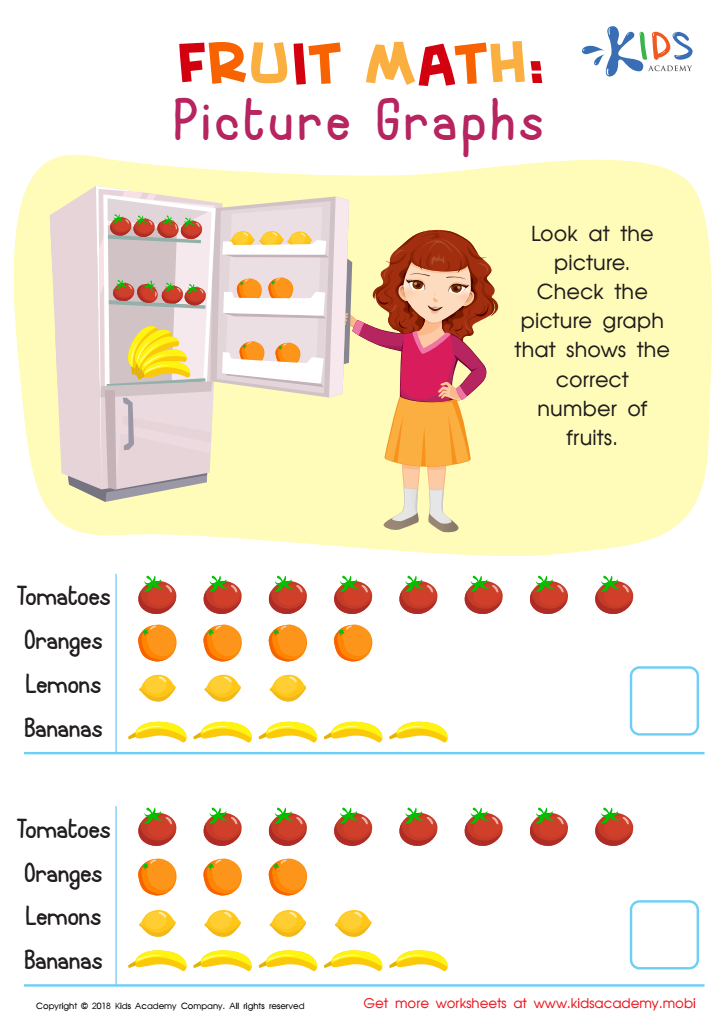
Fruit Math: Picture Graphs Worksheet
Help your child learn to draw graphs by having them look at pictures. Ask them to identify a graph that accurately portrays the data and have them explain why. This will prepare them to easily draw more complex graphs in the future. For example, have them look at the picture with the number of fruits in the colorful worksheet and explain why the graph is accurate.
 Assign to My Students
Fruit Math: Picture Graphs Worksheet
Worksheet
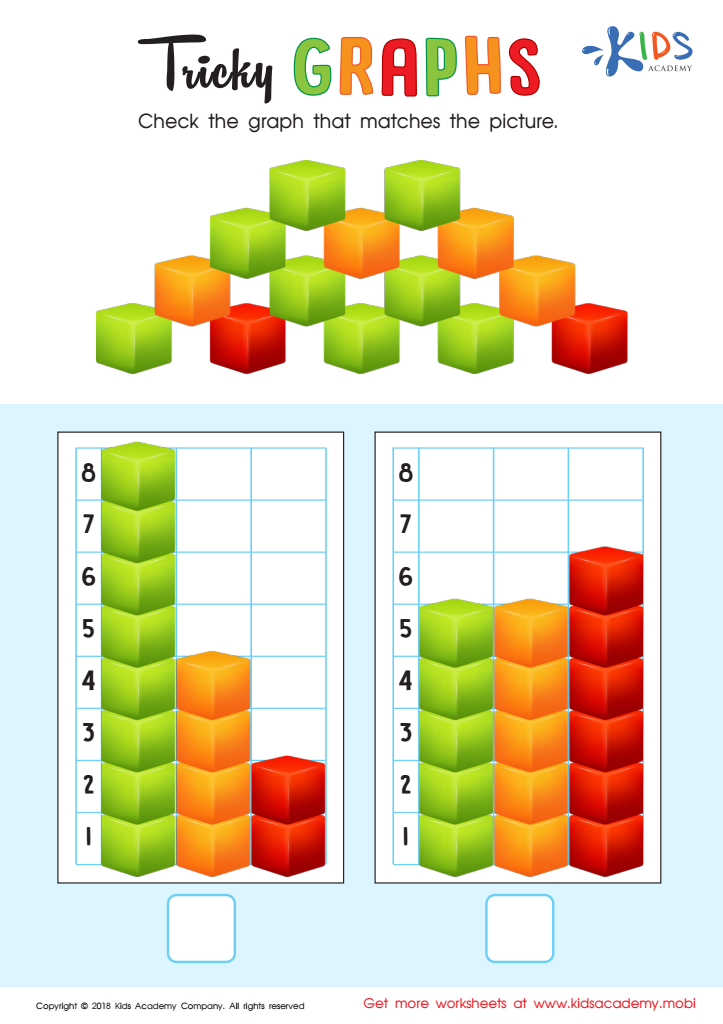
Tricky Graphs Worksheet
Looking for a fun way to sharpen your kid's graphing skills? Get this colorful PDF worksheet! They'll get to practice visual discrimination, counting, and creating bar graphs. Plus, graphing and reading graphs are essential for problem-solving in math.
Tricky Graphs Worksheet
Worksheet
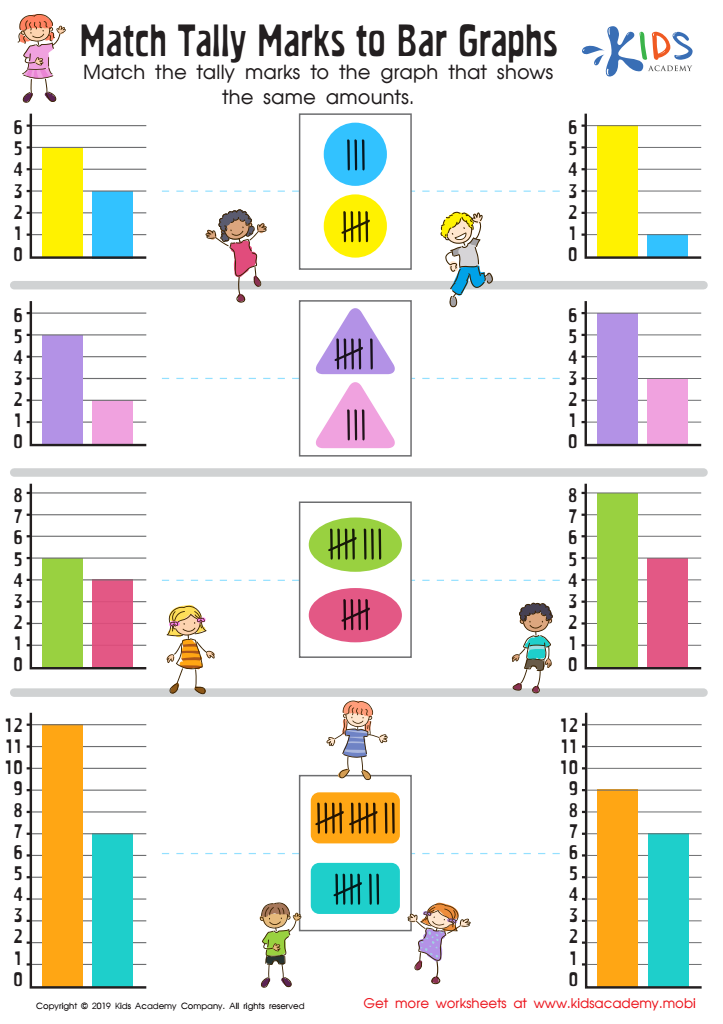
Match Tally Marks to Bar Graphs Worksheet
Learning math can be tough for kids. Rules and formulas can be confusing. Don't worry, this worksheet can help them understand graphs better. Show them how to match the tally marks with the graph that shows the same amount. It will help them grasp the basics and prepare them for more complex equations.
Match Tally Marks to Bar Graphs Worksheet
Worksheet
Join Kids Academy for Free
Who is primarily going to use this learning content?







Understanding graphs is crucial for children aged 3-7, as it lays the foundation for critical thinking and analytical skills. Parents and teachers should prioritize graph comprehension because these early experiences promote numeracy and literacy in an engaging way. Graphs help kids visualize information, making complex ideas more accessible and fostering curiosity about the world around them.
Young children encounter various types of graphs, such as bar graphs or pictographs, through everyday activities, such as counting toys, tracking weather patterns, or collecting data on their favorite snacks. By integrating graph education into their learning, educators can encourage children to ask questions, recognize patterns, and communicate their findings. This not only enhances mathematical abilities but also builds confidence in expressing ideas and interpreting information.
Moreover, understanding graphs nurtures essential social skills, as children may collaborate on projects, share observations, and discuss their results with peers and family. As society leans heavily on data visualization in decision-making, equipping the youngest learners with these skills ensures they are ready to engage with the world meaningfully. Ultimately, graph literacy supports holistic development and prepares children for future learning experiences across all subjects, making it a vital component of early education.








