Applying math skills Math Worksheets for Ages 3-7
3 filtered results
-
From - To
Discover our "Applying Math Skills Worksheets" designed for children ages 3-7. These engaging worksheets provide the perfect blend of fun and education, helping young learners develop essential math skills. Each activity is structured to enhance counting, addition, subtraction, and problem-solving abilities through colorful and interactive exercises. Suitable for preschool and early elementary students, our worksheets are perfect for at-home practice and classroom use, ensuring a strong foundation in math. Make learning an exciting adventure for your child with our expertly crafted worksheets that foster curiosity and build confidence in math proficiency.
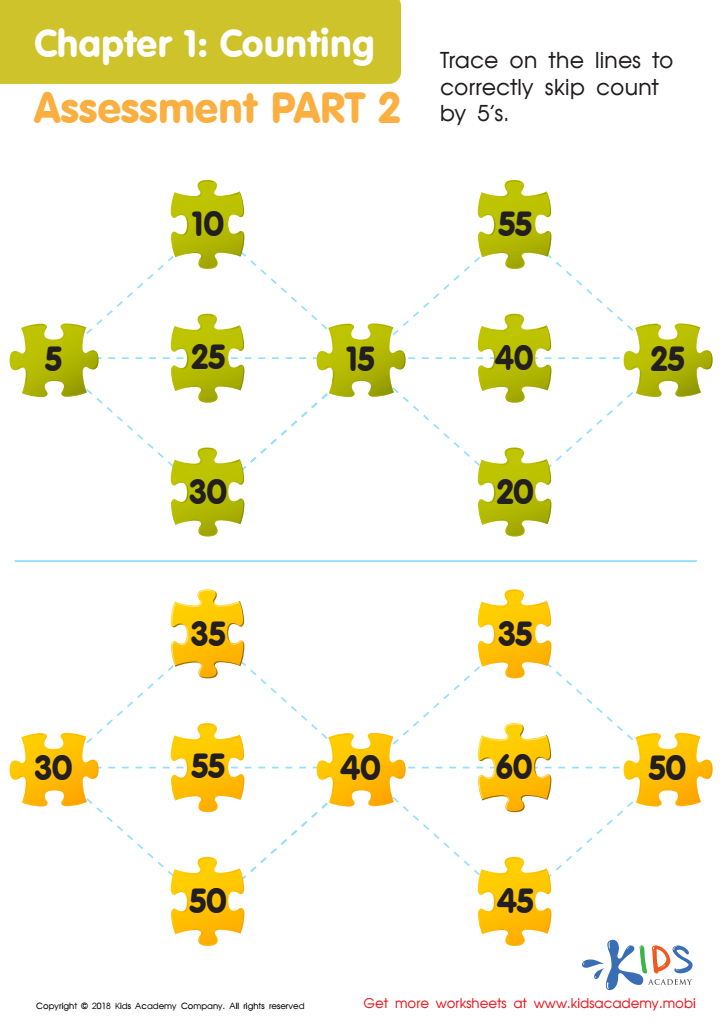
Counting: Assessment 2 Worksheet
 Assign to My Students
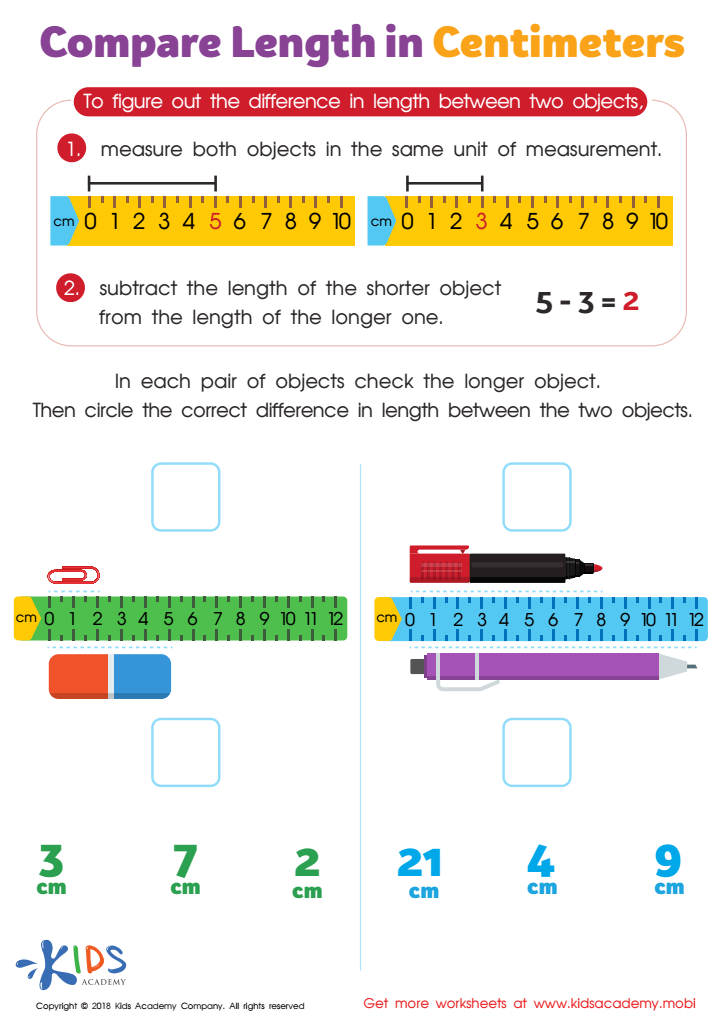
Compare Length in Centimeters Worksheet








Introducing math skills to children ages 3-7 is crucial because these early years set the foundation for future learning and cognitive development. For parents and teachers, nurturing these skills early can make a significant difference in a child’s academic and personal life.
Firstly, early math skills foster critical thinking and problem-solving abilities. When young children engage in simple activities like counting objects, identifying shapes, or recognizing patterns, they learn to observe, analyze, and make sense of the world around them. These are essential skills not only for mathematics but for all areas of learning.
Additionally, early math experiences bolster confidence and enthusiasm for learning. Positive interactions with math-related activities can lead to a more inquisitive mindset, encouraging children to explore and ask questions. This lays the groundwork for a love of learning and resilience when faced with challenging tasks in the future.
Math skills are also fundamental life skills. Concepts like measurement, comparison, and spatial awareness are applied in everyday activities, from cooking and shopping to playing and building. Early exposure helps children connect these abstract ideas to real-world applications.
Finally, developing math skills early can contribute to closing achievement gaps. Studies show that strong early math skills are a predictor of later academic success across subjects. By prioritizing math in these formative years, parents and teachers provide a more equitable start for all children, paving the way for lifelong learning and opportunities.








