Basic addition practice Math Worksheets for Ages 3-7 - Page 2
25 filtered results
-
From - To
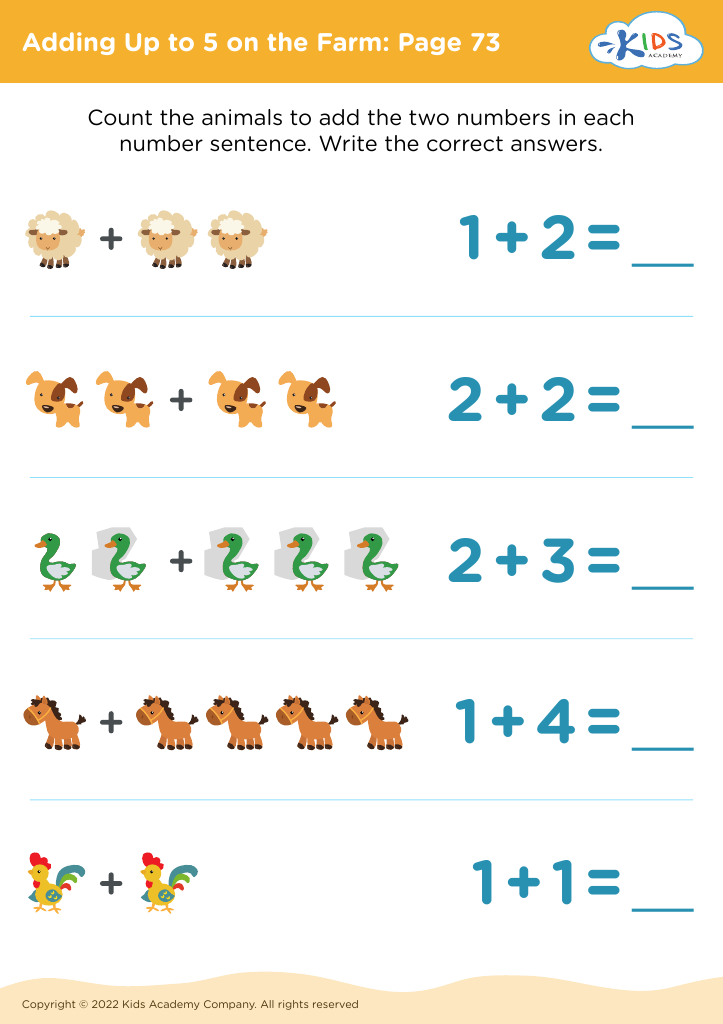








Basic addition is one of the foundational building blocks of mathematics for young children, making practice essential for ages 3-7. During these formative years, children develop critical cognitive skills that pave the way for more complex mathematical concepts. Mastering basic addition helps enhance problem-solving abilities, boost confidence, and foster a positive attitude toward math.
For teachers, incorporating basic addition into daily activities transforms learning into a fun, engaging, and interactive experience. By using tools like manipulatives, games, and visual aids, children can grasp abstract concepts more concretely. This hands-on approach makes math tangible and enjoyable, encouraging active participation and collaboration among peers.
Parents play an equally crucial role by extending math practice beyond the classroom. Engaging in simple, everyday activities—such as counting toys, adding ingredients during cooking, or playing educational board games—can seamlessly integrate math into a child's routine. This constant reinforcement solidifies their understanding and reduces anxiety around the subject.
Ultimately, prioritizing basic addition practice equips children with necessary life skills. It lays the groundwork for arithmetic operations, fosters logical thinking, and builds a strong academic foundation. By investing effort and enthusiasm into early math education, parents and teachers can set children on a path to success and lifelong learning.








