Enhances counting skills Math Worksheets for Ages 3-7
6 filtered results
-
From - To
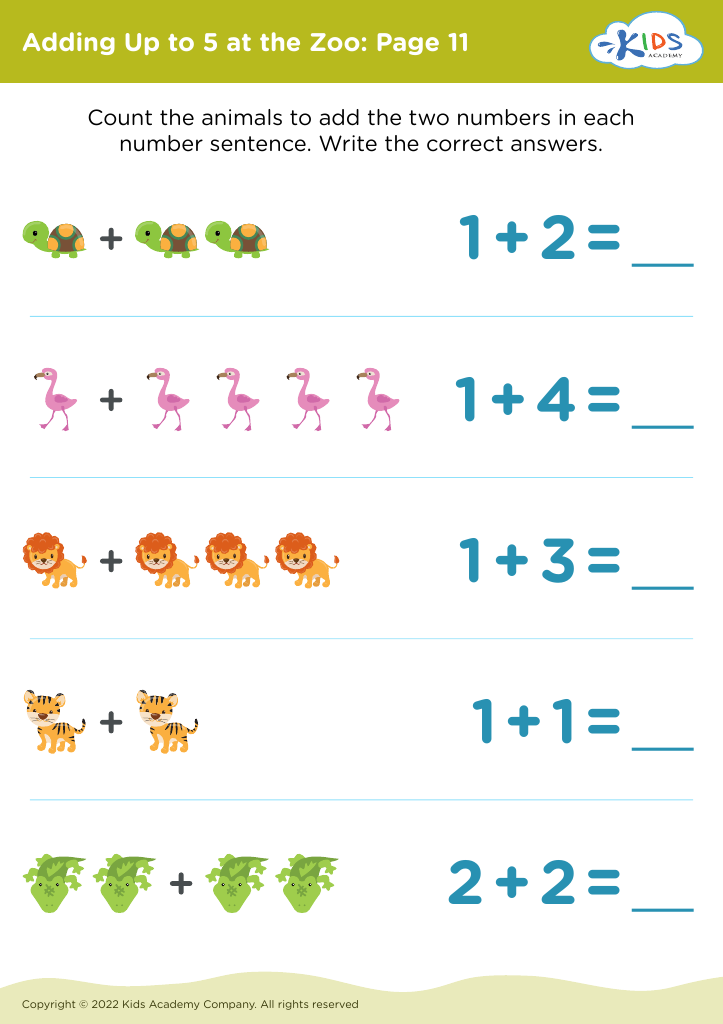
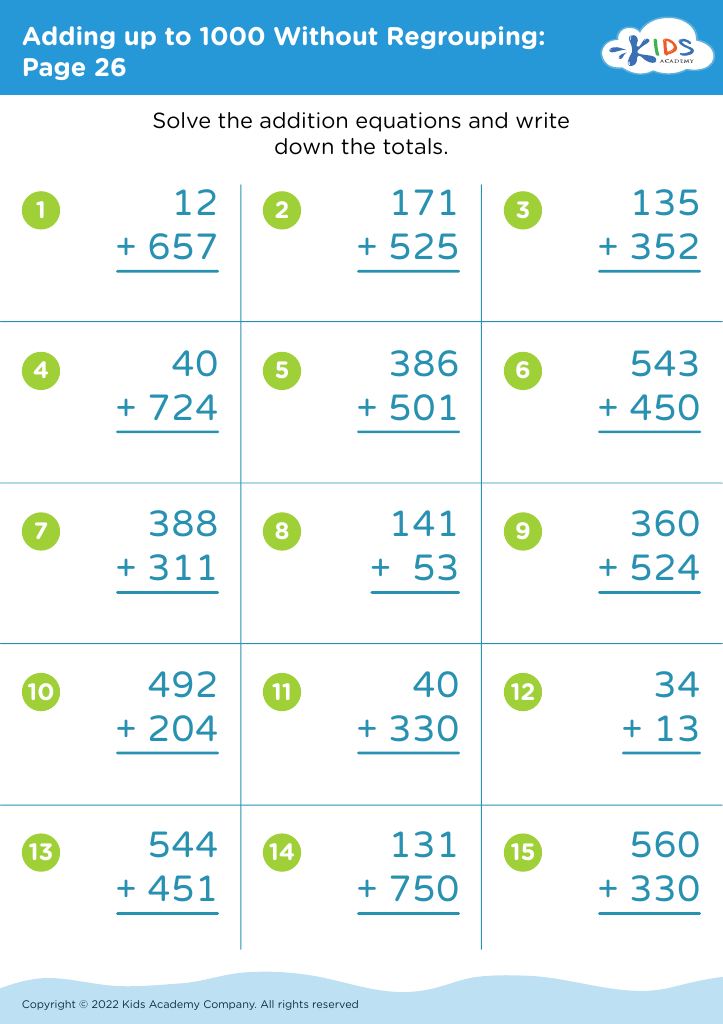
Discover our engaging math worksheets designed to enhance counting skills for children aged 3-7! These interactive resources provide a fun way for young learners to practice essential counting concepts through colorful visuals and relatable activities. Ideal for preschool and early elementary classrooms, our worksheets encourage number recognition and one-to-one correspondence, making math enjoyable and accessible. Whether your child enjoys counting with objects or practicing with numbers, our carefully crafted exercises cater to various learning styles. Foster a strong foundation in math and inspire a love for learning with our Enhance Counting Skills worksheets—perfect for nurturing confident, prepared young mathematicians!
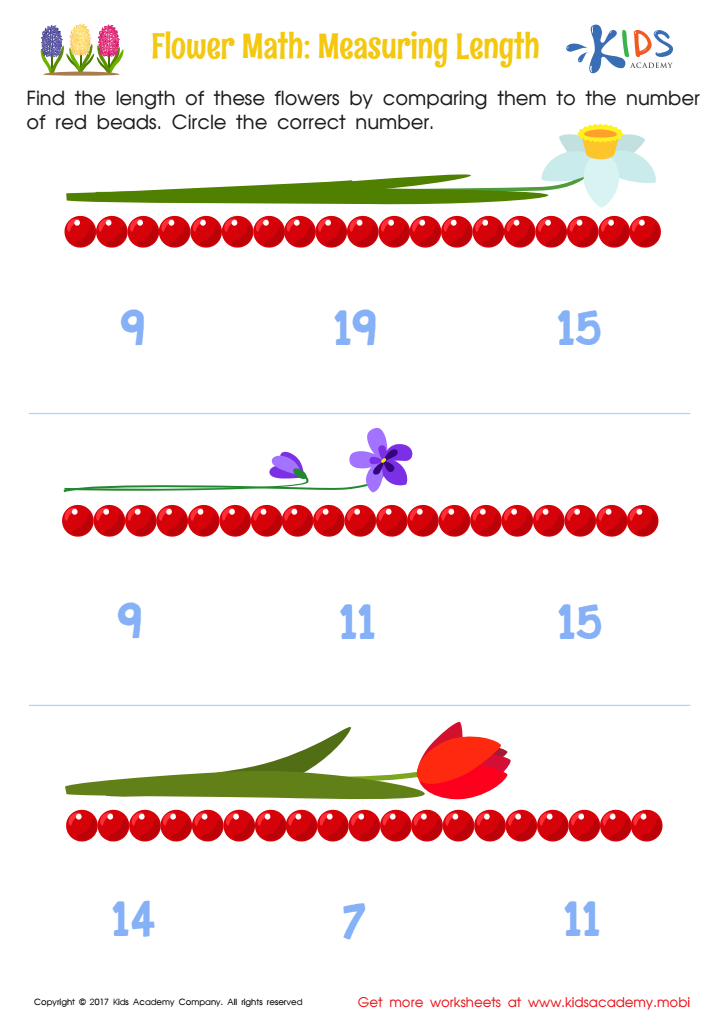
Flower Math: Measuring Height Worksheet
 Assign to My Students
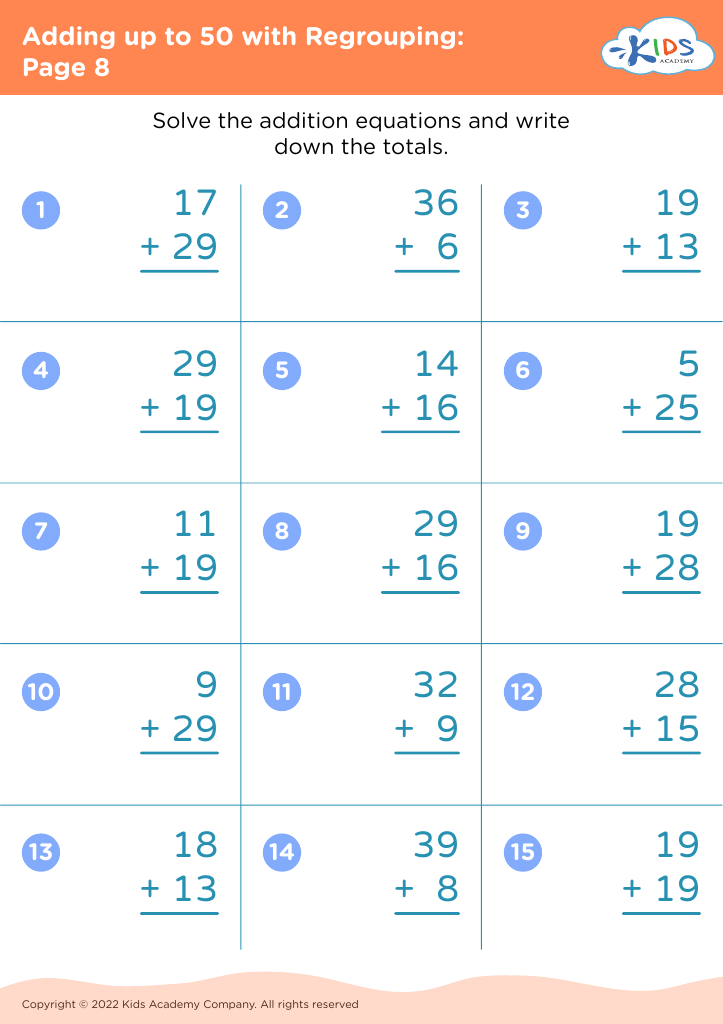
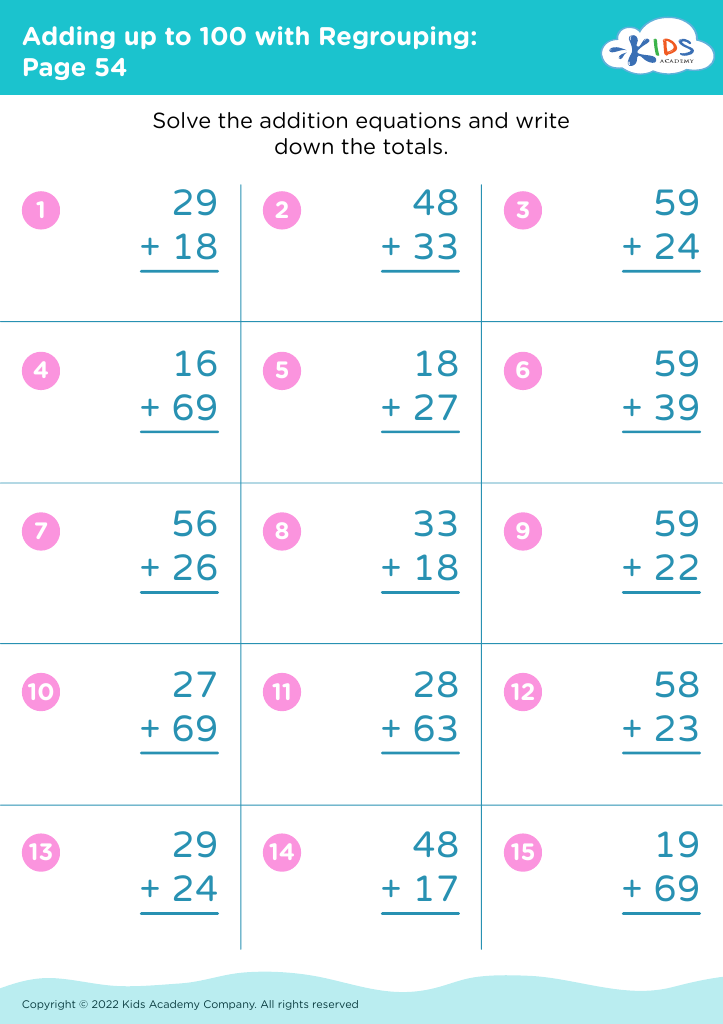
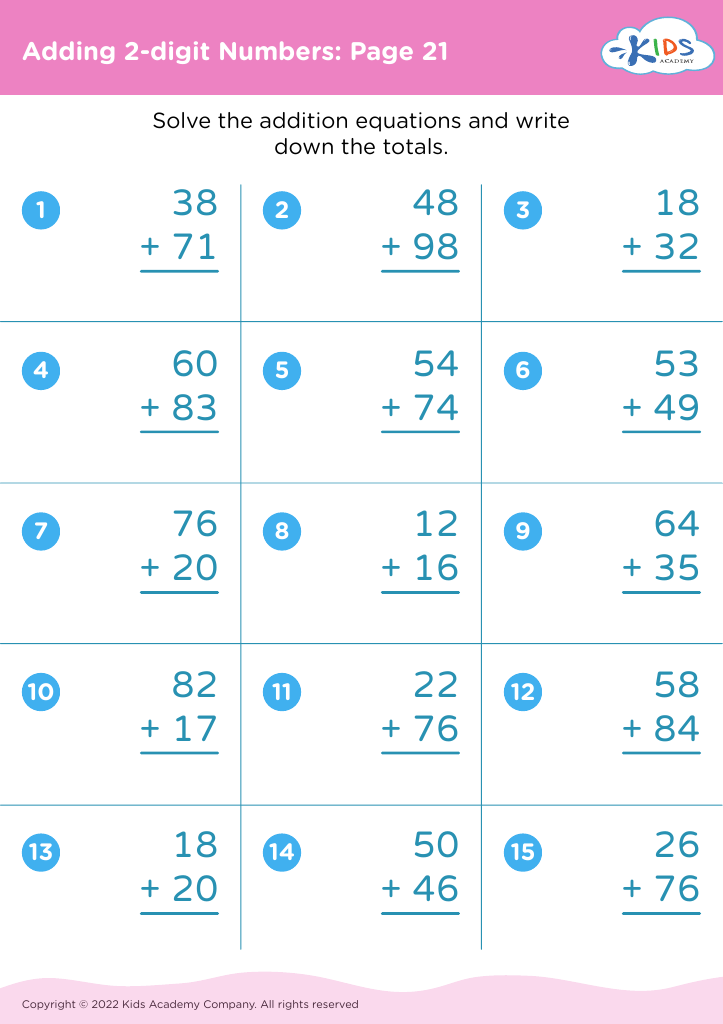








Enhancing counting skills in young children aged 3-7 is crucial for their overall cognitive development and foundational math understanding. At this stage, children are naturally curious and highly receptive to learning. Developing counting skills goes beyond mere number recognition; it fosters critical thinking, problem-solving abilities, and mathematical reasoning.
Parents and teachers play a significant role in supporting this development. Engaging children in counting activities, such as counting objects during play, singing songs, or incorporating numbers into daily routines, helps solidify their understanding. These interactive experiences promote not only numerical fluency but also social skills as children collaborate and communicate during playful learning.
Moreover, strong counting skills set the stage for future math concepts. Children who grasp basic counts are more likely to succeed in addition, subtraction, and beyond. It helps them understand quantities, shapes, and patterns, contributing to a well-rounded mathematical foundation.
Additionally, fostering counting skills instills confidence in young learners. A strong sense of numerical competency can enhance their enthusiasm for learning new math concepts as they grow. Thus, investing in counting skills at an early age supports children’s cognitive growth, academic success, and a lifelong interest in mathematics, making it imperative for parents and teachers to prioritize these activities.








