
Graph reading skills Math Worksheets for Ages 3-7
3 filtered results
Difficulty Level
Grade
Age
-
From - To
Subject
Activity
Standards
Welcome to our engaging Graph Reading Skills Math Worksheets for Ages 3-7! Designed to foster early mathematical development, these worksheets offer young learners a fun and interactive way to understand graph interpretation and data analysis. Children will explore colorful charts, pictographs, and simple bar graphs, enhancing their ability to read and interpret graphical information. Our resources encourage critical thinking and strengthen foundational math skills, all while promoting a love for learning. Ideal for parents and educators alike, these worksheets make math enjoyable and accessible, ensuring your child builds confidence and competence in graph reading at an early age. Download them today!
Favorites
With answer key
Interactive
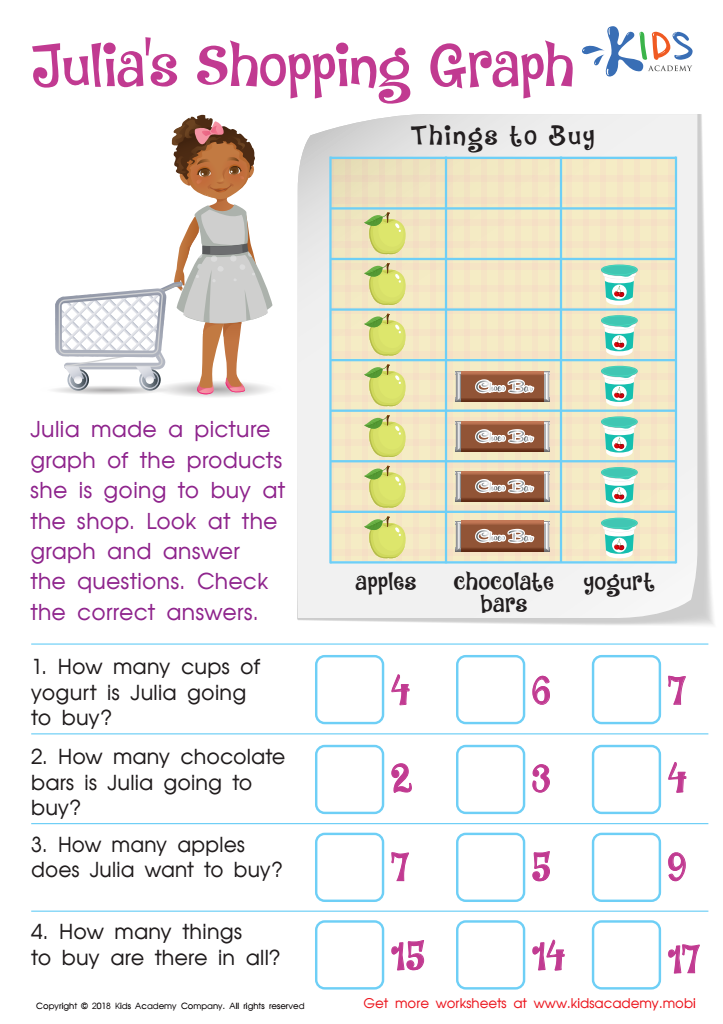
Julia's Shopping Graph Worksheet
This fun PDF worksheet provides little mathematicians with practice using pictographs. They will answer questions about Julia's graph, helping to assess their understanding of reading and interpreting data. Counting and choosing the correct answer is sure to be an enjoyable experience!
 Assign to My Students
Julia's Shopping Graph Worksheet
Worksheet
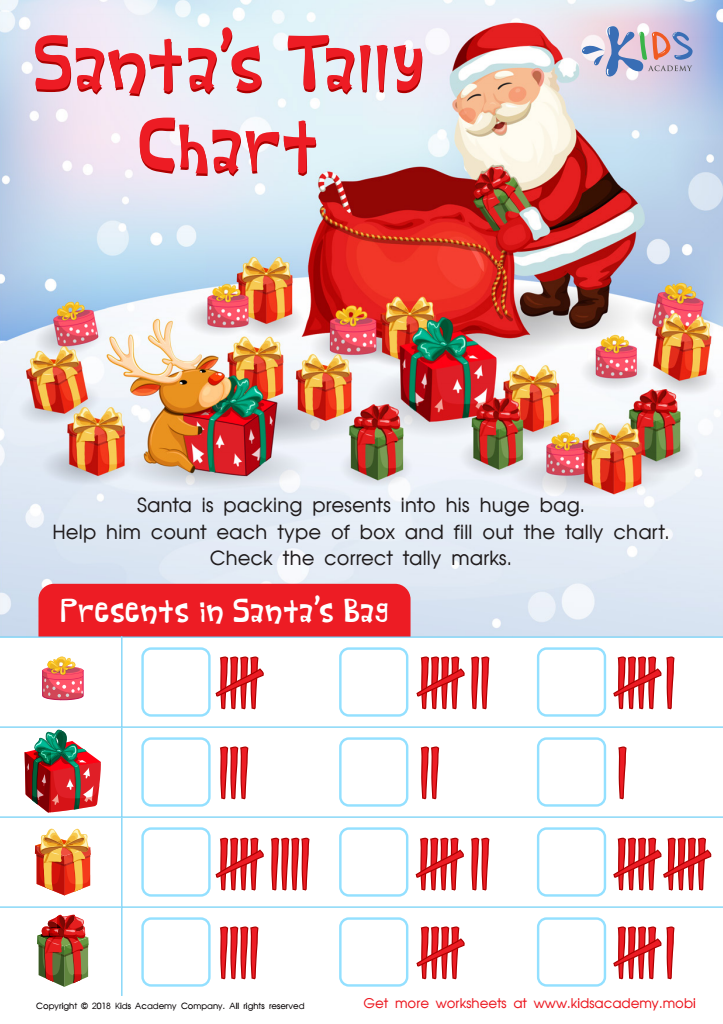
Santa Tally Chart Worksheet
Santa's got a big bag of gifts to count! Kids can help with this fun PDF worksheet, practicing visual recognition and representation skills while they sort and tally the presents. They'll also work on charting as they fill in the tally chart and send Santa off for a happy holiday. Ho, Ho, Ho!
Santa Tally Chart Worksheet
Worksheet
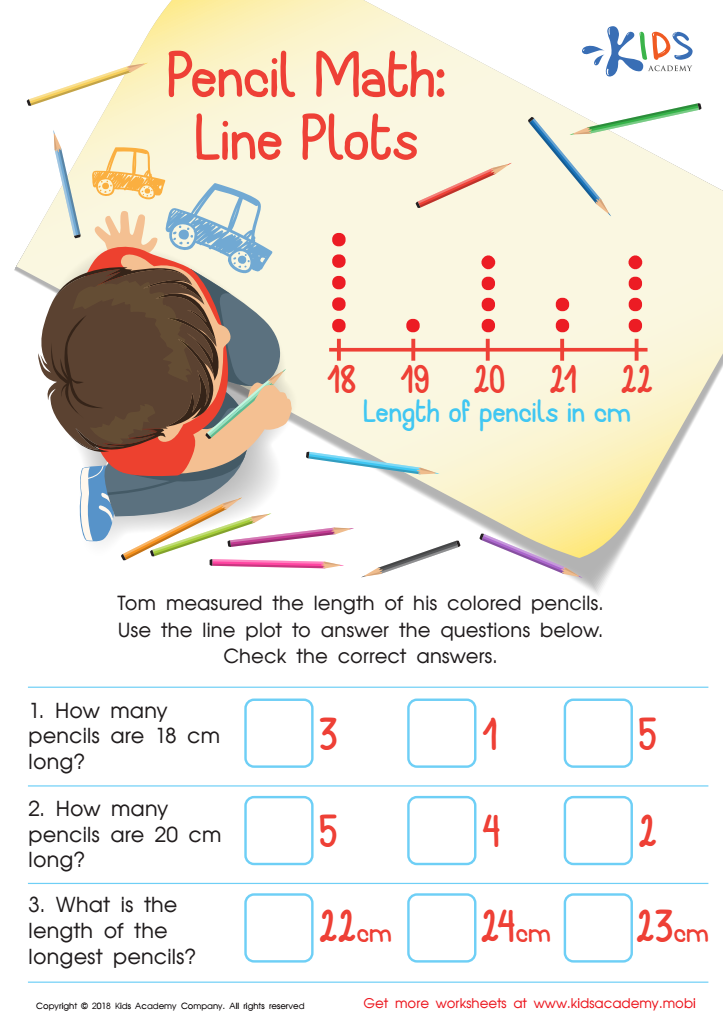
Pencil Math: Line Plots Worksheet
Your child will meet Tom in this worksheet, helping him find the length of his colored pencils. Tom has written the lengths in cm, and the line plot will help your kids answer the questions. Check the correct answers for each, including how many pencils are of a certain length. The line plot makes it easy to find the answers.
Pencil Math: Line Plots Worksheet
Worksheet
Join Kids Academy for Free
Who is primarily going to use this learning content?





.jpg)

Graph reading skills are essential for young children, especially those aged 3-7, as they form the foundation for mathematical understanding and critical thinking. At this age, children are naturally curious and eager to explore patterns, relationships, and data. By engaging them in graph reading activities, parents and teachers can nurture this curiosity while fostering essential analytical skills.
Understanding graphs helps children visualize information, making it easier for them to comprehend concepts like counting, sorting, and comparing quantities. For example, bar graphs can illustrate favorite fruits, aiding them in recognizing and interpreting data compared to simple numerical skills. These activities enhance their ability to interpret everyday information, such as weather charts or schedules, making learning relevant and engaging.
Moreover, graph reading sharpens problem-solving abilities by encouraging children to ask questions about the data they observe. This analytical approach not only supports mathematical concepts but also lays the groundwork for logical reasoning skills needed in more advanced subjects.
In essence, prioritizing graph reading skills in early education cultivates a sense of inquiry, promotes math literacy, and empowers children to analyze and interpret the world around them, ultimately contributing to their overall cognitive development.








