
Improving mental math Math Worksheets for Ages 3-7
3 filtered results
Difficulty Level
Grade
Age
-
From - To
Subject
Activity
Standards
Enhance your child's math skills with our "Improving Mental Math" worksheets, designed specifically for ages 3-7. Our engaging and interactive worksheets help young learners develop essential mental math abilities, fostering confidence and competence in basic arithmetic. Featuring fun activities that include addition, subtraction, and counting challenges, these resources cater to different learning styles. Each worksheet encourages critical thinking and problem-solving, laying a strong foundation for future math success. Suitable for parents and educators, our worksheets can be easily printed and used at home or in the classroom. Start your child's math journey today and help them thrive with mental math proficiency!
Favorites
With answer key
Interactive
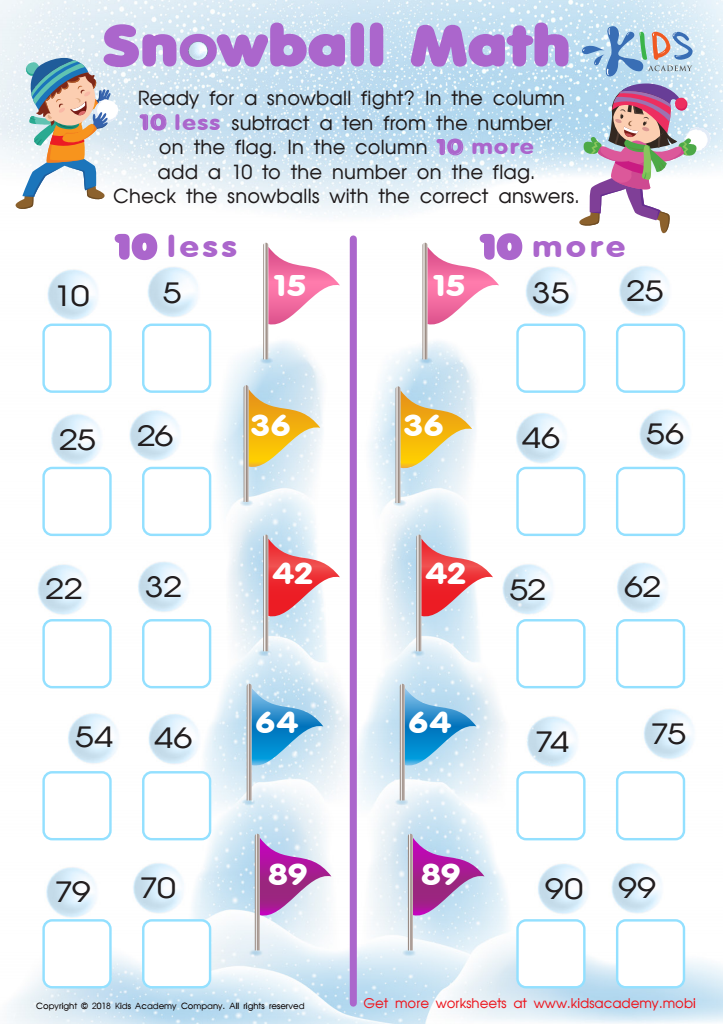
Snowball Math Worksheet
Kids can have a snowball fight and build math skills at the same time with this free worksheet. Kids can use tens to add and subtract for quick math equations and select the correct answers. No need to worry about getting cold either - these snowballs won't chill you!
 Assign to My Students
Snowball Math Worksheet
Worksheet
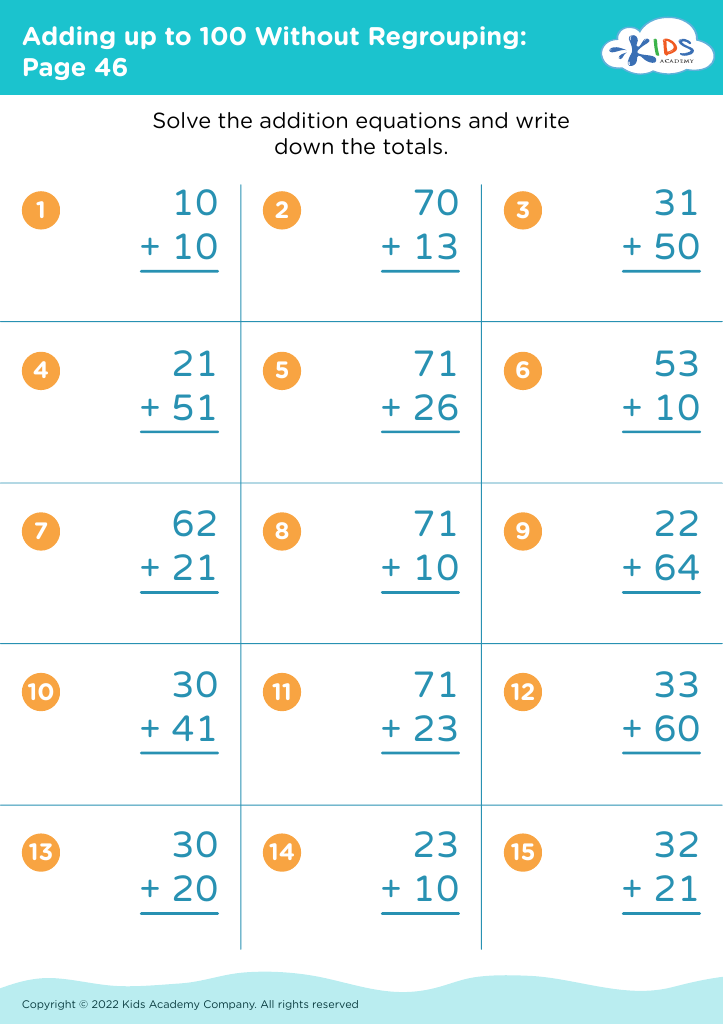
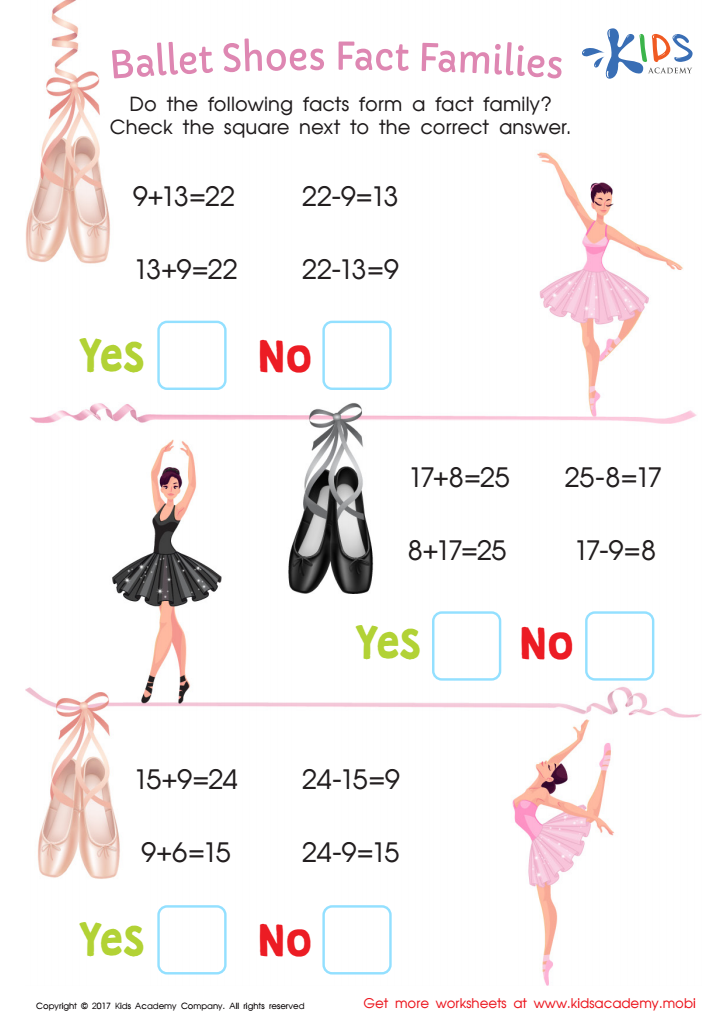
Ballet Shoes Fact Family Printable
Have them observe the equations and determine which groupings are fact families for a delightful learning experience. It encourages critical thinking, showing how addition and subtraction are related.
Ballet Shoes Fact Family Printable
Worksheet
Join Kids Academy for Free
Who is primarily going to use this learning content?








Improving mental math skills in children aged 3-7 is crucial for several reasons. Firstly, this developmental stage is foundational for mathematical understanding. At this age, children's brains are highly adaptable, making it the perfect time to cultivate a strong numerical sense and problem-solving abilities. Enhanced mental math skills provide a solid base for future mathematics learning and develop critical thinking capabilities that are beneficial in various academic areas.
Moreover, mental math promotes confidence and independence in children. When children can perform calculations without relying on physical aids, they feel empowered and capable, fostering a positive attitude toward math. This confidence can diminish math-related anxiety, which may arise later in life.
Additionally, engaging in mental math encourages cognitive processes like memory, concentration, and logical thinking. It can also enhance communication skills as children learn to articulate their thought processes and reasoning.
Ultimately, by prioritizing mental math development, parents and teachers can equip children with essential life skills, setting them on a path to academic success and preparing them for everyday situations that involve mathematics. Investing time in these early skills can yield significant long-term benefits, shaping responsible, confident learners who view challenges as opportunities for growth.








