Math skills improvement Math Worksheets for Ages 3-7
7 filtered results
-
From - To
Unlock your child's potential with our Math Skills Improvement Math Worksheets designed for ages 3-7. At Kids Academy, we provide engaging, easy-to-follow worksheets that foster a love for math while enhancing essential skills. These interactive worksheets cover topics such as counting, addition, subtraction, shapes, and patterns, ensuring a well-rounded mathematical foundation. Perfect for home or classroom use, our worksheets make learning fun and effective. Empower your child to build confidence and excel in math with age-appropriate, expertly crafted resources from Kids Academy. Visit us today and watch your young learner thrive!
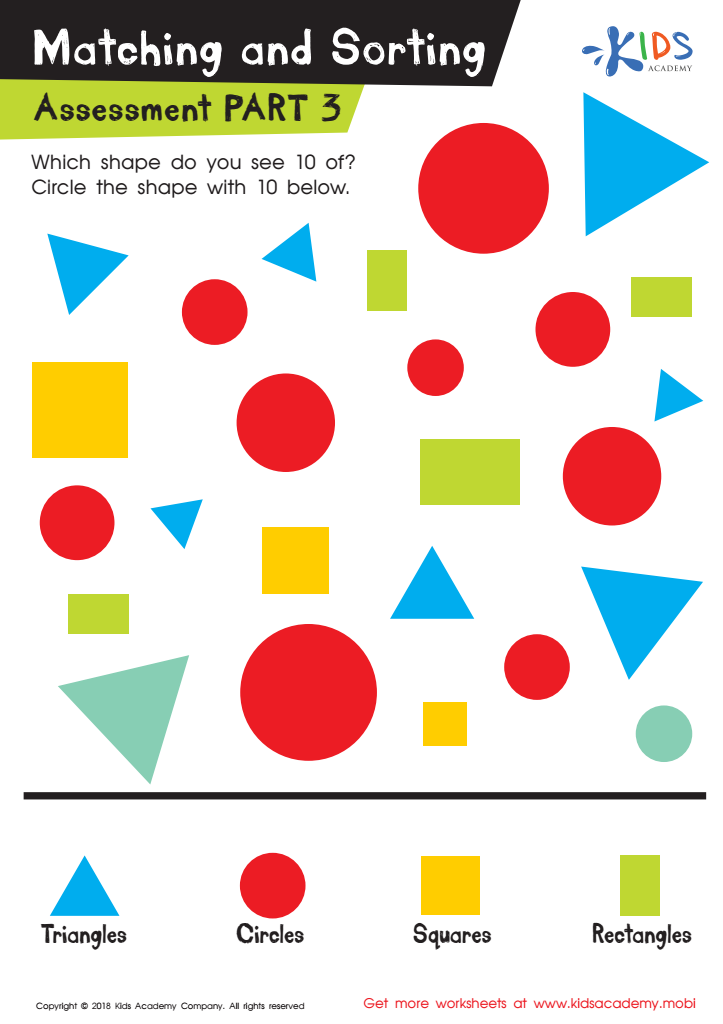
Matching and Sorting for Kindergarten: Assessment 3 Worksheet
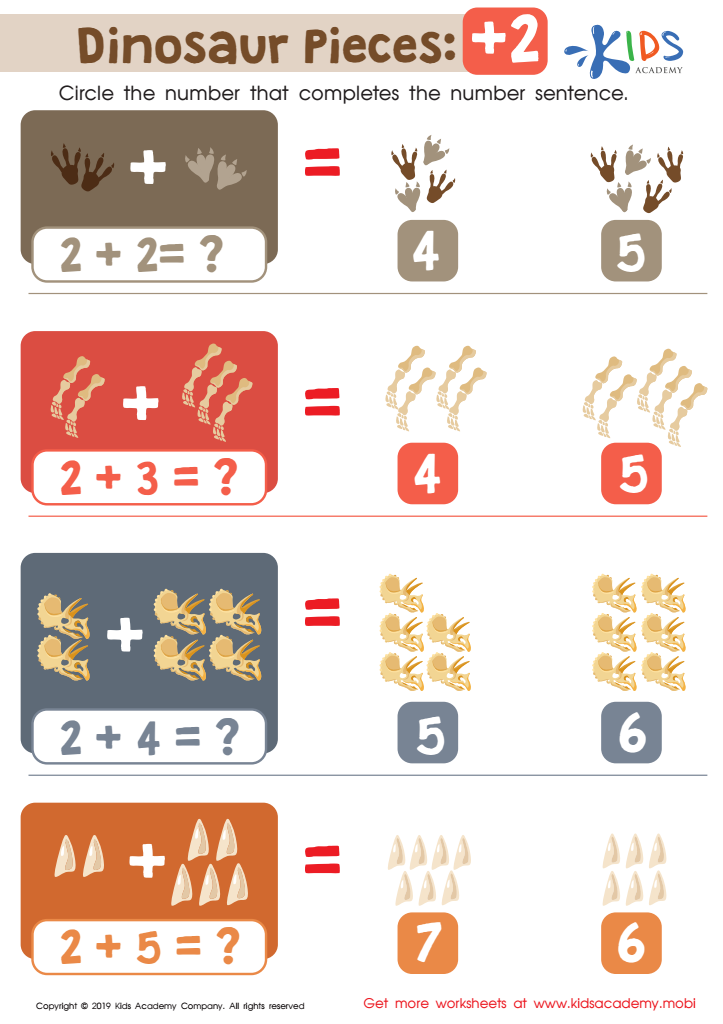
Dinosaur Pieces: +2 Worksheet
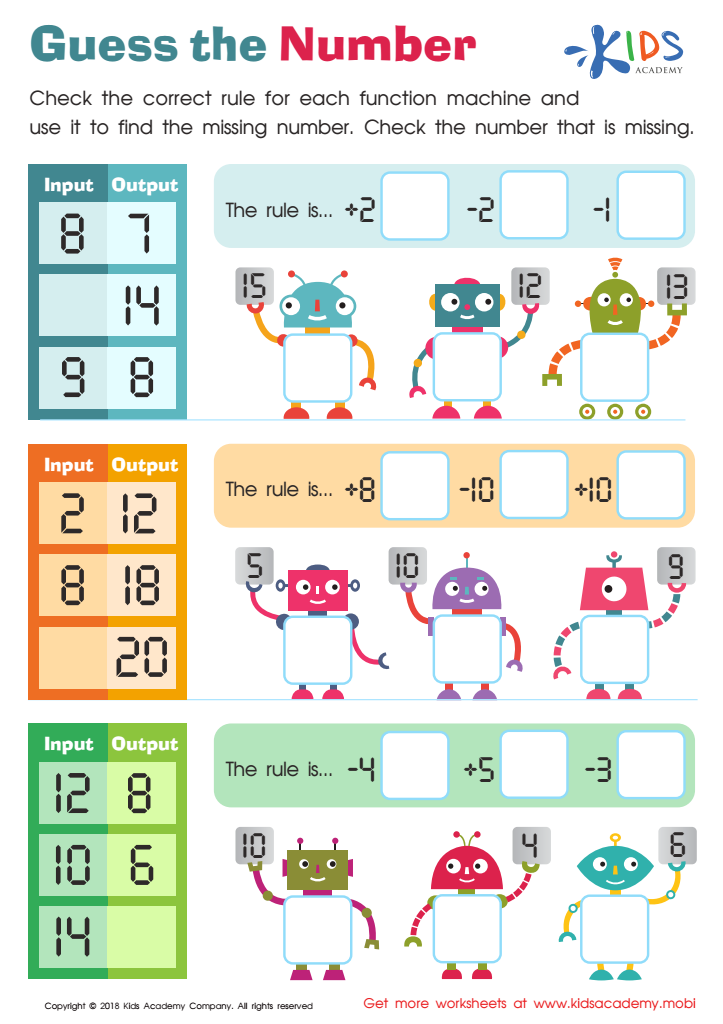
Guess the Number Worksheet
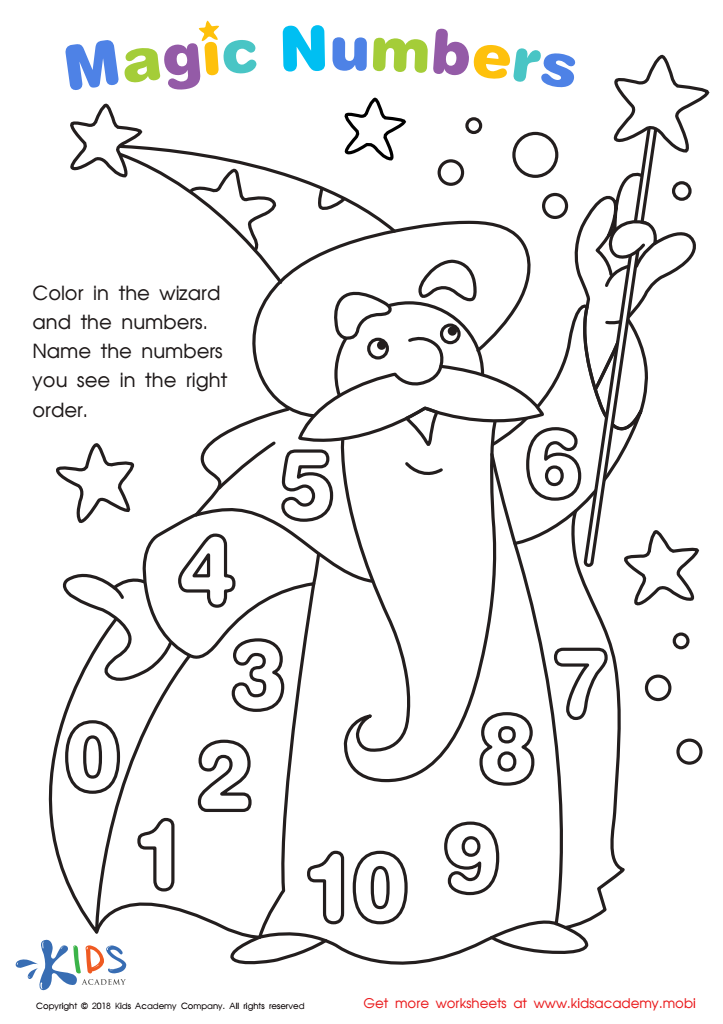
Magic Numbers Worksheet
 Assign to My Students
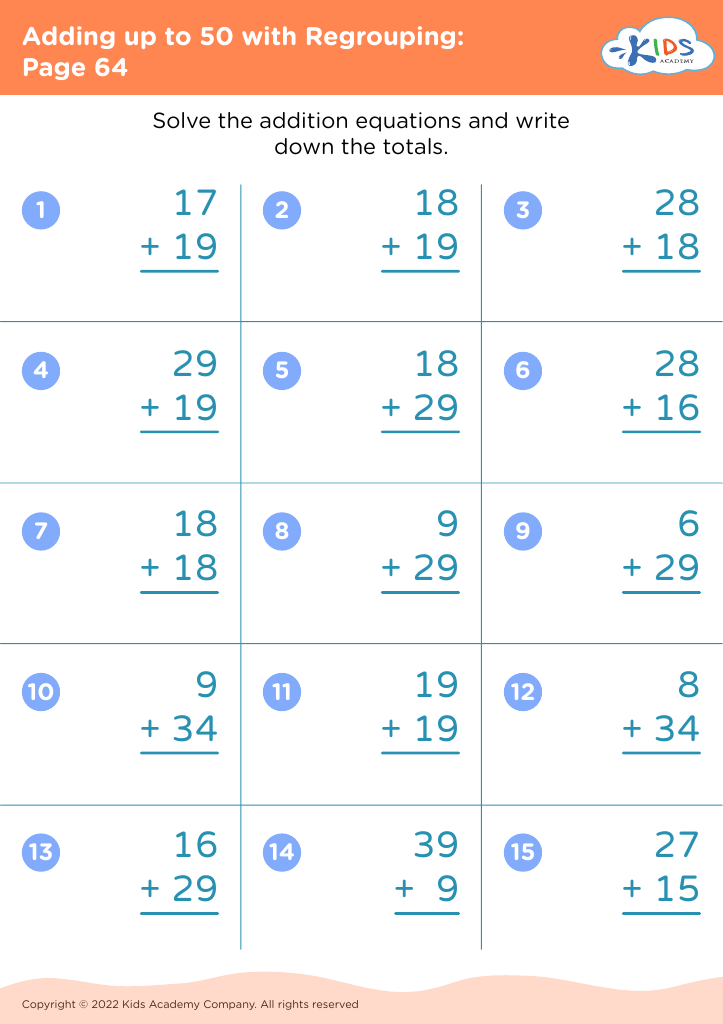
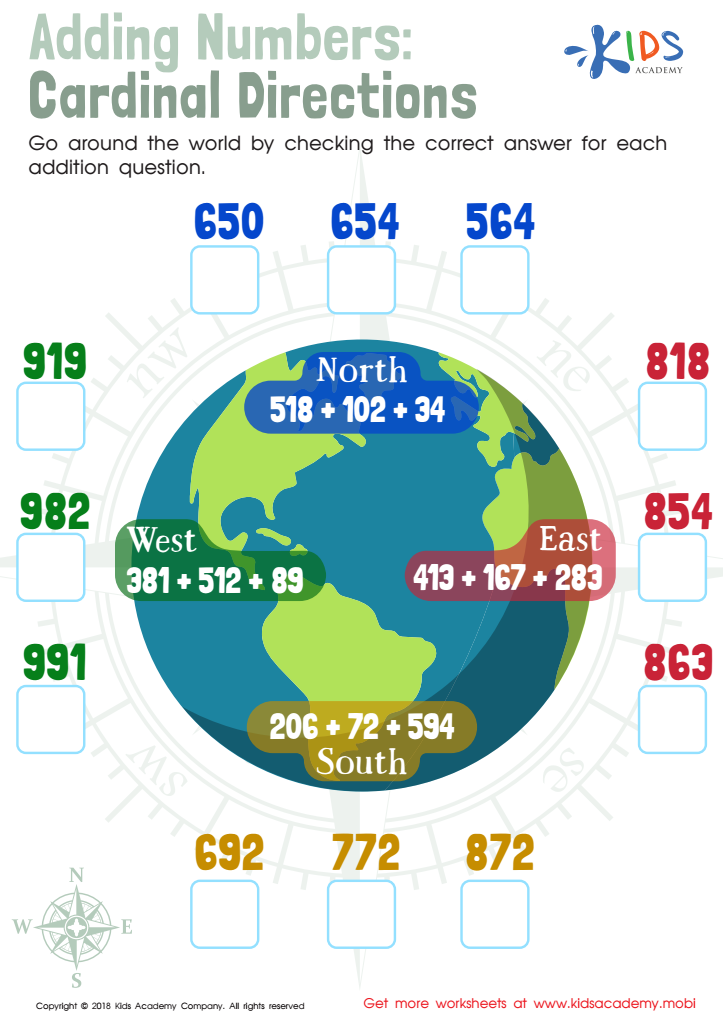
Adding Numbers: Cardinal Directions Worksheet








Improving math skills in children aged 3-7 is crucial for several reasons. Early mathematical ability is a strong predictor of later academic success, not just in math but across other academic areas. Developing foundational number sense, pattern recognition, and problem-solving skills at a young age forms the bedrock for more complex mathematical concepts taught in later years. As children engage in math activities, they develop critical thinking, logical reasoning, and problem-solving skills, which are essential competencies for everyday life.
Math also promotes cognitive development by stimulating brain areas responsible for understanding and manipulating numbers and spatial relationships. By fostering a positive attitude towards math early on, parents and teachers can help mitigate math anxiety, enabling children to approach the subject with confidence and curiosity. Additionally, early math proficiency is linked to better socio-economic outcomes. Proficient math skills can open doors to a variety of career opportunities in science, technology, engineering, and math (STEM) fields in an increasingly digital and data-driven world.
Moreover, engaging young children in math activities provides an opportunity for bonding and interaction between parents, teachers, and peers. These interactions can enhance social and communication skills, reinforcing the holistic development of the child. Therefore, building a strong math foundation early on is essential for long-term educational and personal success.








