Numerical problem solving Math Worksheets for Ages 3-7
3 filtered results
-
From - To
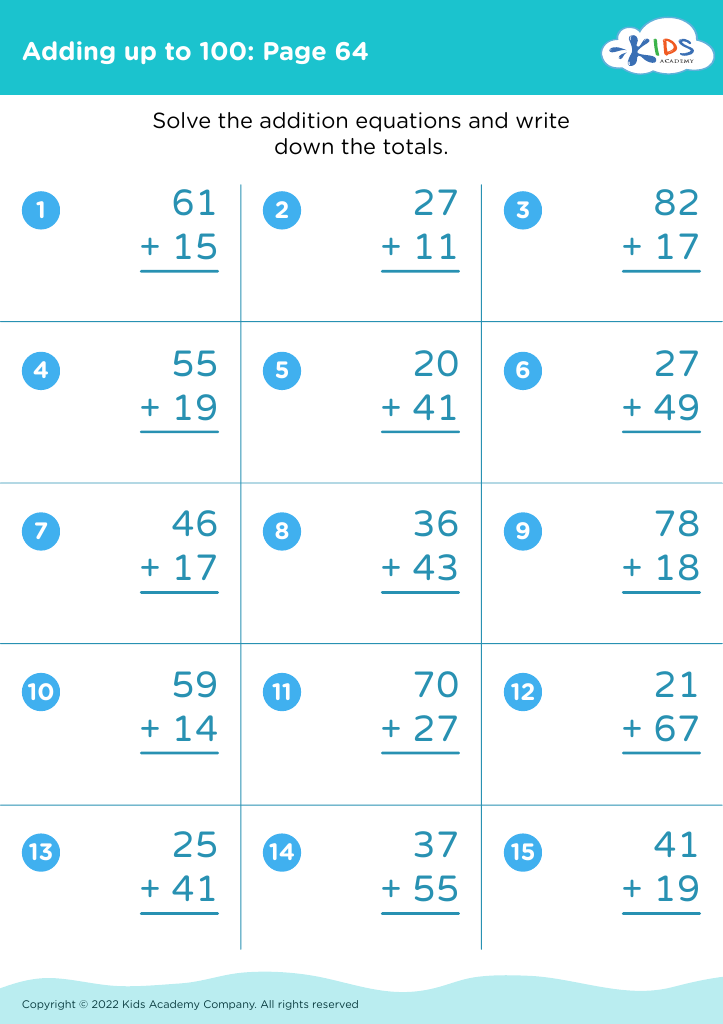
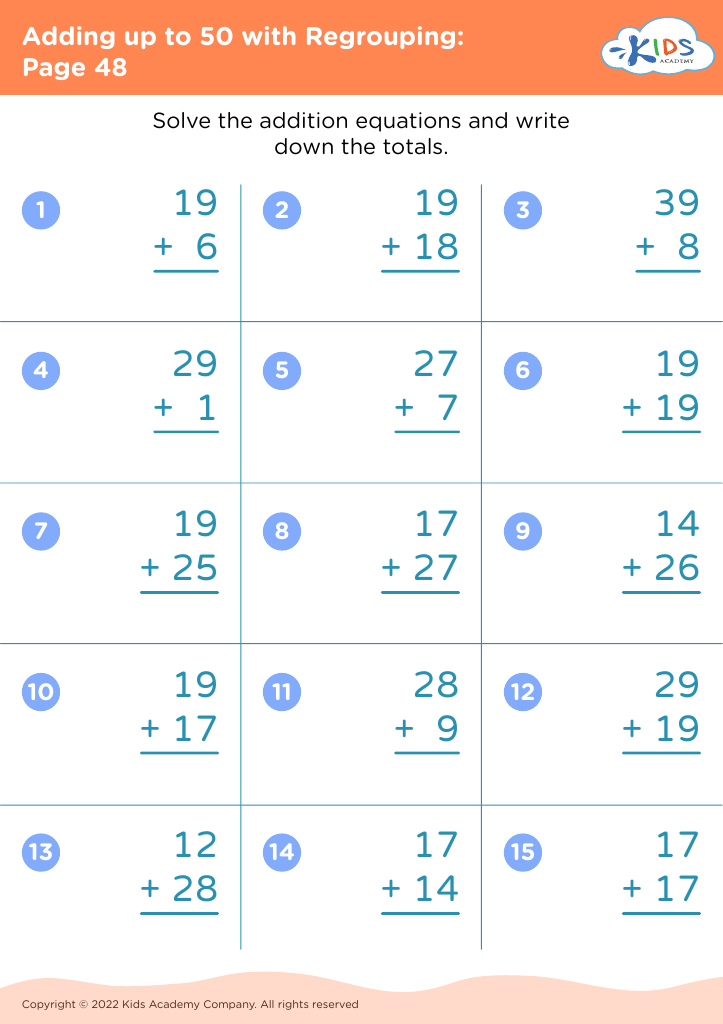
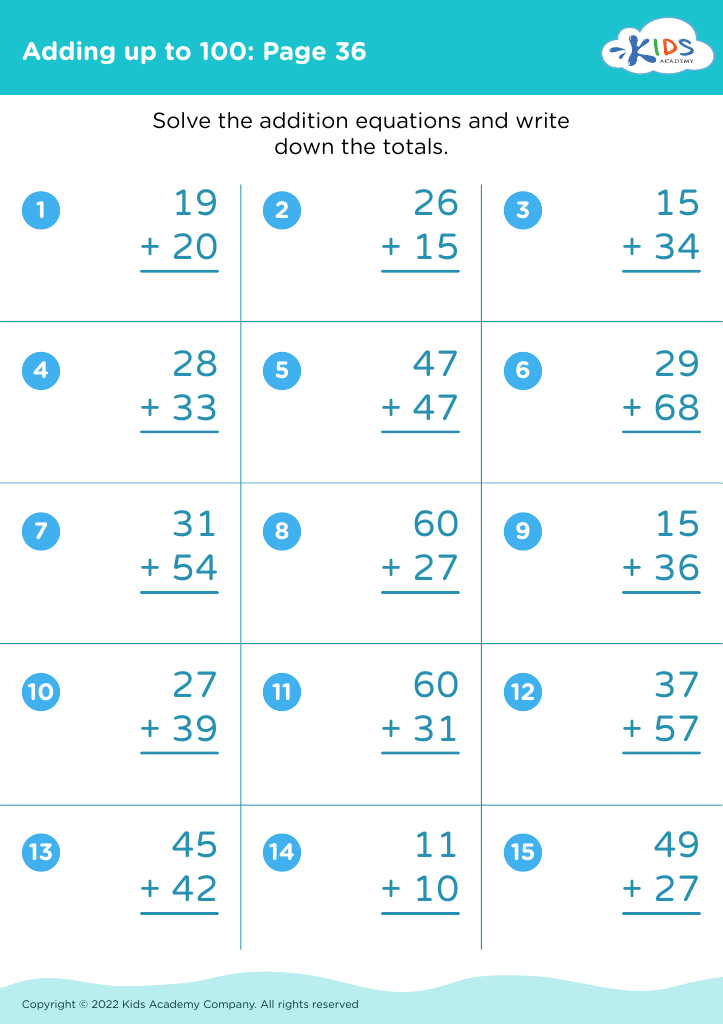
Enhance your child's mathematical skills with our engaging Numerical Problem Solving Math Worksheets designed for ages 3-7. These worksheets offer a fun and interactive way for young learners to explore essential math concepts such as addition, subtraction, counting, and more. Ideal for early education settings or at-home learning, our printable worksheets promote critical thinking and problem-solving abilities that lay the foundation for future success. Each activity is crafted to captivate young minds while reinforcing numerical reasoning in an enjoyable manner. Watch your child thrive as they build confidence in their math skills with our colorful and inviting worksheet designs!



%20(1).jpg)


Numerical problem-solving skills are essential for children aged 3-7 as they lay the foundation for future mathematical understanding and critical thinking. During these formative years, children develop their cognitive skills, which are crucial for interpreting the world around them. Engaging in numerical problem-solving encourages logical reasoning and helps children understand concepts such as quantity, sequence, and relationships.
Parents and teachers should care about fostering these skills because early experiences with math significantly impact a child's confidence and attitudes towards the subject. When children solve numerical problems, they learn persistence and creativity—skills that extend beyond math into all aspects of learning. Nurturing a positive math mindset can help combat common anxieties related to numbers.
Moreover, hands-on numerical problem-solving activities create opportunities for discussions and collaborative learning, enhancing social and communication skills. By guiding children through challenges and celebrating their successes, adults can instill a lifelong love for learning. Ultimately, fostering numerical problem-solving in early childhood prepares children not only for future academic success but also for real-world situations where these skills are crucial, such as problem-solving at home or in everyday life. Empowers our young learners today for a brighter, numerically proficient tomorrow.








