Spatial awareness Math Worksheets for Ages 3-7 - Page 2
29 filtered results
-
From - To
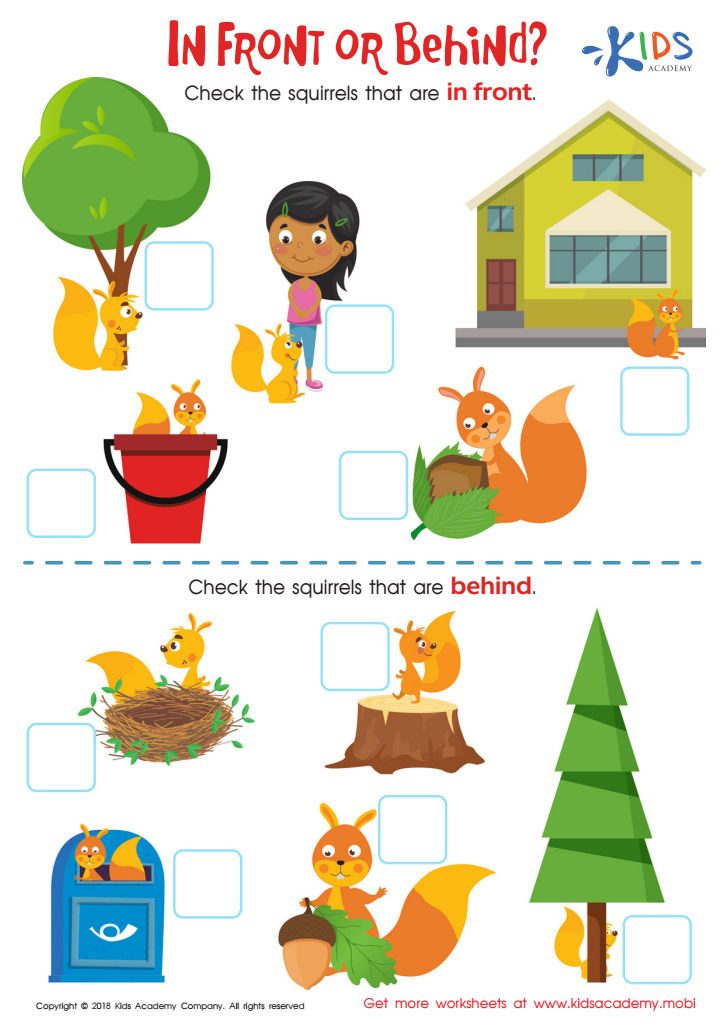
In Front or Behind: Part 2 Worksheet
 Assign to My Students
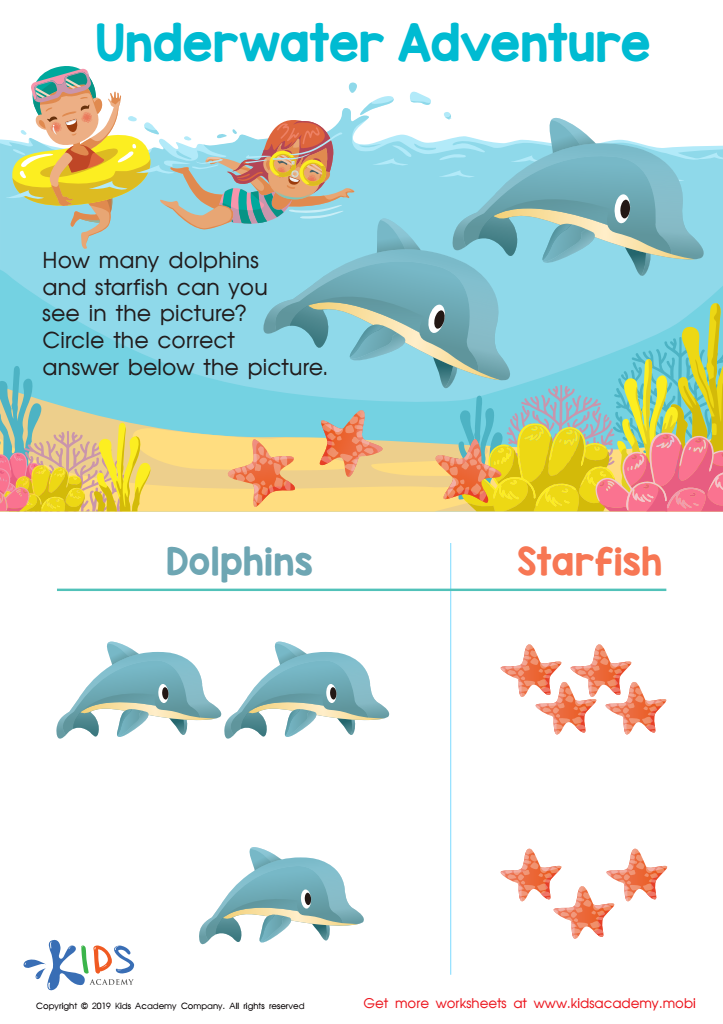
Underwater Adventure Worksheet
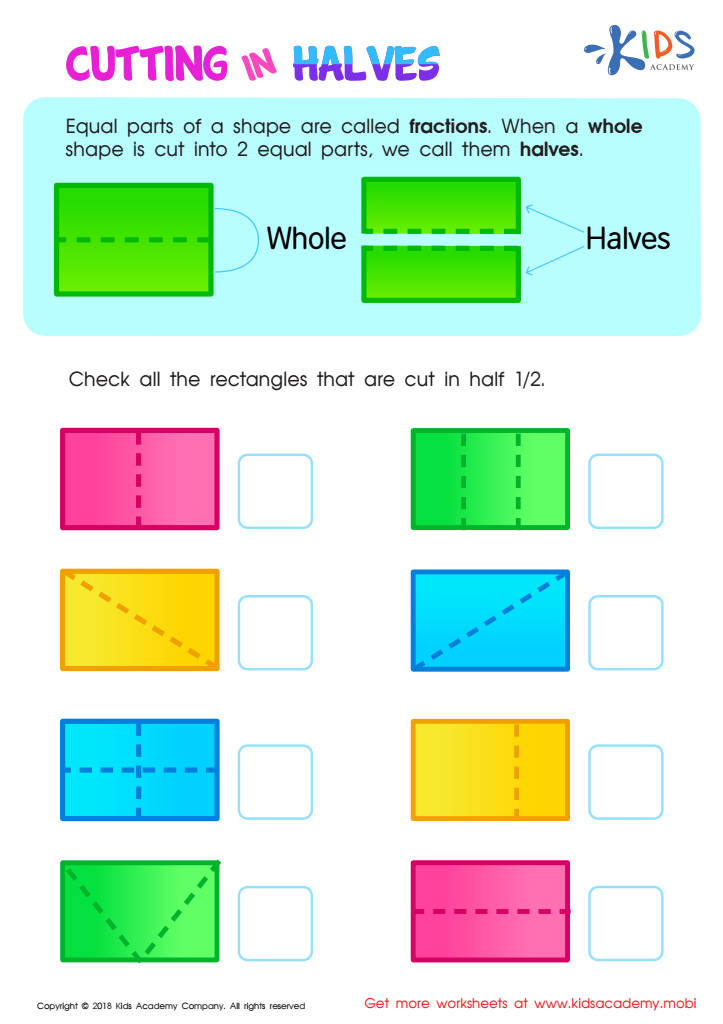
Cutting in Halves Worksheet
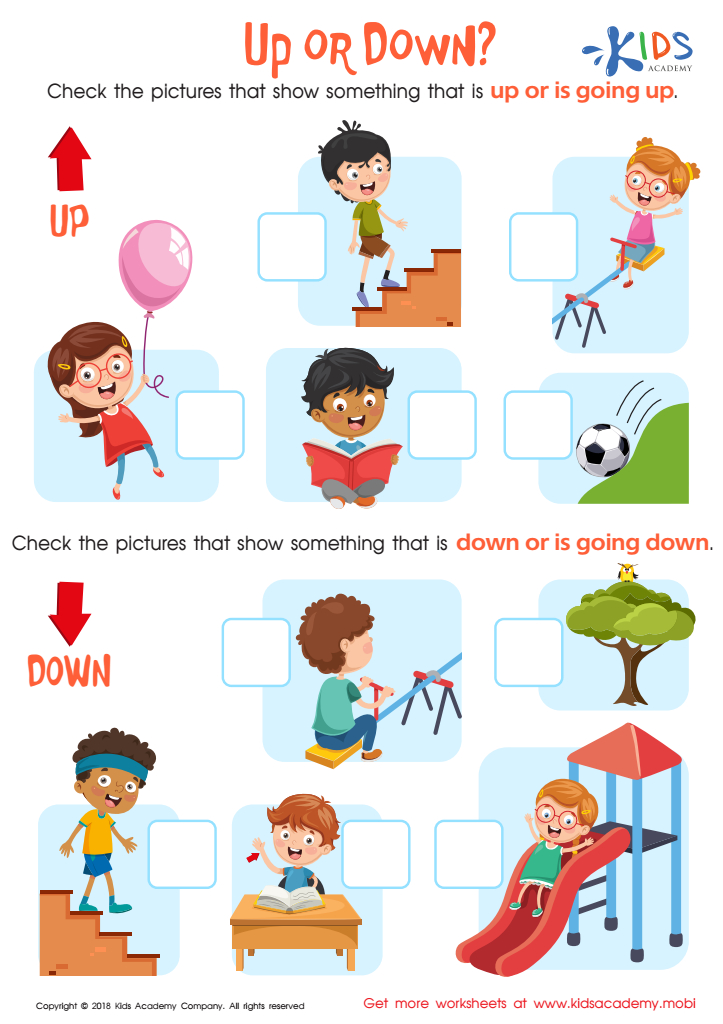
Up or Down Worksheet







Spatial awareness is a crucial aspect of early childhood development that greatly enhances mathematical learning for children aged 3-7. Parents and teachers should prioritize this because spatial skills underpin the understanding of complex mathematical concepts such as geometry, measurement, and problem-solving later on. During early years, children who develop strong spatial awareness can better understand shapes, sizes, positions, and directions, laying the foundation for more advanced mathematical reasoning.
Moreover, developing spatial skills early improves cognitive development. It helps in visualizing and manipulating objects mentally, which is linked to improved performance not just in math but also in science and technology fields. Activities like puzzles, building blocks, and drawing help children recognize patterns and relationships between objects, enhancing their ability to navigate and make sense of their environment.
Encouraging spatial awareness also boosts critical thinking and creativity. Children learn to see patterns, predict outcomes, and devise solutions, which are skills necessary for lifelong learning and adaptation. Ultimately, supporting spatial skills in young children equips them with the tools they need for academic success and gives them confidence to explore and understand the world around them more effectively. Therefore, both parents and educators play vital roles in fostering these essential skills.








