Subtraction skills Math Worksheets for Ages 3-7 - Page 2
27 filtered results
-
From - To
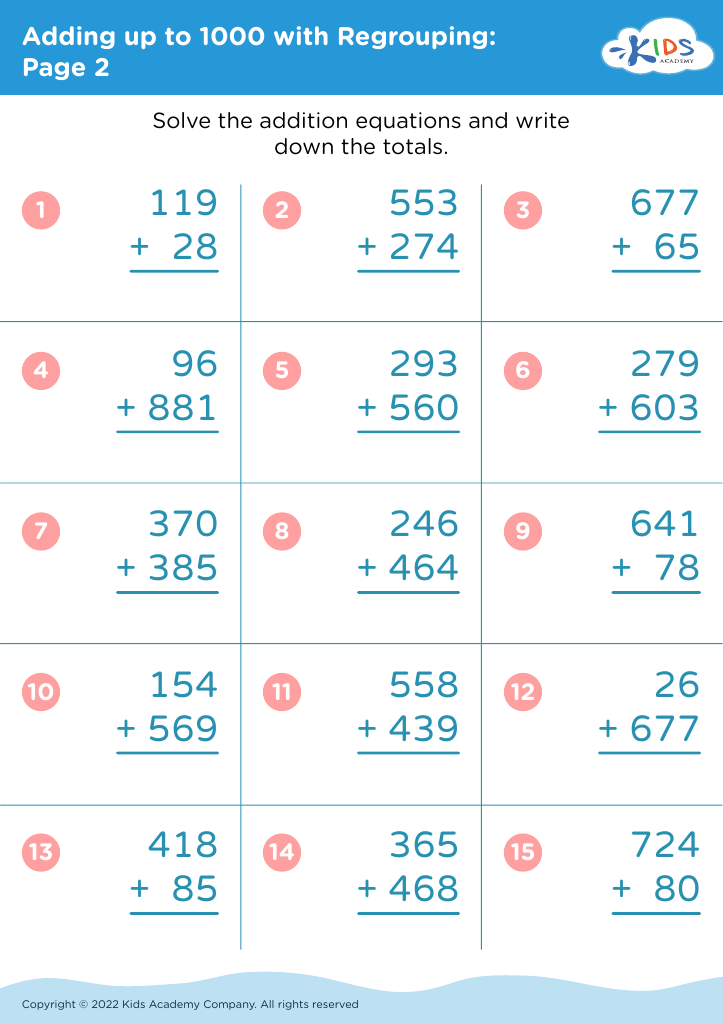
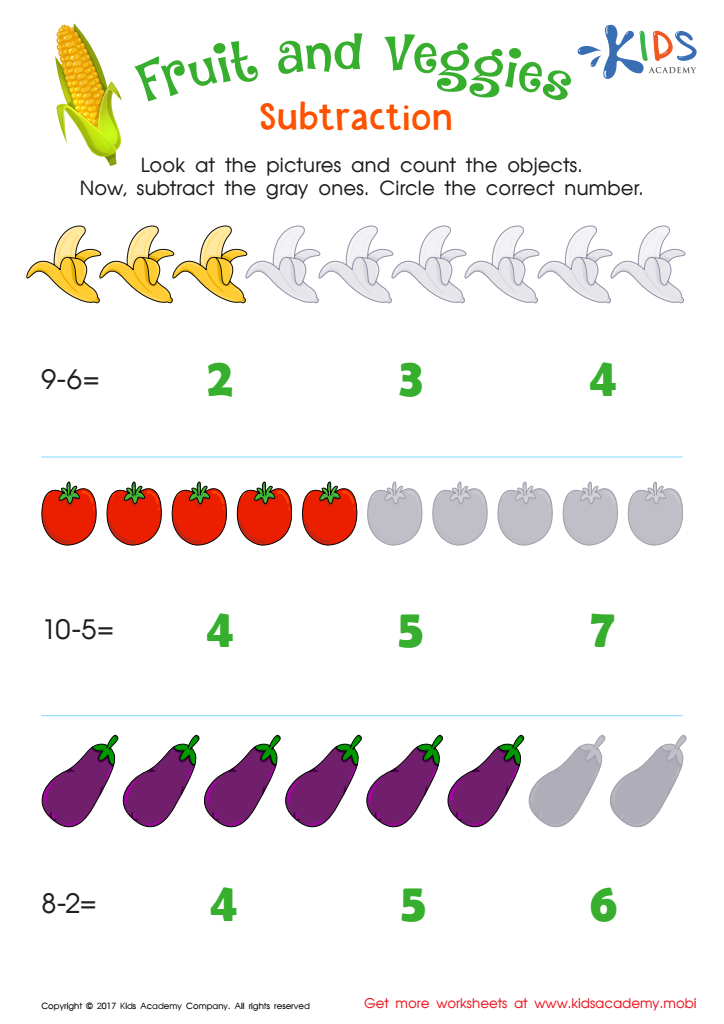
Fruit and Veggies Subtraction Worksheet
 Assign to My Students
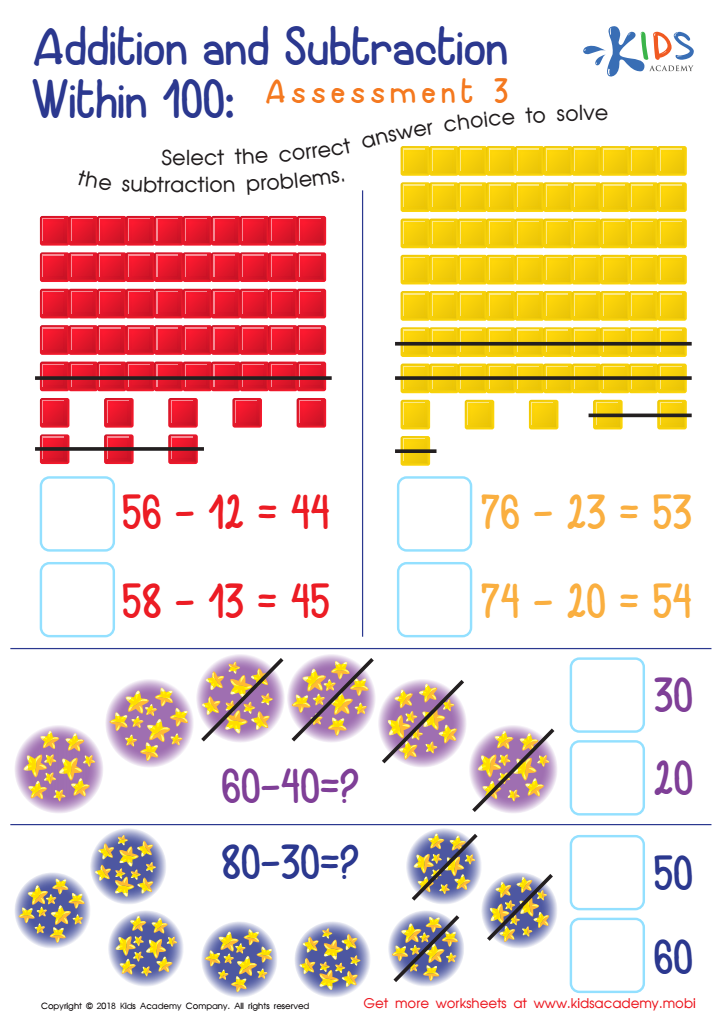
Addition and Subtraction Within 1: Assessment 3 Worksheet







Subtraction skills are fundamental for children ages 3-7, serving as a building block for their overall mathematical understanding and cognitive development. Mastering subtraction helps children develop critical thinking and problem-solving skills, essential not only in math but also in everyday situations. Understanding how to subtract lays the groundwork for future mathematical concepts, such as addition, multiplication, and even division.
Moreover, subtraction fosters a child's ability to understand relationships between quantities, enhancing their spatial awareness and logical reasoning. By engaging with subtraction early on, children learn to recognize patterns and develop an intuitive grasp of numerical concepts. This early exposure can mitigate future learning challenges and foster a positive attitude towards mathematics.
For parents and teachers, nurturing subtraction skills is an opportunity to create a supportive learning environment. Incorporating engaging activities, such as games and hands-on exercises, makes learning enjoyable and promotes retention. Furthermore, children gain confidence in their abilities, directly correlating to their self-esteem and willingness to tackle more complex mathematical concepts later on. In summary, emphasizing subtraction skills during these formative years not only equips children with essential academic skills but also instills a love for learning that can last a lifetime.








