Understanding directions Math Worksheets for Ages 3-7
7 filtered results
-
From - To
Welcome to our "Understanding Directions Math Worksheets" designed for children aged 3-7! These engaging worksheets help young learners grasp essential directional concepts while enhancing their math skills. With fun activities that include identifying directions such as left, right, up, and down, children will develop critical thinking and spatial awareness. Our worksheets combine colorful visuals and simple instructions, making learning enjoyable and effective. Perfect for parents and teachers looking to enrich their child's educational journey, these resources foster essential cognitive skills that pave the way for future learning. Download now and watch your little ones thrive as they master understanding directions!
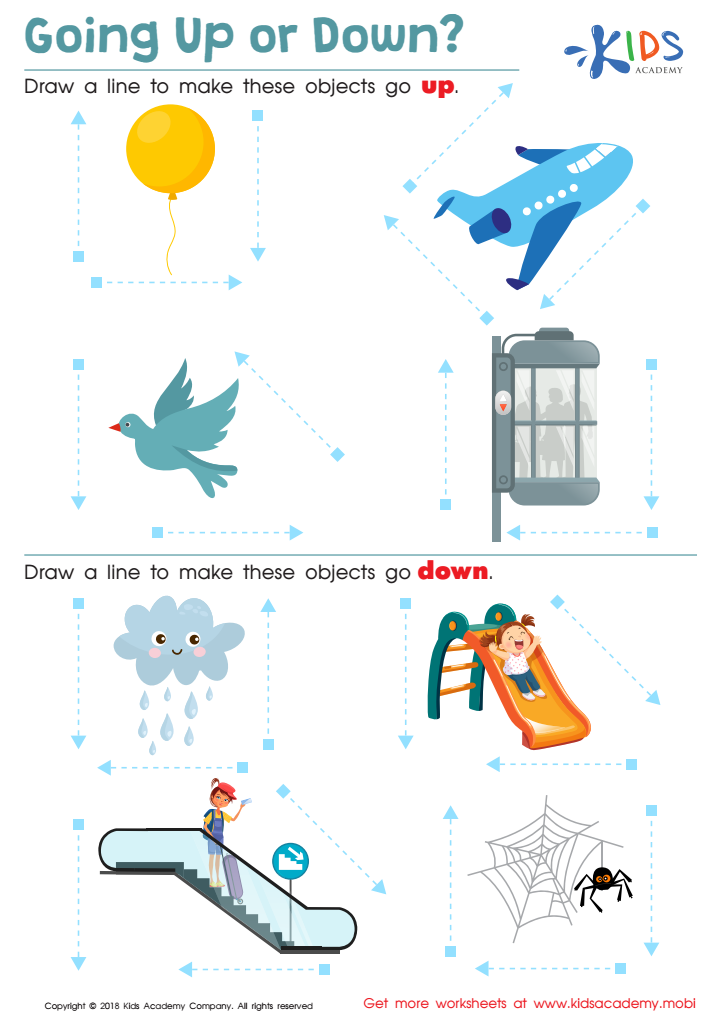
Going up or Down? Worksheet
 Assign to My Students
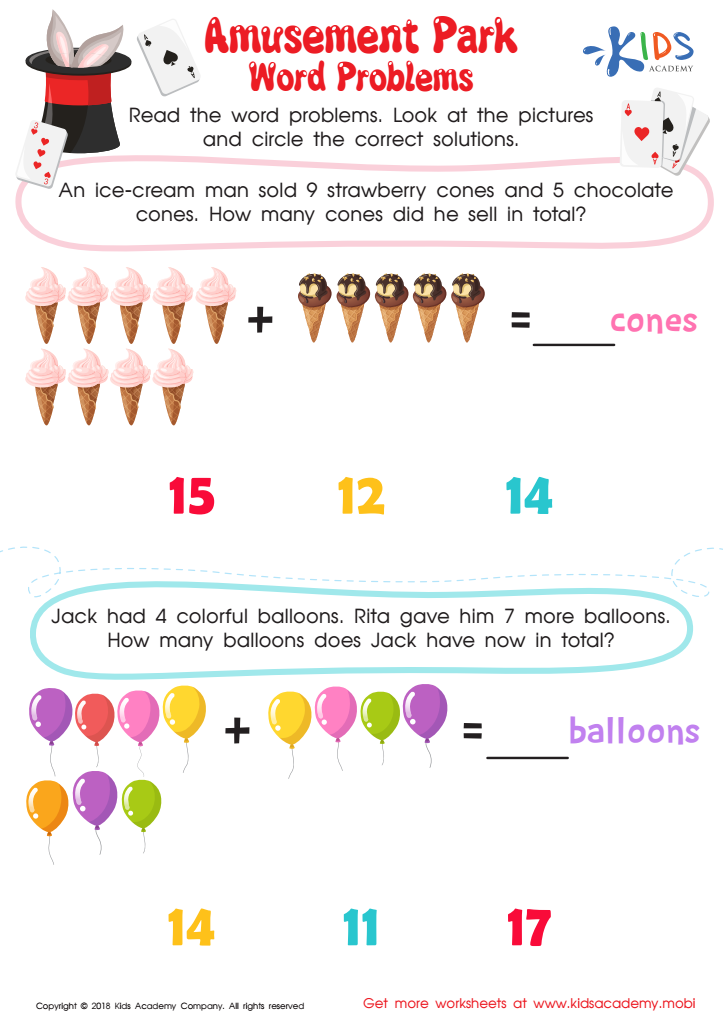
Amusement Park Word Problems Worksheet
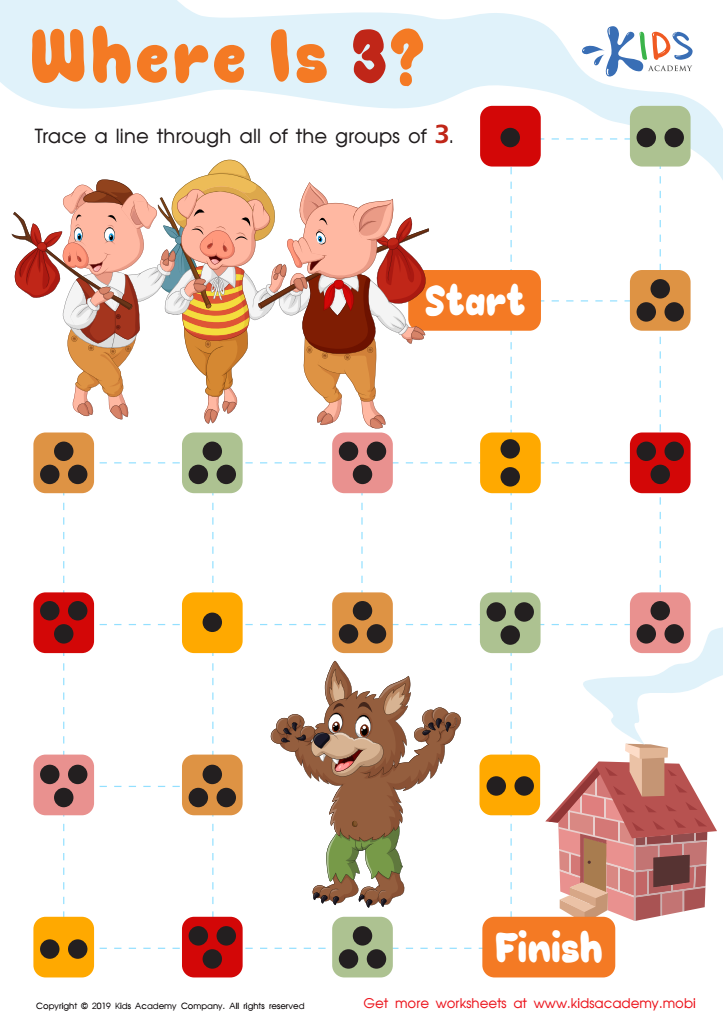
Where Is 3? Worksheet
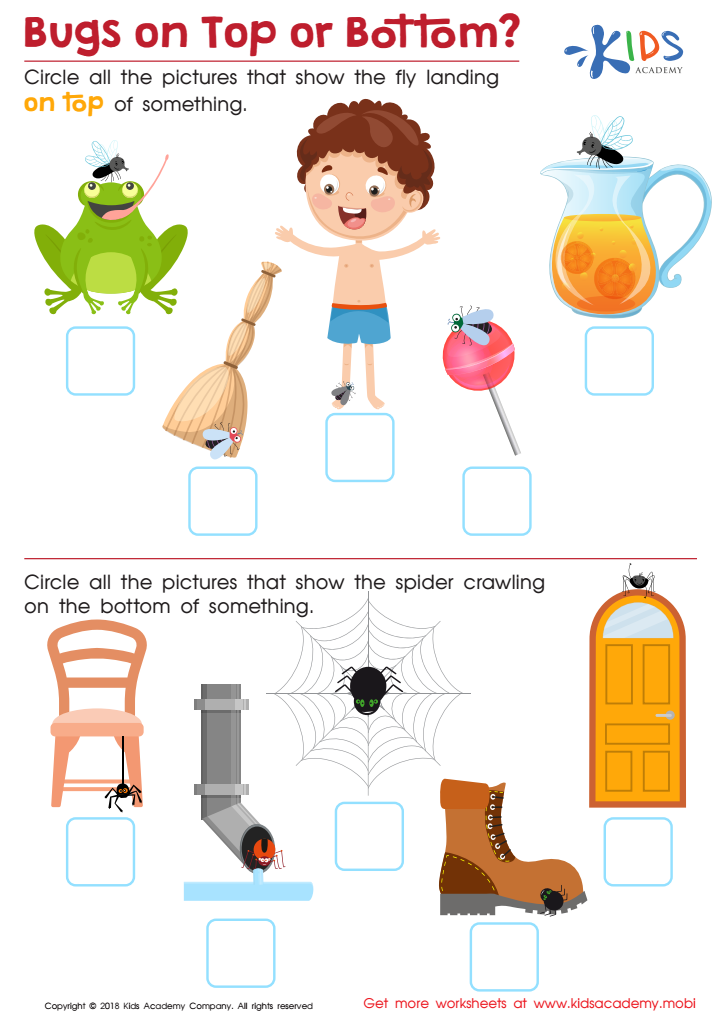
Bugs on Top or Bottom? Worksheet







Understanding directions in math is crucial for young children aged 3-7 as it lays the foundation for their cognitive and problem-solving skills. At this stage, children are naturally curious and eager to explore concepts, making it an ideal time for them to learn how to follow and interpret directions in mathematical contexts.
When parents and teachers emphasize the importance of directions in math, they help children develop logical thinking and comprehension. Clear understanding of directions enables children to solve problems independently, promoting critical thinking and confidence. For instance, following verbal or written steps helps in mastering basic concepts such as counting, shapes, and simple addition or subtraction.
Additionally, this skill nurtures a sense of sequencing and organization, which is not just vital for math but for overall learning. Children who understand how to follow directions learn to approach tasks methodically, helping in later academic success.
Moreover, understanding directions fosters effective communication: children learn to ask questions and clarify when confused, crucial skills for collaborative learning. In essence, investing time in teaching young children how to understand mathematical directions ensures a strong educational foundation that will benefit them across all subjects in their academic journey and beyond.








