Understanding fractions Math Worksheets for Ages 3-7 - Page 9
198 filtered results
-
From - To



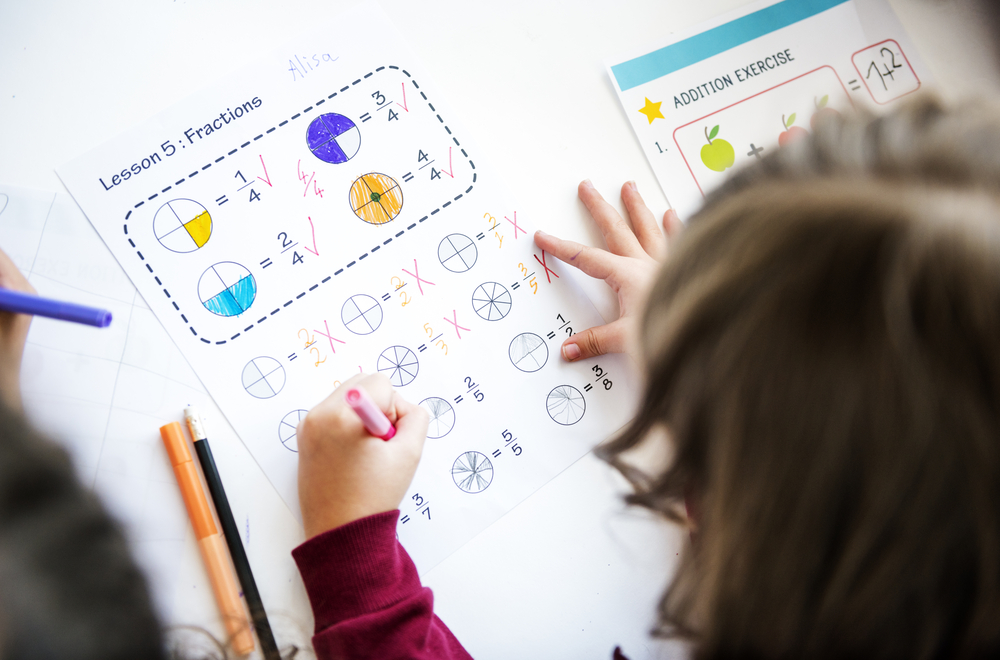

Understanding fractions is crucial for children aged 3-7, as it lays a foundation for future mathematical concepts and real-life applications. At this early stage, children are naturally curious and open to exploring mathematical ideas through play. Introducing fractions through engaging activities fosters cognitive development and helps them grasp essential mathematical concepts in an intuitive way.
Learning about fractions enhances critical thinking and problem-solving skills. For instance, when children divide a pizza or share toys, they are unknowingly applying fractional concepts, which allows them to understand sharing, fairness, and measurement—skills essential not only in math but in everyday life.
Moreover, understanding fractions helps develop their numerical literacy. As they progress to higher grades, a solid grasp of fractions is vital for more complex math concepts, including ratios, proportions, and decimals, equipping them for success in academia.
Teachers and parents play a crucial role in promoting this understanding by incorporating fractions into everyday activities and creating a supportive learning environment. When children see fractions in context, it enhances their engagement and boosts their confidence in math, setting them on a positive path toward their educational journey. Therefore, fostering comprehension of fractions is an investment in their bright future.








