Problem Solving Subtraction Worksheets for Ages 3-7
3 filtered results
-
From - To
Introduce your young learners to the world of math with our Problem Solving Subtraction Worksheets for Ages 3-7. These expertly designed worksheets from Kids Academy not only enhance subtraction skills but also develop critical thinking and problem-solving abilities. Suitable for preschoolers to second graders, each worksheet offers engaging exercises that keep children entertained while they learn. Colorful illustrations combined with age-appropriate challenges make practice enjoyable and effective. Perfect for both classroom and home settings, these worksheets provide the ideal foundation for a lifelong love of math. Watch as your child gains confidence and mastery in subtraction while having fun!
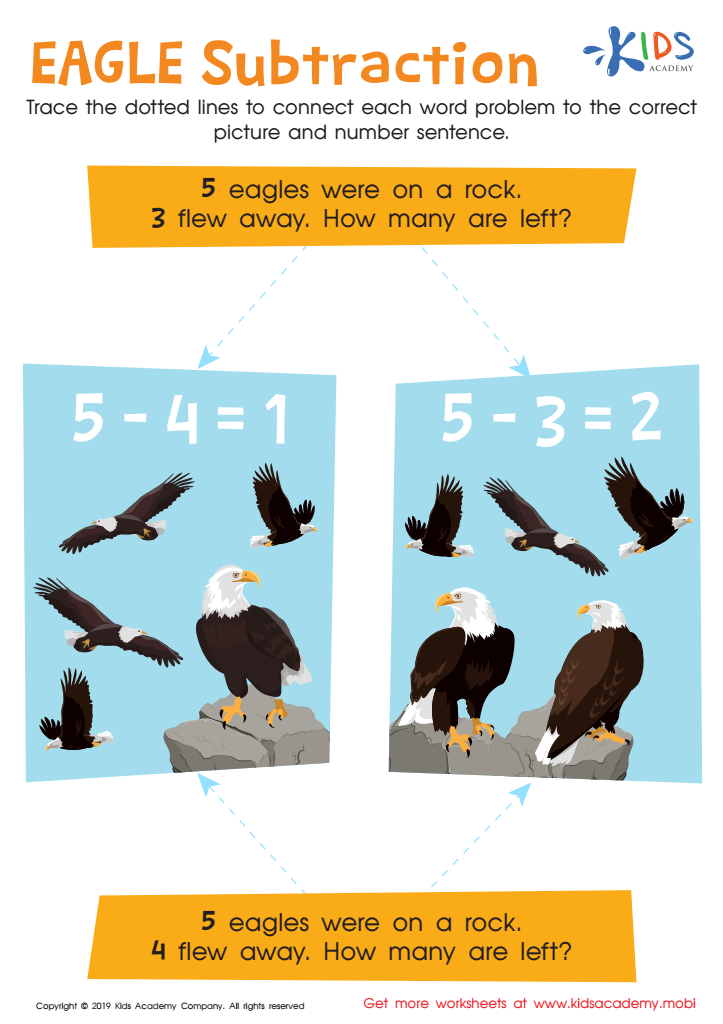
Eagle Subtraction Worksheet
 Assign to My Students
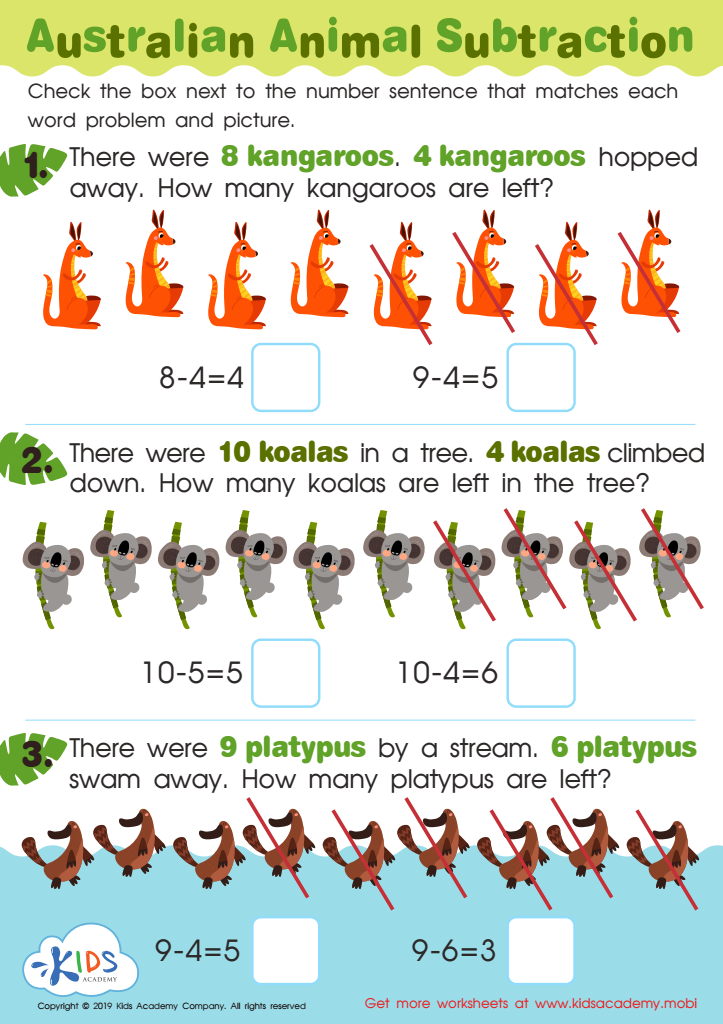
Australian Animal Subtraction Worksheet
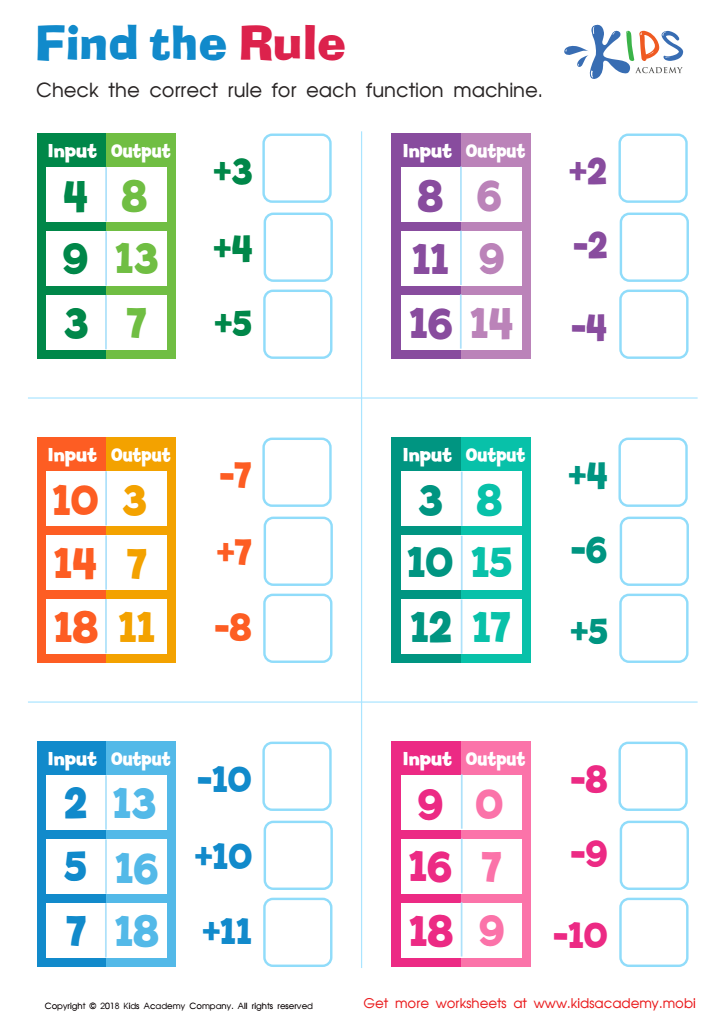
Find the Rule Worksheet








Problem-solving subtraction for children ages 3-7 is essential because it lays the foundation for critical thinking and mathematical understanding. At this young age, kids are developing not just their numerical skills but also their ability to manage and solve real-world problems. By introducing subtraction in various contexts through problem-solving exercises, children learn to recognize patterns, understand quantity changes, and apply logical reasoning. This early mastery can boost their confidence, making them more willing to tackle complex problems in the future.
Engaging young children in problem-solving subtraction also supports the development of other crucial skills. For instance, it enhances their attention to detail, fosters perseverance, and encourages strategic thinking. In real-life scenarios, subtraction helps kids grasp concepts like sharing items fairly, understanding time, and managing simple finances, which empowers their everyday decision-making.
Moreover, making these activities interactive and fun, using toys, drawings, or storytelling, ensures that learning subtraction isn't seen as a chore but an enjoyable challenge. By fostering a positive mindset towards mathematics early on, parents and teachers can help cultivate a lifelong appreciation for learning and problem-solving, setting the stage for academic success and intelligent decision-making in the future.








