Animal knowledge Reading Non-Fiction Worksheets for Ages 3-7
3 filtered results
-
From - To
Explore our engaging "Animal Knowledge Reading Non-Fiction Worksheets" designed for children ages 3-7! These worksheets combine fun and learning, helping young readers discover the fascinating world of animals through captivating facts and illustrations. Perfect for both home and classroom settings, our resources enhance reading comprehension, vocabulary skills, and critical thinking. With age-appropriate content and interactive activities, children will develop a deeper understanding of various animal species and their habitats. Ideal for promoting a love for reading and nature, these worksheets make learning about animals an enjoyable adventure. Dive in and inspire curiosity today!
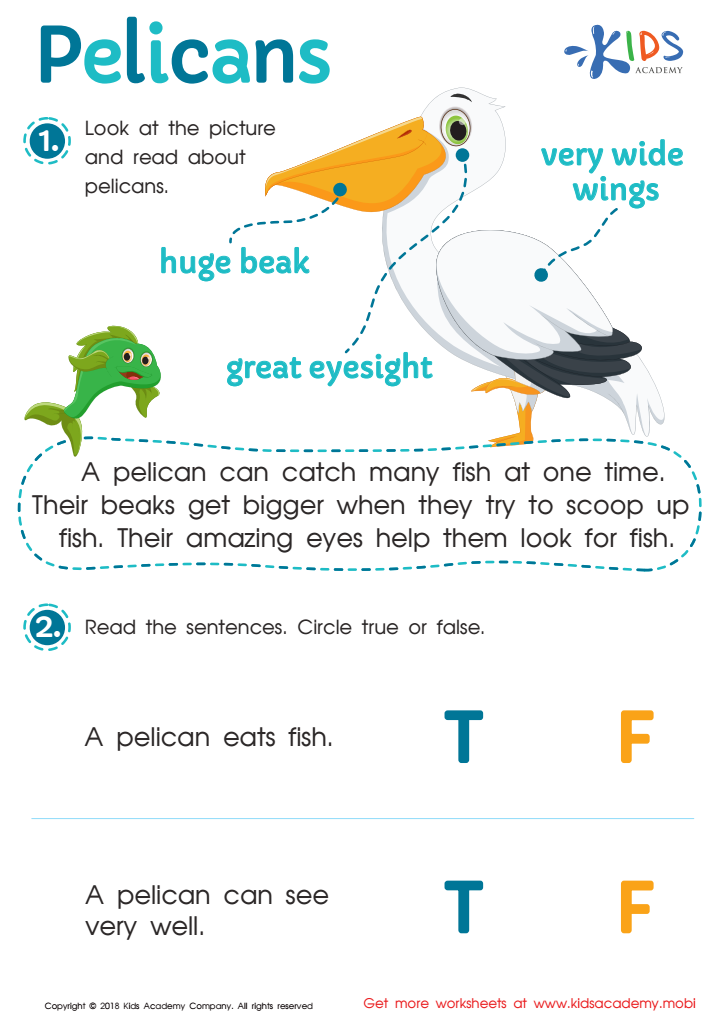
Pelicans Worksheet
 Assign to My Students
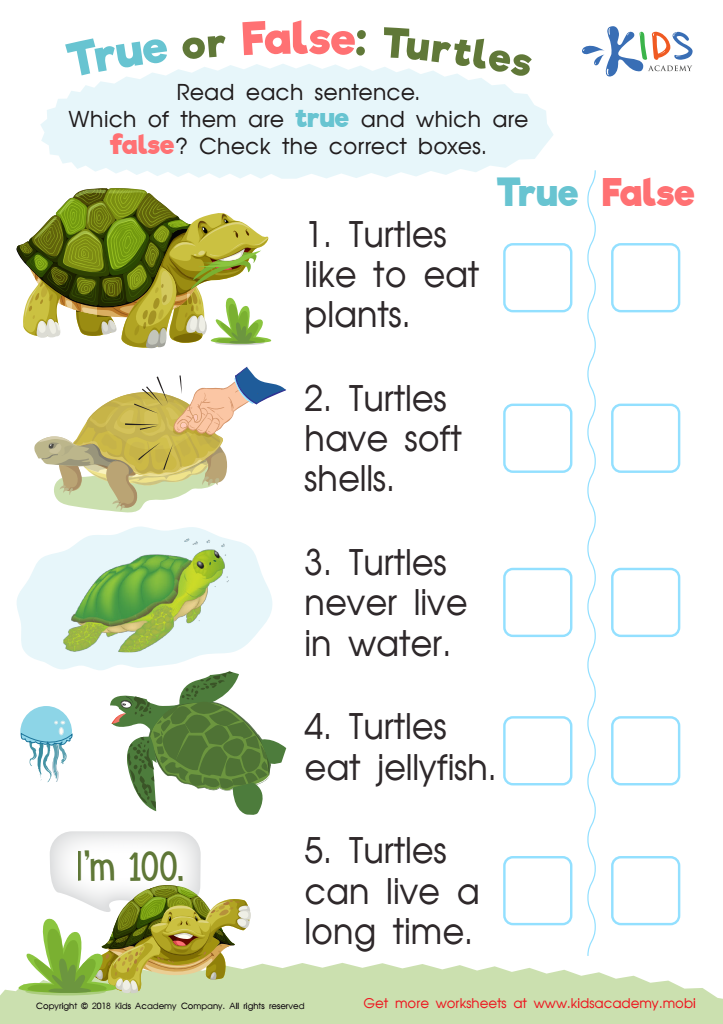
True or False: Turtles Worksheet
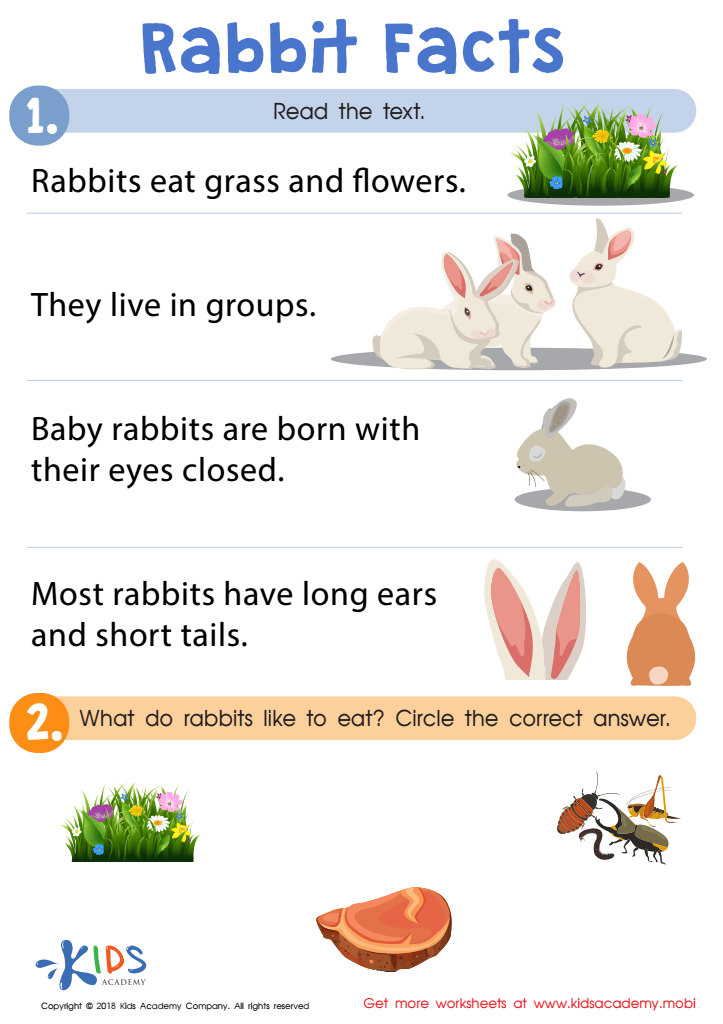
Rabbit Facts Worksheet








Animal knowledge plays a crucial role in the cognitive and emotional development of children aged 3-7. Engaging with non-fiction literature about animals encourages curiosity, enhances vocabulary, and fosters a love for learning. At this age, children are naturally inquisitive; introducing them to books that explore various animal habitats, behaviors, and lifecycles provides answers to their questions while stimulating their imagination.
Non-fiction reading helps develop critical thinking skills by encouraging children to analyze, compare, and synthesize information about the animal kingdom. This not only broadens their understanding of biology and natural sciences but also teaches them to appreciate the diversity of life. Additionally, learning about animals can instill empathy and compassion, as children understand that animals also experience emotions and have roles in the ecosystem.
For parents and teachers, fostering animal knowledge through non-fiction materials lays the groundwork for more complex academic skills later on. As children develop a strong understanding of factual concepts and improve their reading comprehension, they build essential literacy foundations. Furthermore, exploring such topics together nurtures bonds between adults and children, making learning a shared and enjoyable experience, which is vital at these formative ages.








