Enhancing observation skills Reading Non-Fiction Worksheets for Ages 3-7
3 filtered results
-
From - To
Boost your child's observation skills with our engaging non-fiction reading worksheets designed for ages 3-7. These activity sheets from Kids Academy focus on developing keen observational abilities while reading informative texts. Each colorful worksheet features fun and educational themes, encouraging kids to identify details, answer questions, and discuss what they see and read. By promoting active engagement and critical thinking, these activities help young learners enhance their comprehension and attention to detail, setting a strong foundation for future academic success. Empower your child’s learning journey with Kids Academy’s expertly crafted observation skills worksheets!
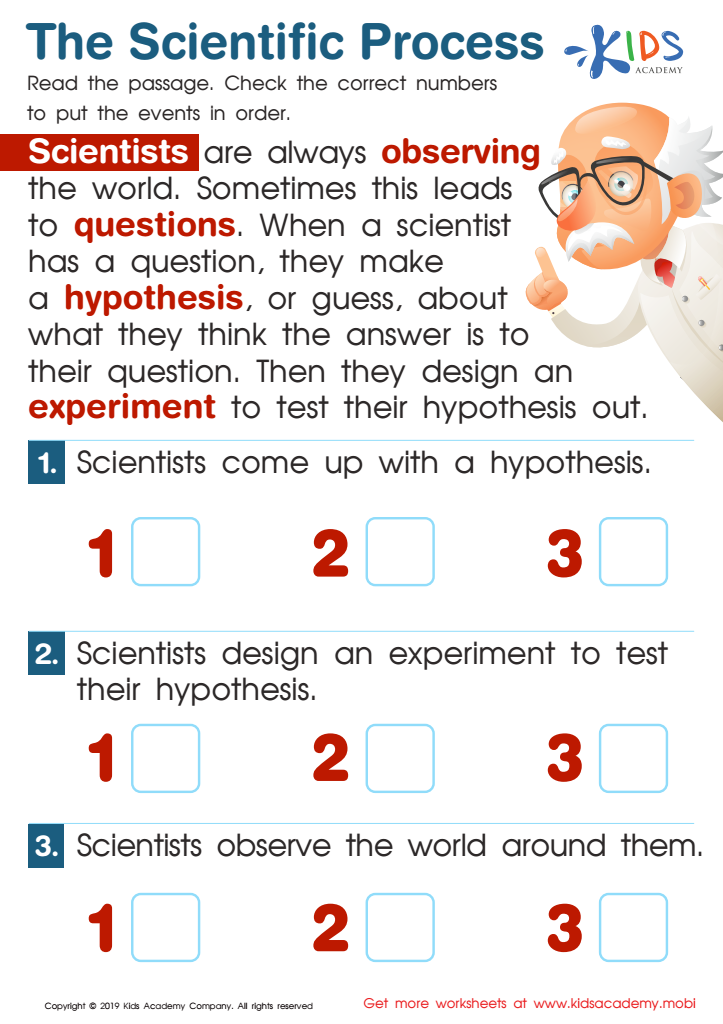
The Scientific Process Worksheet
 Assign to My Students
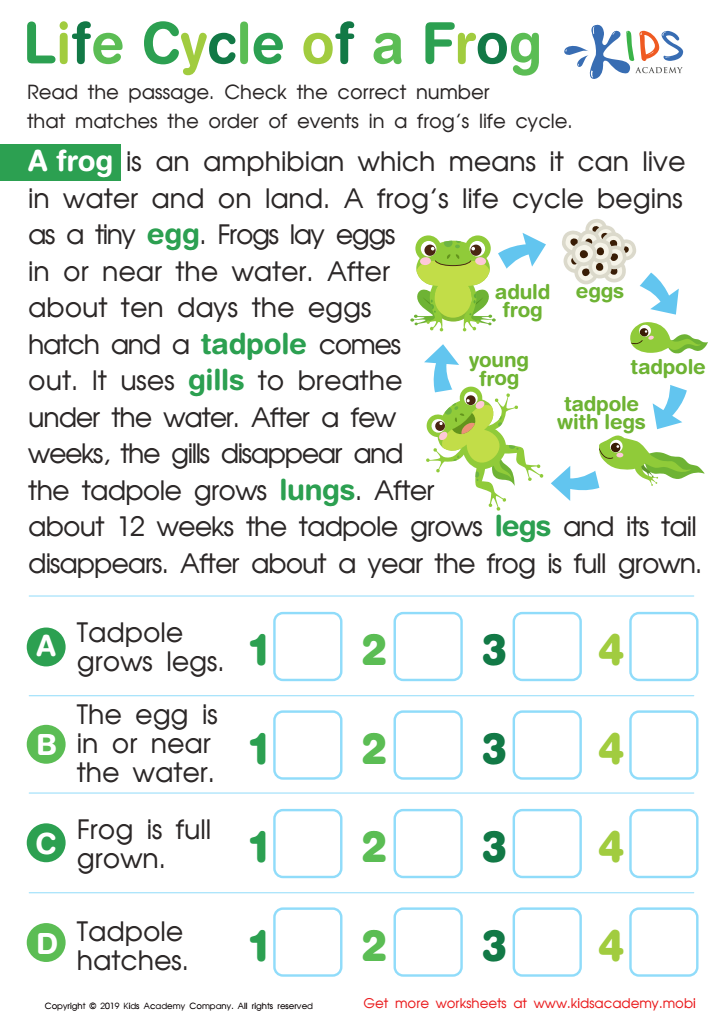
Life Cycle of a Frog Worksheet
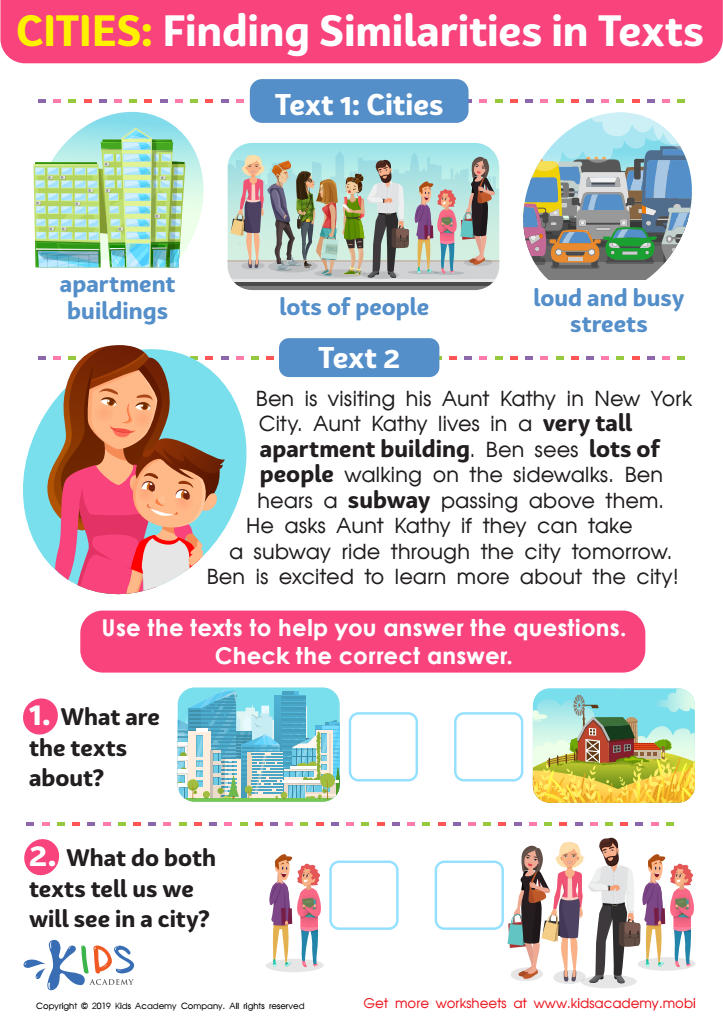
Cities: Finding Similarities Worksheet








Parents and teachers should prioritize enhancing observation skills through reading non-fiction for children aged 3-7 because it lays a robust foundation for their cognitive and academic development. At this tender age, children's brains are exceptionally receptive and curious about the world around them. Engaging them in non-fiction reading sharpens their ability to notice details, identify patterns, and comprehend real-world concepts, feeding their natural curiosity with factual information.
By fostering strong observation skills, children learn to focus and retain information better, aiding in their overall comprehension and critical thinking. When they observe closely, they can connect dots between what they see and what they read, leading to a deeper understanding of the material. Additionally, non-fiction books cover a plethora of topics, from animals to space, which can dramatically expand their vocabulary and general knowledge.
Moreover, these skills are fundamental in other areas of learning, such as science and mathematics, where reasoning and detailed analysis are crucial. As young learners practice observing and making sense of facts and phenomena, they develop persistence, attention to detail, and enthusiasm for discovery, traits that are vital for lifelong learning. Therefore, promoting non-fiction reading helps in building key skills that are essential in both academic settings and everyday life.








