Historical Knowledge Reading Non-Fiction Worksheets for Ages 3-7
5 filtered results
-
From - To
Explore the rich world of history with our engaging Historical Knowledge Reading Non-Fiction Worksheets for Ages 3-7. Designed to foster curiosity and critical thinking in young learners, these printable worksheets introduce children to essential historical events, figures, and concepts. Each worksheet incorporates age-appropriate non-fiction texts with vivid illustrations and interactive activities to reinforce comprehension and retention. Ideal for both classroom and home use, these resources support early literacy skills while sparking a love for history. Ensure your child builds a solid foundation of historical knowledge in a fun and educational way. Discover more at Kid's Academy!
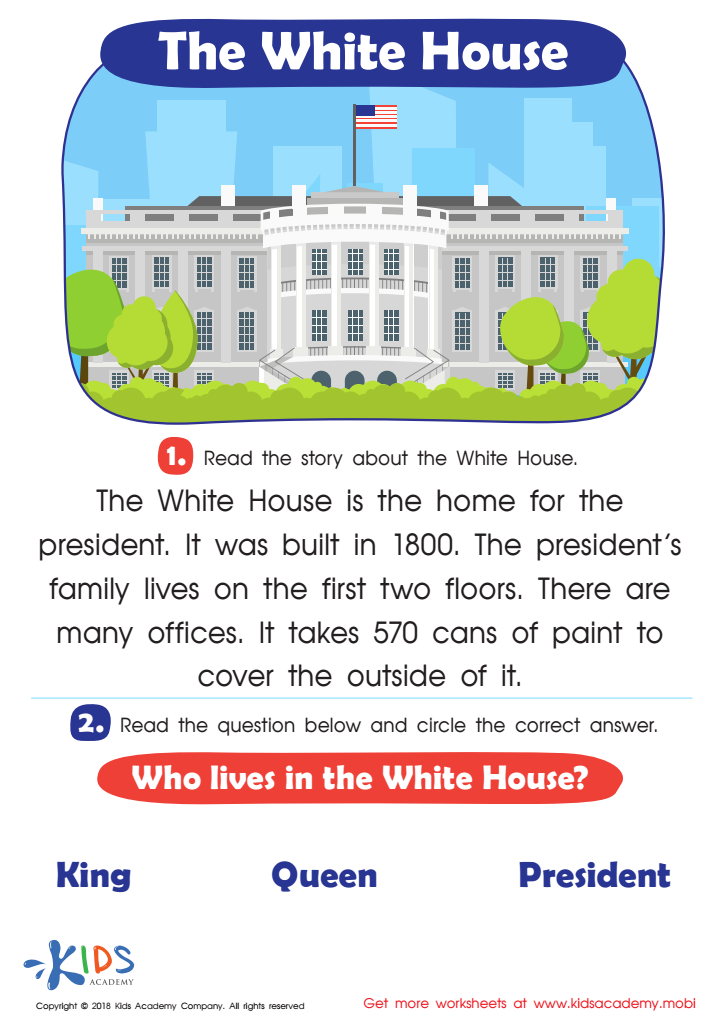
White House Worksheet
 Assign to My Students
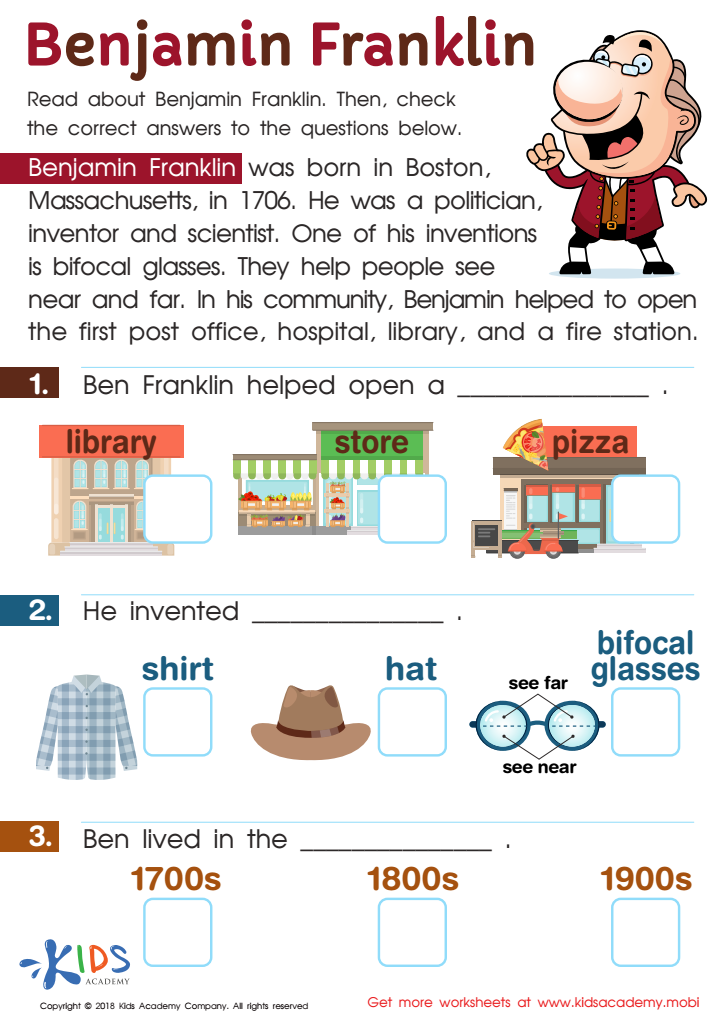
Benjamin Franklin Worksheet
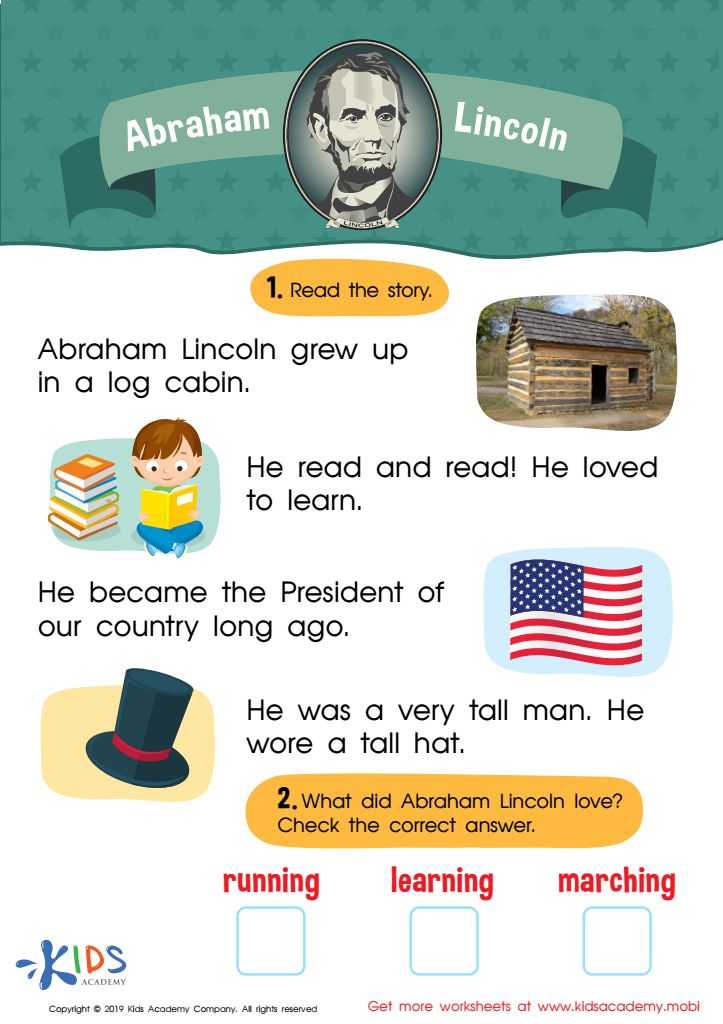
Abraham Lincoln Worksheet
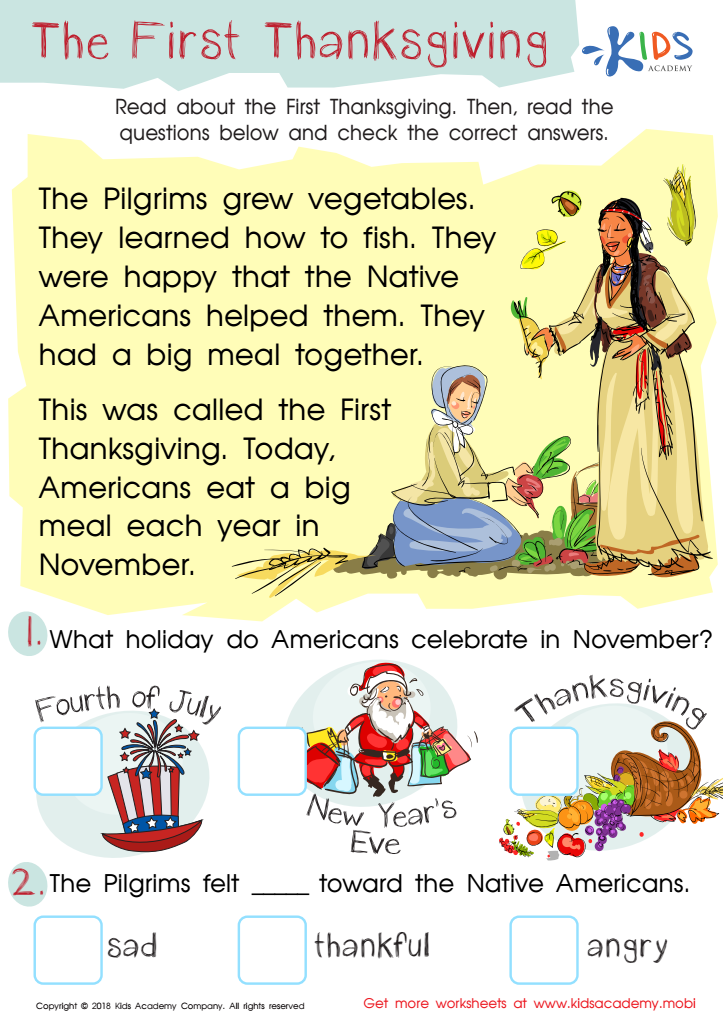
Assessment: First Thanksgiving Worksheet
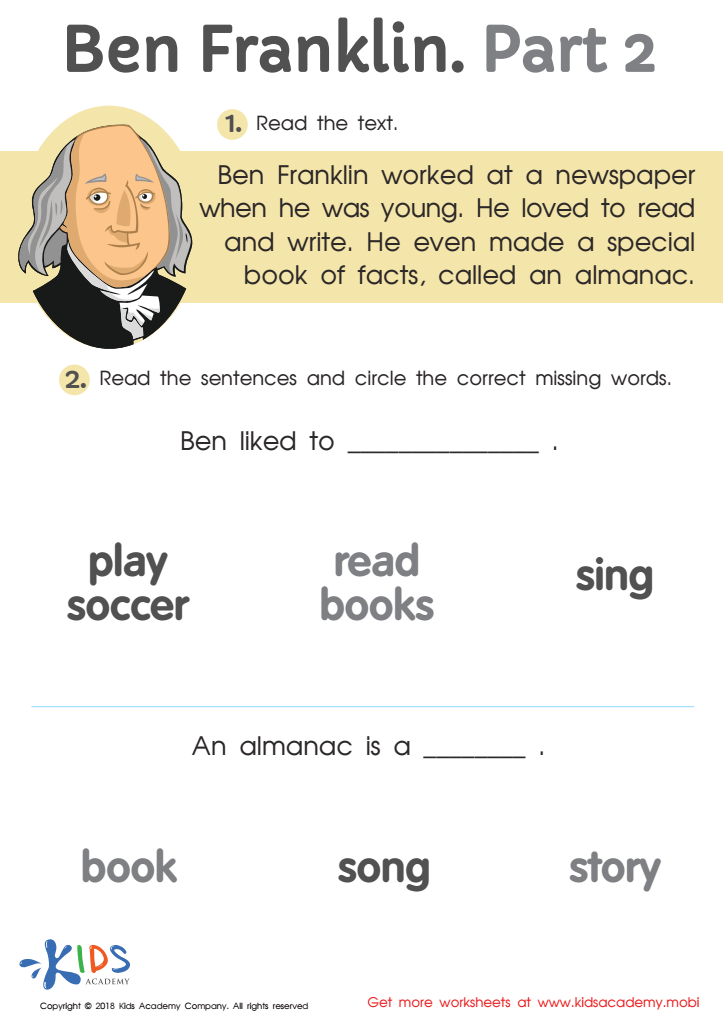
Ben Franklin Part 2 Worksheet








Parents and teachers should prioritize historical knowledge through non-fiction reading for children aged 3-7 as it lays the foundation for a lifelong interest in learning and critical thinking. During these formative years, children's brains are highly receptive to new information, and exposure to non-fiction texts can significantly broaden their understanding of the world. By reading age-appropriate historical non-fiction, children become familiar with pivotal events, diverse cultures, and influential figures, fostering a sense of curiosity and awareness about the past.
Integrating historical content helps develop essential literacy skills, including vocabulary, comprehension, and critical analysis. Real-world stories can also make abstract concepts more tangible, aiding cognitive development. Historical narratives not only inform but also instill empathy, as children learn about different people's experiences and struggles throughout history, encouraging a deeper understanding of humanity and moral values.
Moreover, parents and teachers instill a mindset that values accuracy, evidence, and reason by engaging young minds with factual texts. This foundational knowledge prepares children for advanced education by equipping them with the tools needed to explore and appreciate history's complexities.
In essence, introducing young children to historical non-fiction nurtures informed, empathetic, and thoughtful individuals, capable of making connections between the past and present, thus better preparing them to navigate the future.








