Logical Reasoning Reading Non-Fiction Worksheets for Ages 3-7
3 filtered results
-
From - To
Unlock your child's potential with our "Logical Reasoning Reading Non-Fiction Worksheets for Ages 3-7"! Developed to enhance critical thinking, these engaging worksheets combine reading with logic exercises designed to captivate young minds. Each activity challenges kids to draw connections and make inferences, fostering essential skills such as problem-solving and comprehension. Perfect for both home and classroom settings, our resources offer a fun, educational experience that keeps young learners motivated and curious. Elevate your child's learning journey with these thoughtfully crafted worksheets from Kids Academy—where discovery and education go hand in hand!

Dogs, Dogs Worksheet
 Assign to My Students
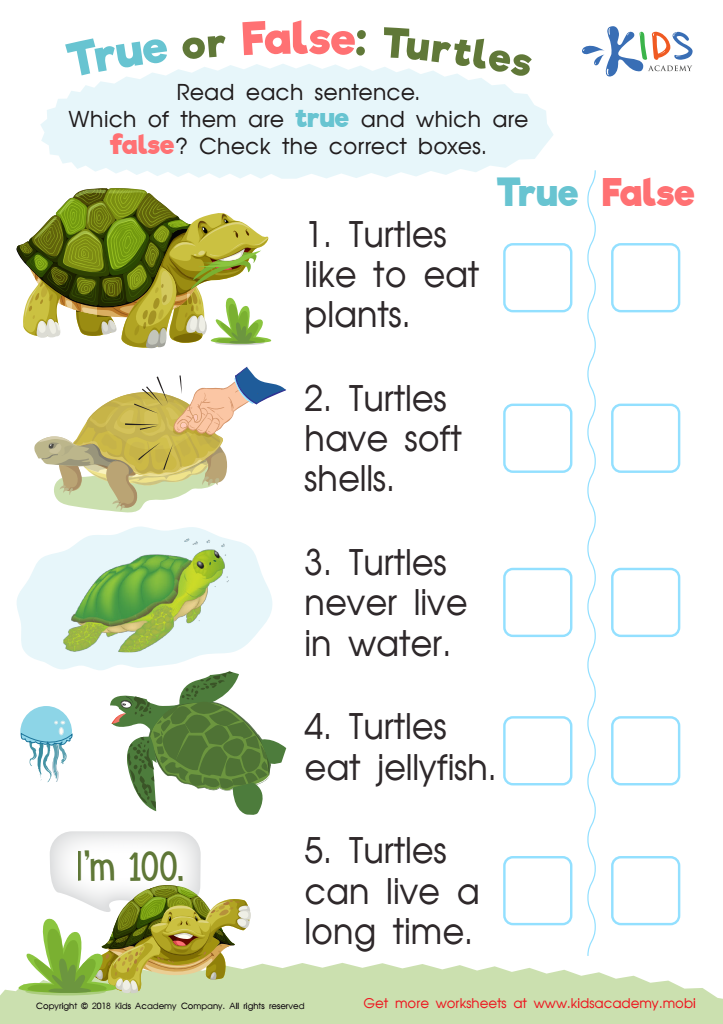
True or False: Turtles Worksheet
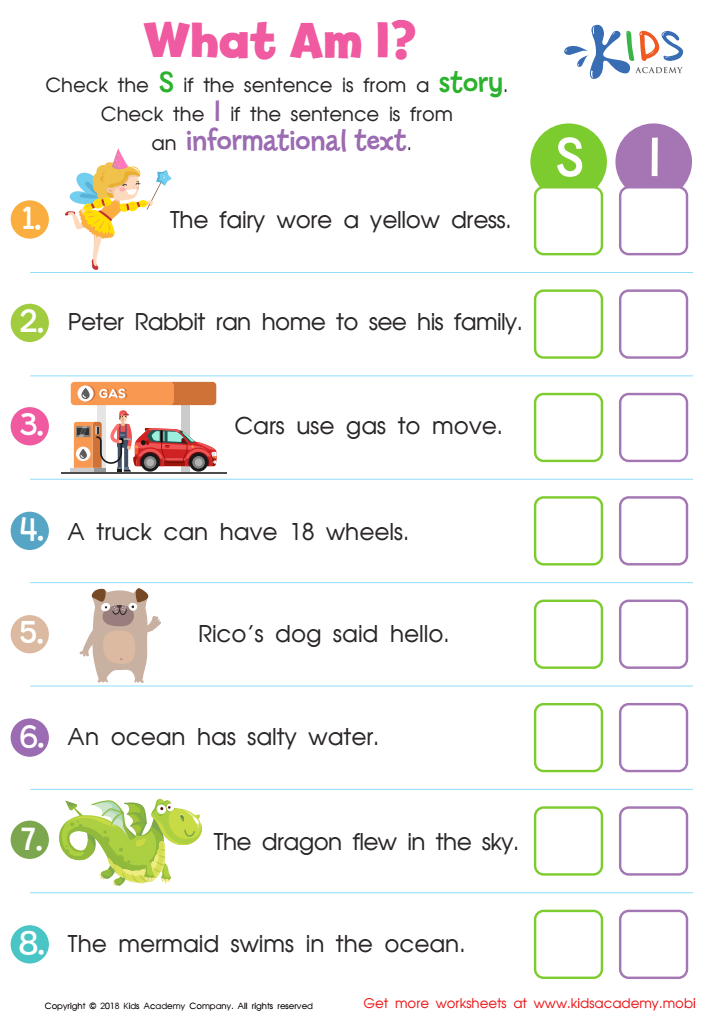
What Am I? Worksheet








Parents and teachers should prioritize logical reasoning and non-fiction reading for children ages 3-7 because these skills lay a strong foundation for future academic success and personal development. At this formative stage, children’s cognitive abilities are rapidly developing. Encouraging logical reasoning aids in enhancing their problem-solving skills, which is crucial for understanding complex concepts later in life. It helps children to analyze situations, make connections, and draw conclusions based on evidence rather than guesswork.
Reading non-fiction at a young age is equally important because it exposes children to factual content and a variety of subjects such as science, history, and the world around them. This type of reading not only broadens their knowledge base but also stimulates their curiosity and love for learning. Moreover, non-fiction reading improves vocabulary and comprehension skills, enabling children to understand and interact with the informative material that will dominate their academic journeys.
Together, logical reasoning and non-fiction reading cultivate critical thinking and a sense of inquiry that will be essential in all areas of learning and decision-making. By investing in these skills early on, parents and teachers can help children build a solid intellectual foundation, preparing them for a lifetime of informed thinking and learning.








