Reading Skills Reading Non-Fiction Worksheets for Ages 3-7
3 filtered results
-
From - To
Enhance your child’s literacy with our engaging Reading Non-Fiction Worksheets, designed for young learners ages 3-7. These expertly crafted worksheets ignite curiosity and build fundamental reading skills by exploring interesting topics. Packed with colorful images and simple text, they help children understand and interpret non-fiction material. Activities encourage critical thinking, boost comprehension, and expand vocabulary, setting a strong foundation for future academic success. Perfect for parents and educators, our worksheets make learning enjoyable and effective. Download now to support your child’s reading journey with fun and educational non-fiction content!
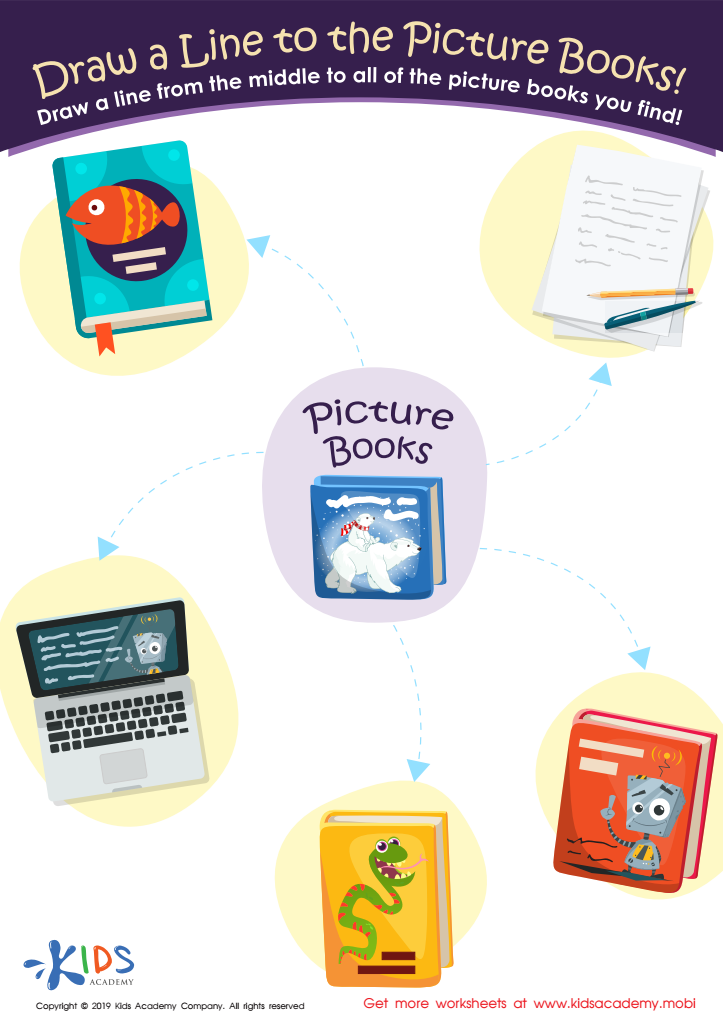
Draw a Line to the Picture Books Worksheet
 Assign to My Students
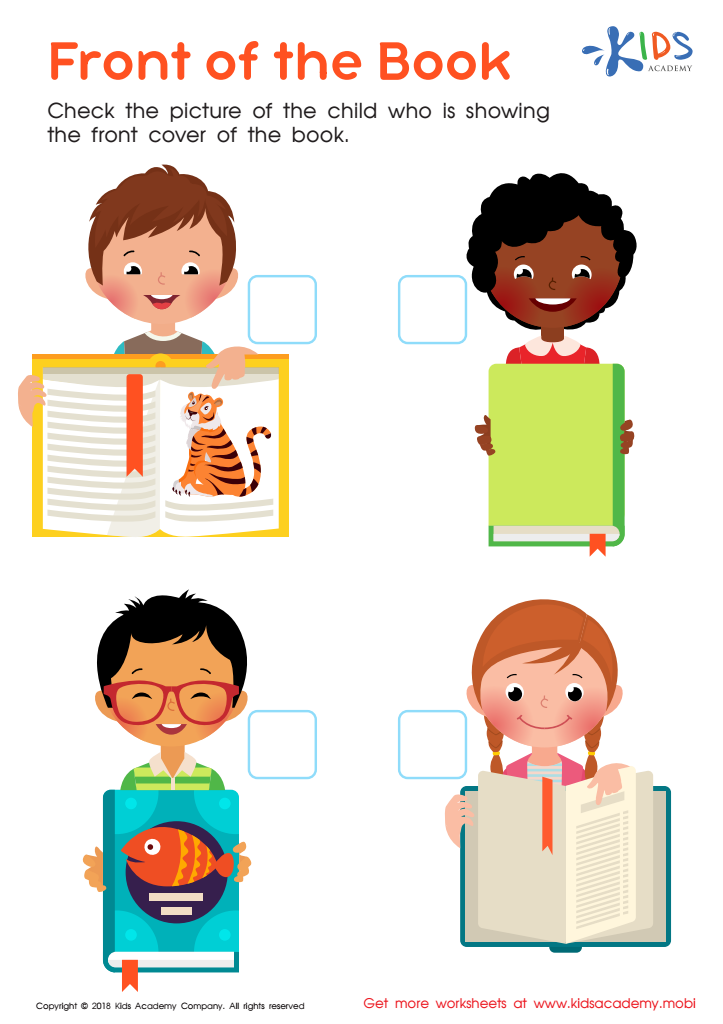
Front of the Book Worksheet
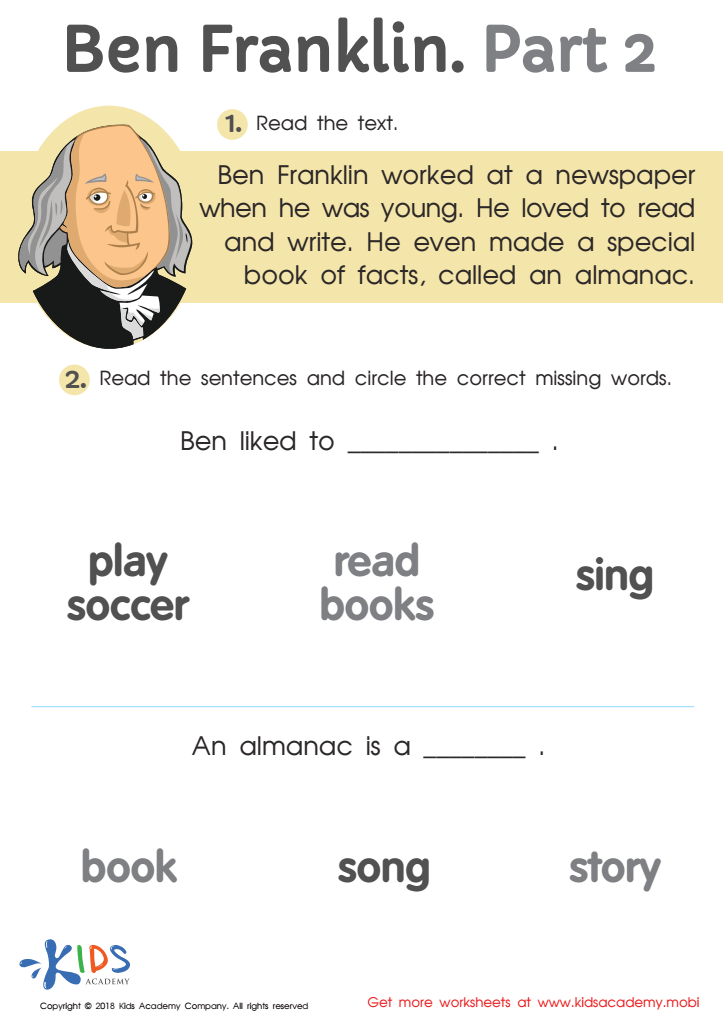
Ben Franklin Part 2 Worksheet








Reading skills are fundamental to a child's academic and personal development, and focusing on reading non-fiction from ages 3-7 is crucial for several reasons. Non-fiction books provide young readers with factual information about the world around them, building their knowledge base on everything from animals to space to cultural traditions. This type of content helps to quench their natural curiosity and fosters a habit of wanting to learn more about diverse subjects.
Reading non-fiction also improves vocabulary and comprehension skills. These books often introduce words and concepts that are specific and technical, requiring children to understand and think critically about the information presented. This exposure can enhance language development, helping children to articulate thoughts more effectively.
Furthermore, engaging with non-fiction supports the development of analytical thinking. As children differentiate between fantasy and reality, they learn to question, infer, and understand the importance of evidence-based information. This is hoped to pave the way for future academic pursuits in various fields like science, history, and geography.
Lastly, reading non-fiction can inspire real-world connections and activities. Children often find joy in learning about subjects they can observe or interact with in their daily lives, thus reinforcing the learning experience and making it more meaningful and enduring. For parents and teachers, nurturing these skills early helps set the stage for lifelong learning and a greater appreciation of the world.








