Understanding life cycles Reading Non-Fiction Worksheets for Ages 3-7
3 filtered results
-
From - To
Explore the fascinating world of life cycles with our engaging non-fiction worksheets designed for children ages 3-7! Our thoughtfully crafted resources introduce young learners to the stages of life for different plants and animals, fostering curiosity and understanding of nature. Each worksheet promotes critical thinking and vocabulary development through age-appropriate content and interactive activities. Ideal for both classroom instruction and home learning, these worksheets encourage children to observe, ask questions, and connect with the natural world. Enhance your child's literacy skills while they discover the amazing processes of growth, change, and transformation. Dive into a delightful learning experience today!
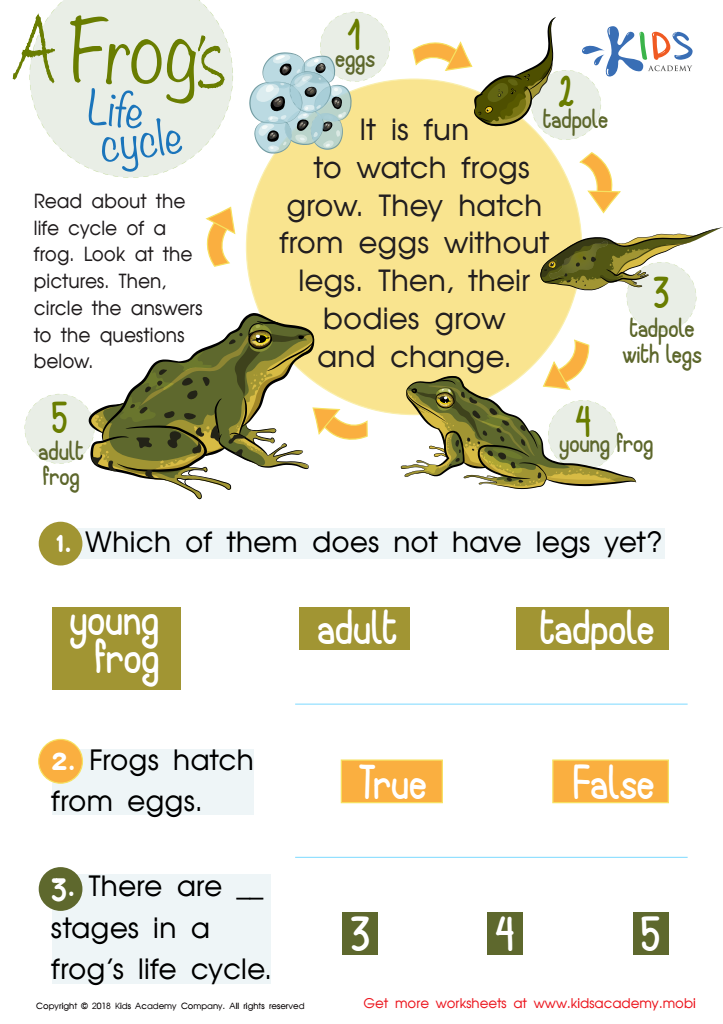
A Frog’s Life Cycle Worksheet
 Assign to My Students
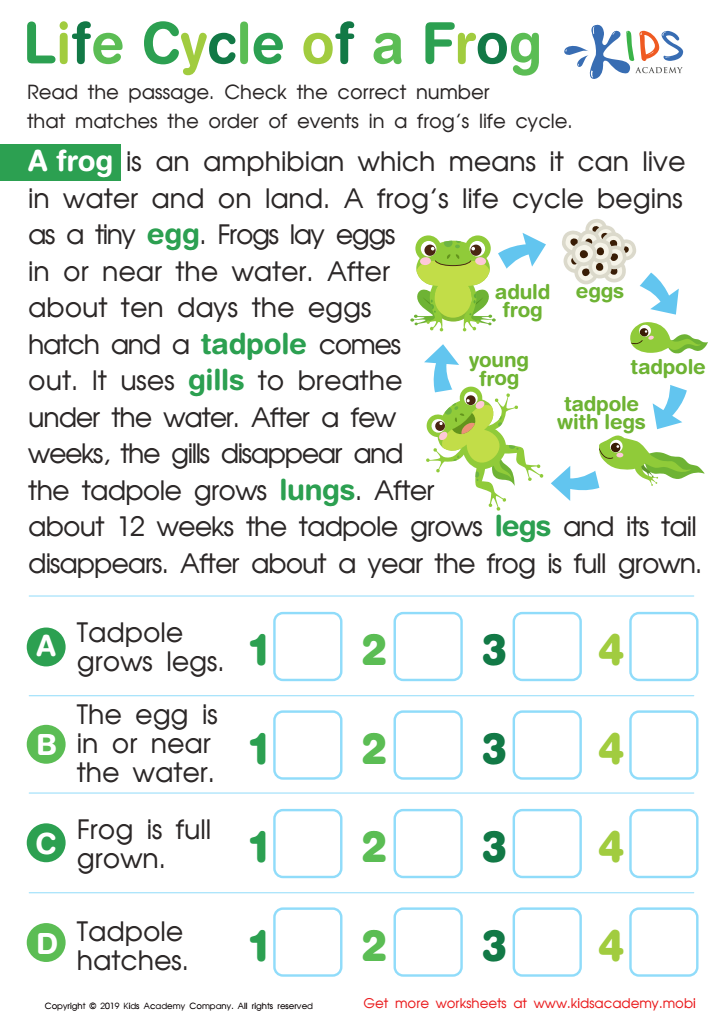
Life Cycle of a Frog Worksheet
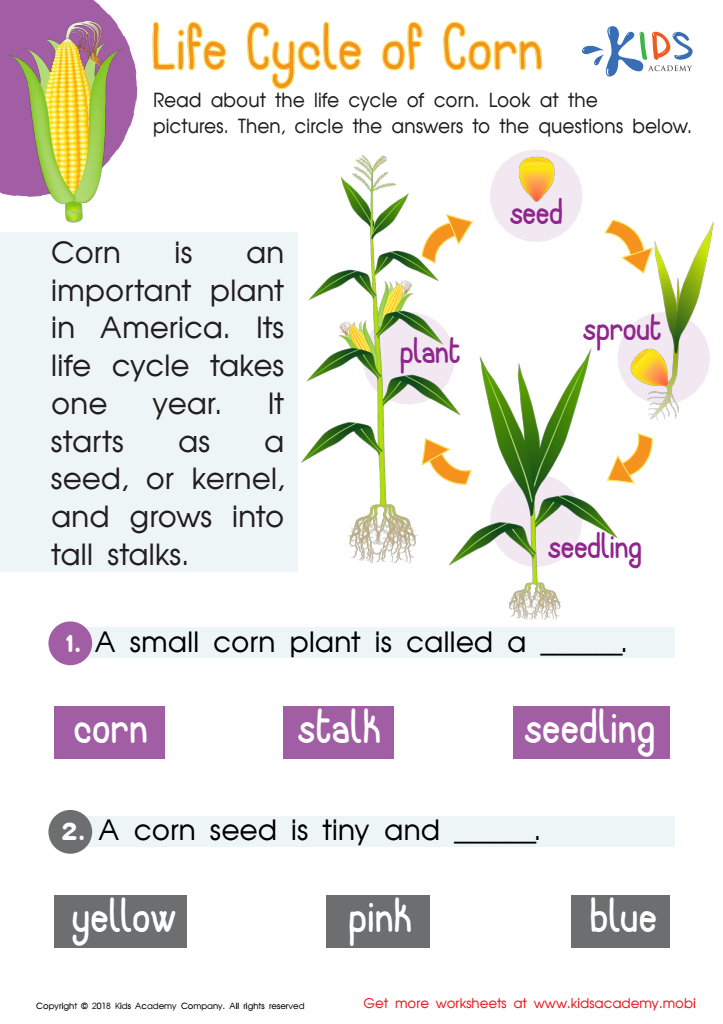
Life Cycle of Corn Worksheet








Understanding life cycles is a fundamental concept that resonates deeply within the realms of science and nature, making it essential for young learners aged 3-7. Parents and teachers should care about this topic, as it fosters curiosity and a sense of wonder about the world. Reading non-fiction books focused on life cycles helps children engage with real-world concepts in a way that fiction often cannot.
At this developmental stage, children are naturally inquisitive and eager to learn about their environment. Non-fiction materials cater to this curiosity, providing factual, straightforward information that demystifies processes like the transformation of a caterpillar into a butterfly or the stages of plant growth. Utilizing vivid illustrations and simple language enhances comprehension, making complex information more digestible.
Additionally, understanding life cycles can cultivate emotional skills. As children learn about growth, development, and change, they begin to understand their own lives and experiences better—grasping concepts of birth, growth, decay, and renewal. This educational approach promotes critical thinking, encourages observation of the natural world, and instills values such as respect for living organisms. Altogether, engaging with non-fiction on life cycles lays a solid foundation for scientific literacy and a lifelong love for learning.








