Counting objects Sight Words Worksheets for Ages 3-7
3 filtered results
-
From - To
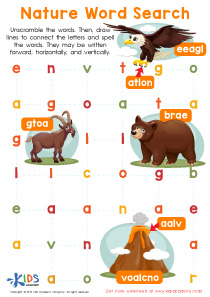
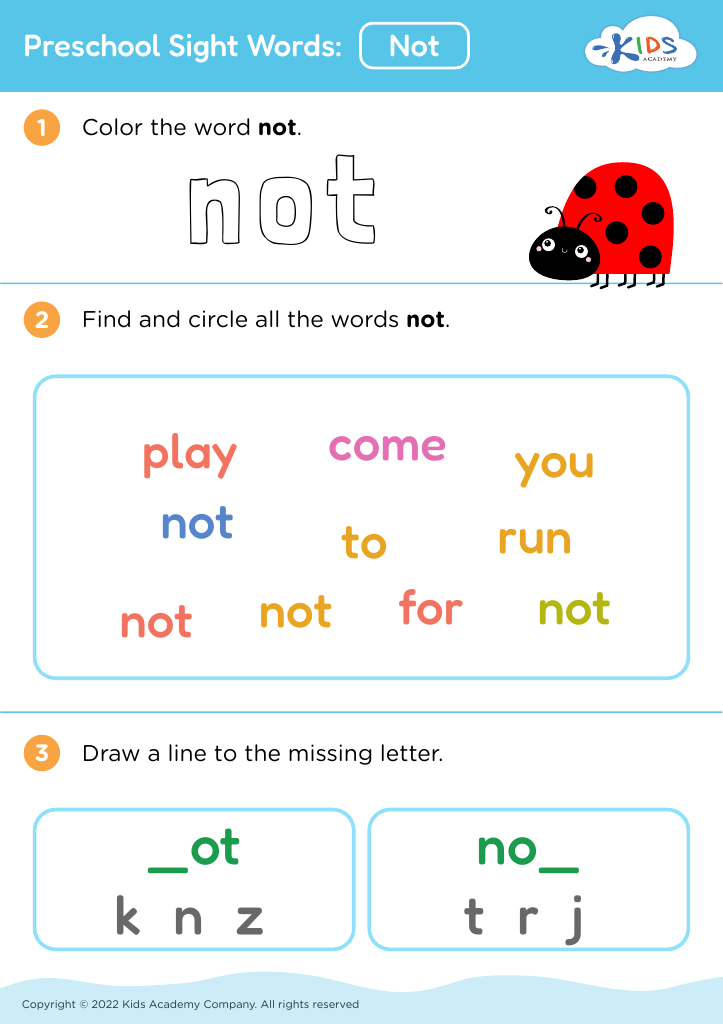
Introduce your young learner to the world of counting and reading with our Counting Objects Sight Words Worksheets for ages 3-7. These thoughtfully designed worksheets combine essential sight word recognition with engaging counting activities. Helping children develop early reading skills, number sense, and cognitive development. Ideal for preschool, kindergarten, and early elementary students, the worksheets offer fun, interactive learning experiences that capture attention and encourage progress. Each printable worksheet is crafted to support your child’s educational journey, fostering confidence and a love for learning. Explore our collection today and watch your child’s skills grow!




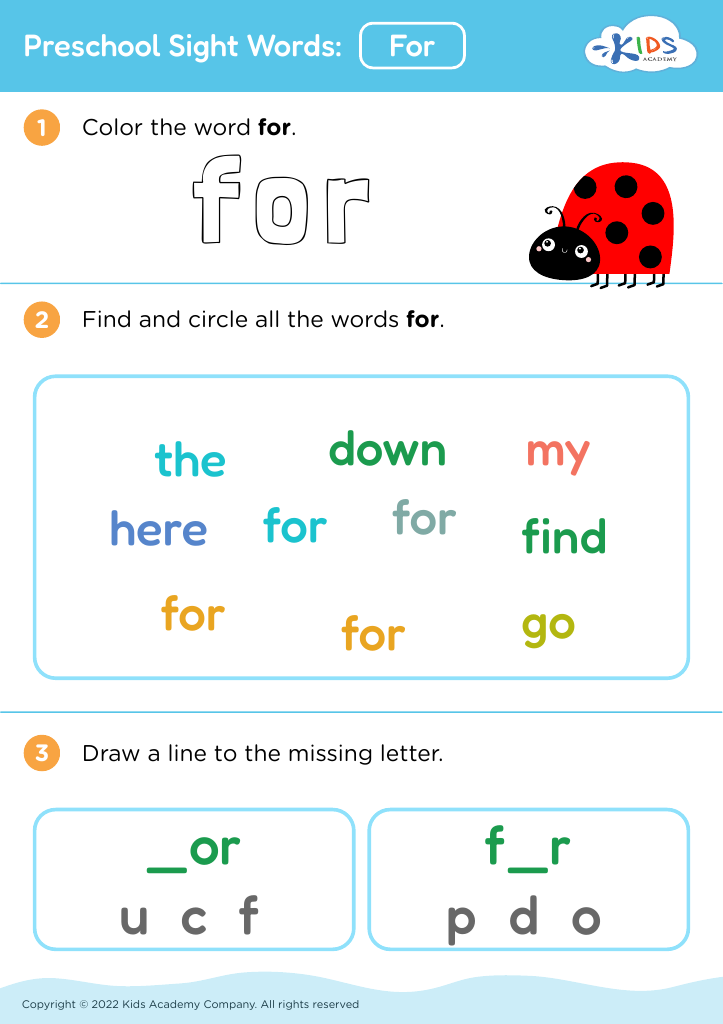
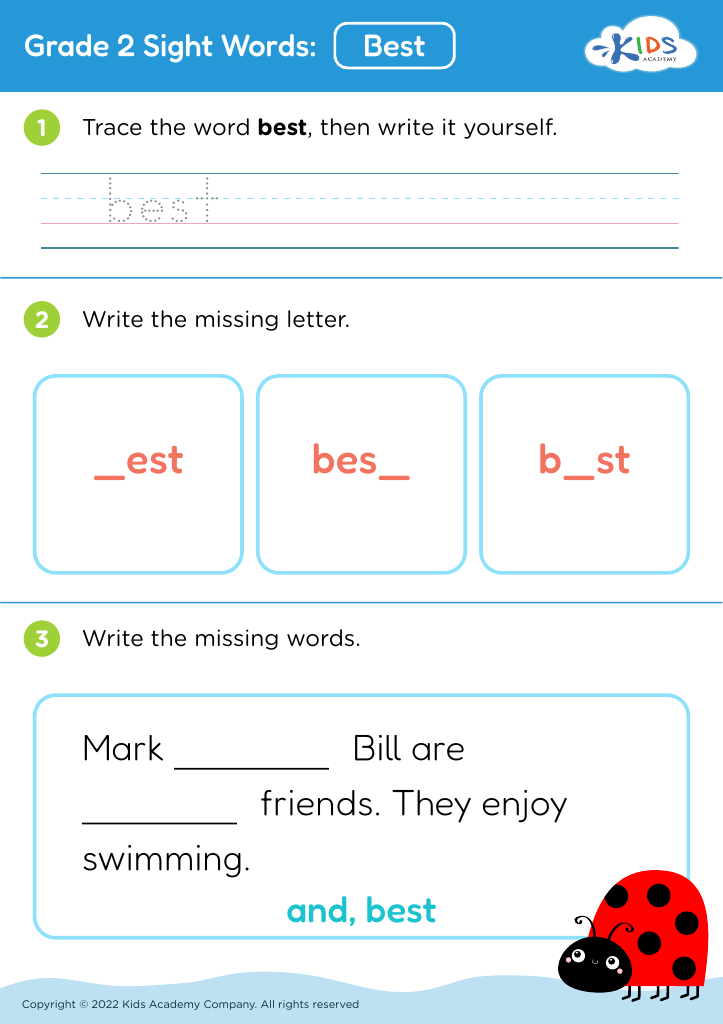








Parents and teachers should care about counting objects and sight words for children aged 3-7 for several crucial reasons. First, early math skills, such as counting objects, form the foundation for future mathematical learning. When children practice counting, they develop number recognition, understand quantity, and grasp the concept of one-to-one correspondence. These basic skills are essential not only for advanced math topics but also for everyday tasks and problem-solving.
Sight words, on the other hand, are commonly used words that children should recognize without having to sound out each letter. Mastery of sight words is essential for developing reading fluency. When children can quickly recognize these words, their reading becomes faster and more accurate, allowing them to focus on comprehension rather than decoding. This skill boosts their confidence, making reading a more enjoyable and less frustrating experience.
Furthermore, both counting objects and recognizing sight words contribute to critical cognitive development during early childhood. They enhance brain functions like memory, attention, and logical thinking. Equipping children with these foundational skills at an early age not only supports academic success but also fosters a lifelong love of learning, paving the way for holistic development and a bright future.