Mathematical reasoning Sight Words Worksheets for Ages 3-7
6 filtered results
-
From - To
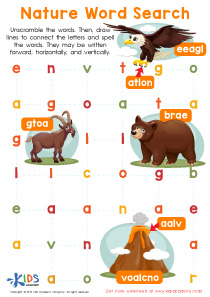
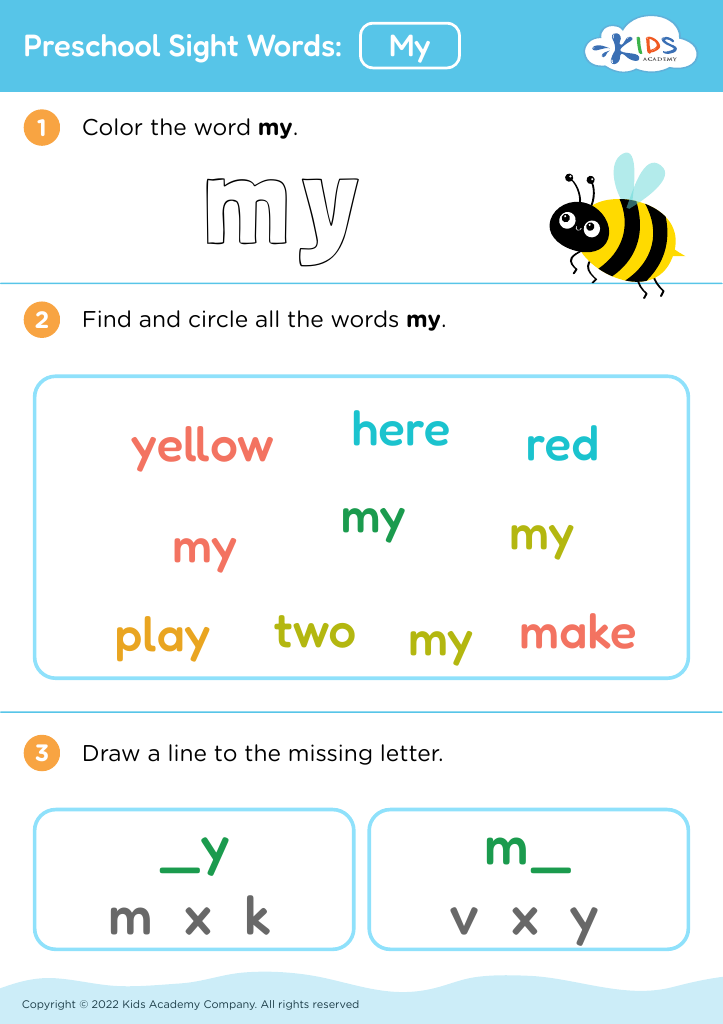
Boost early learning with our Mathematical Reasoning Sight Words Worksheets for Ages 3-7! These engaging resources combine the power of sight words with fun math challenges to enhance critical thinking, reading fluency, and problem-solving skills. Designed for young learners, the worksheets provide activities that progress from simple recognition to complex reasoning, fostering a love for both reading and math in one interactive experience. Perfect for use at home or in the classroom, our printable worksheets help children build foundational skills needed for academic success. Empower your 3-7-year-olds today with activities that make learning sight words and math an exciting adventure!





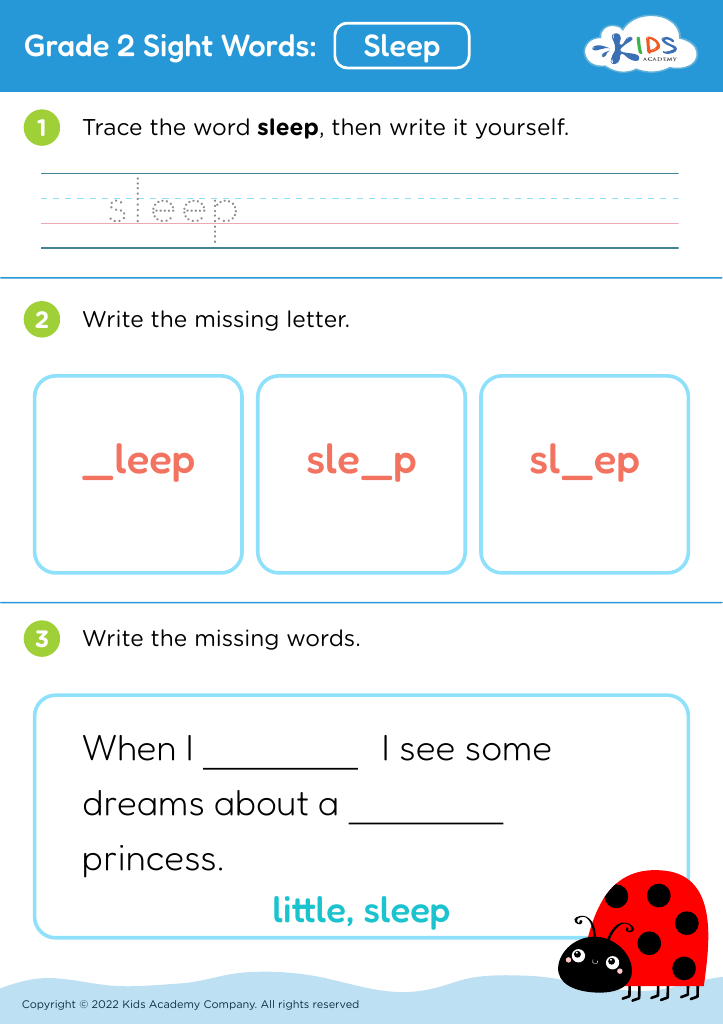
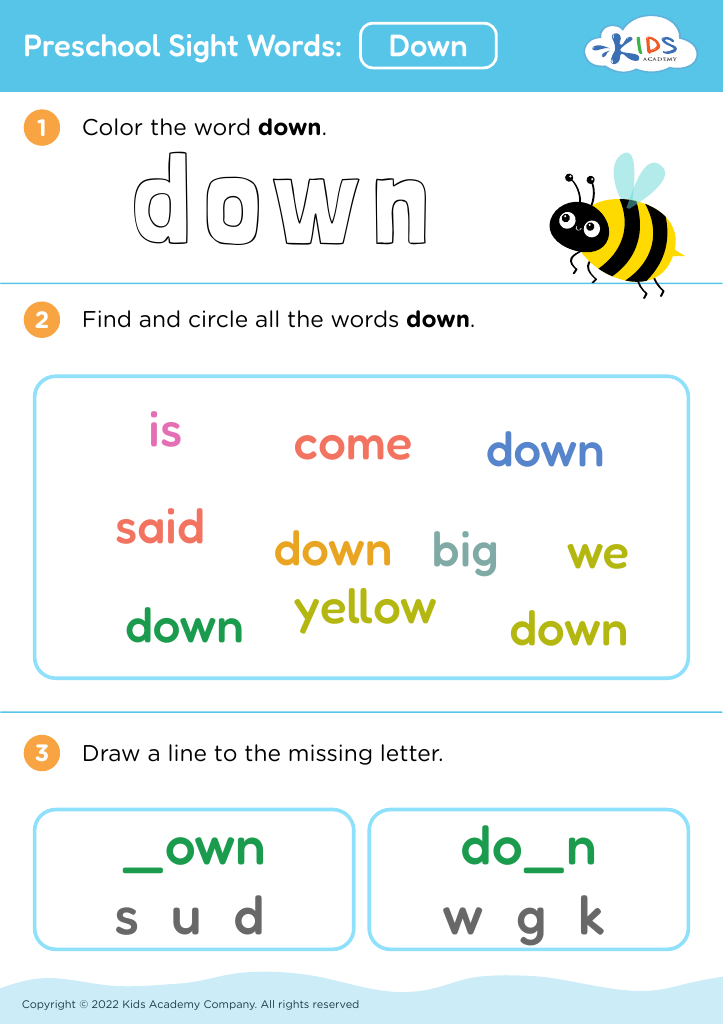
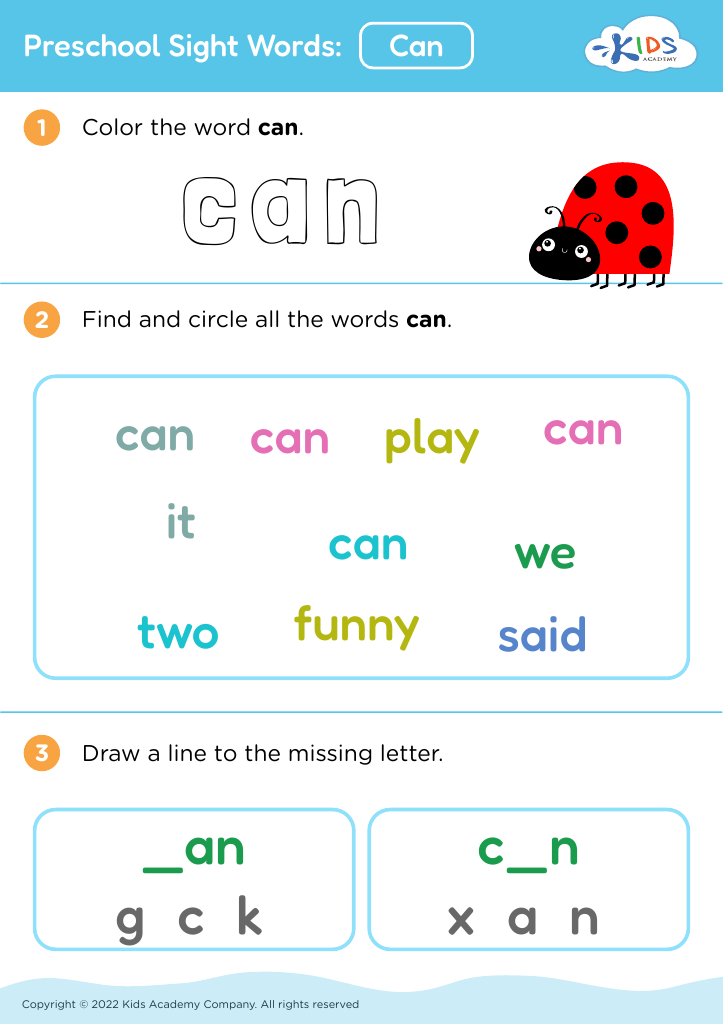
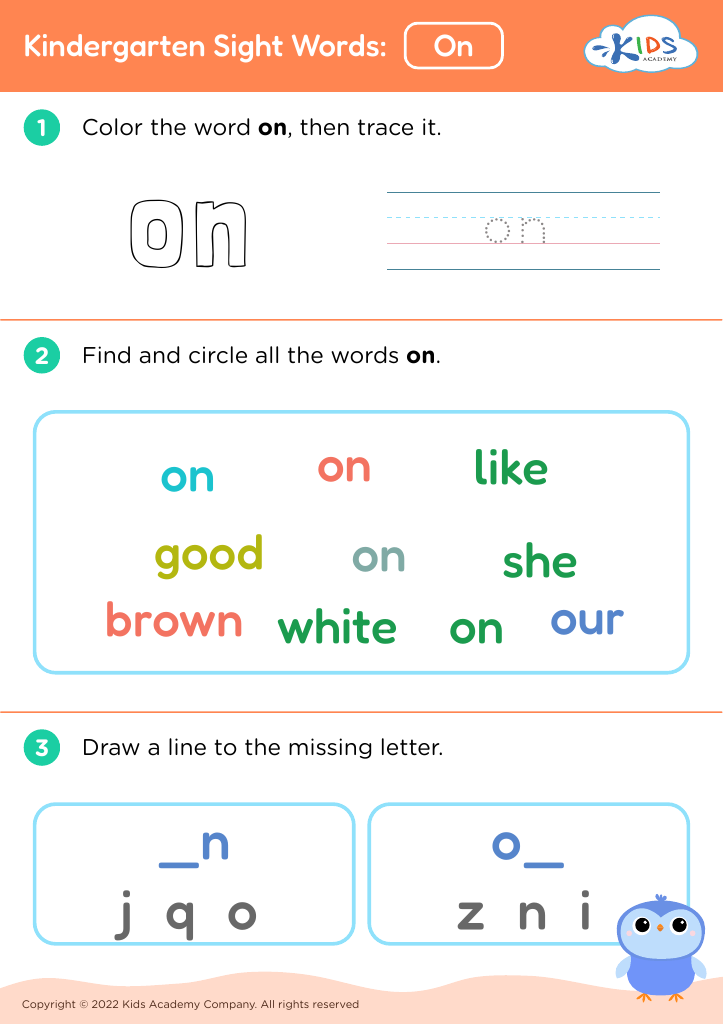
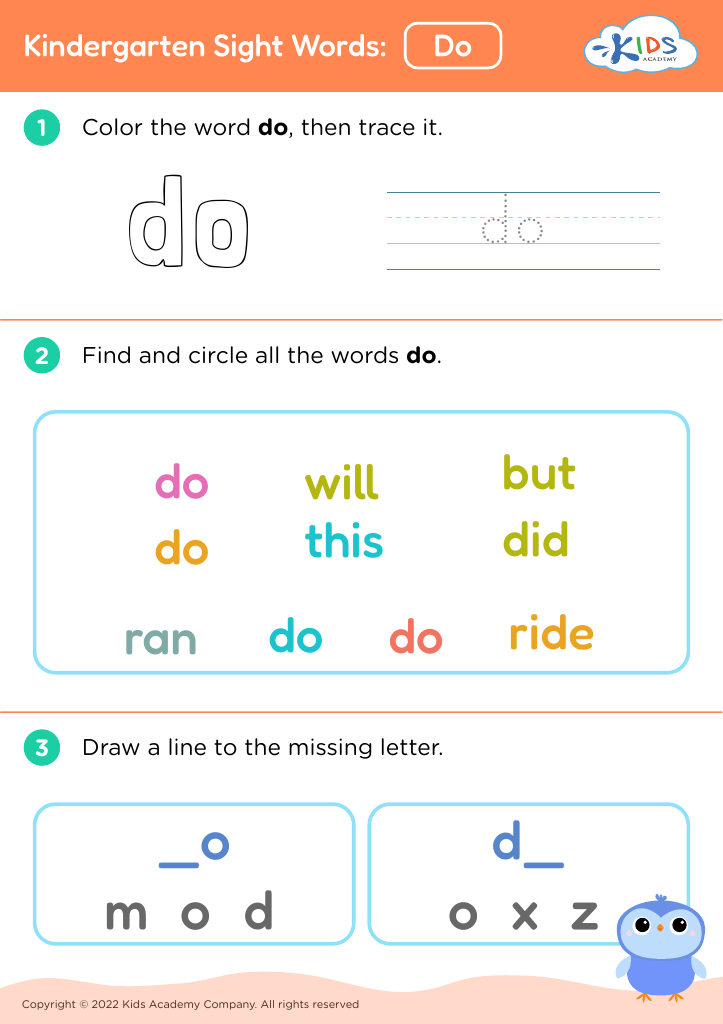








Mathematical reasoning and sight words are fundamental building blocks for early education, especially for children aged 3-7. Parents and teachers should prioritize them because they lay the groundwork for future academic success and cognitive development.
Firstly, mathematical reasoning fosters critical thinking, problem-solving skills, and logical analysis. Young children who engage in activities that promote these skills develop the ability to understand patterns, make predictions, and approach problems methodically. This foundation is not only crucial for future math learning but also enhances abilities in science, technology, engineering, and other disciplines that rely on analytical thinking.
Secondly, sight words are essential for early literacy. These frequently occurring words in the English language don't always follow regular phonetic rules, making them difficult for young readers to decode using phonics alone. Recognizing sight words instantly helps children read more fluently and confidently. This fluency enables better comprehension and a stronger ability to enjoy and engage with texts, fostering a love of reading.
Combining these skills, children develop efficiently both academically and personally. Mathematical reasoning enhances their approach to challenges, while sight words empower their communication. Parents and teachers are essential guides in nurturing these skills, providing opportunities for children’s better-rounded development. Investing time and resources in these areas early on promises significant long-term benefits.