Reading comprehension Sight Words Worksheets for Ages 3-7
11 filtered results
Difficulty Level
Grade
Age
-
From - To
Subject
Activity
Standards
Give your child a head start in reading with our engaging Reading Comprehension Sight Words Worksheets, perfect for ages 3-7. These worksheets focus on building key reading skills by teaching essential sight words, boosting fluency, and understanding. Through fun, interactive activities and colorful illustrations, young learners can easily grasp the most common words, paving the way for reading success. Designed specifically for early readers, these worksheets cater to their developmental stages, ensuring they stay motivated and enjoy the learning process. Make reading an exciting adventure for your child with our expertly crafted sight word worksheets!
Favorites
With answer key
Interactive
 Assign to My Students

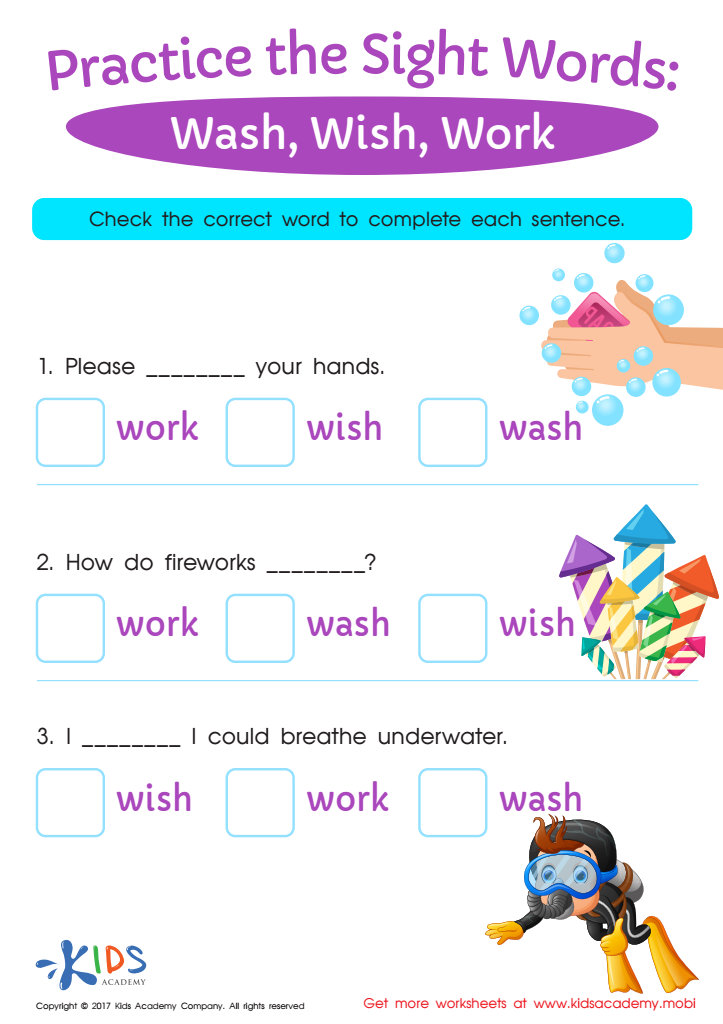
Wash, Wish, Work Sight Words Worksheet
Help your child distinguish between 'wash', 'wish' and 'work' with this sight words printable worksheet. It features sentences with the words and colorful images that aid your child's memory. Help them get one step closer to becoming a confident reader!
Wash, Wish, Work Sight Words Worksheet
Worksheet
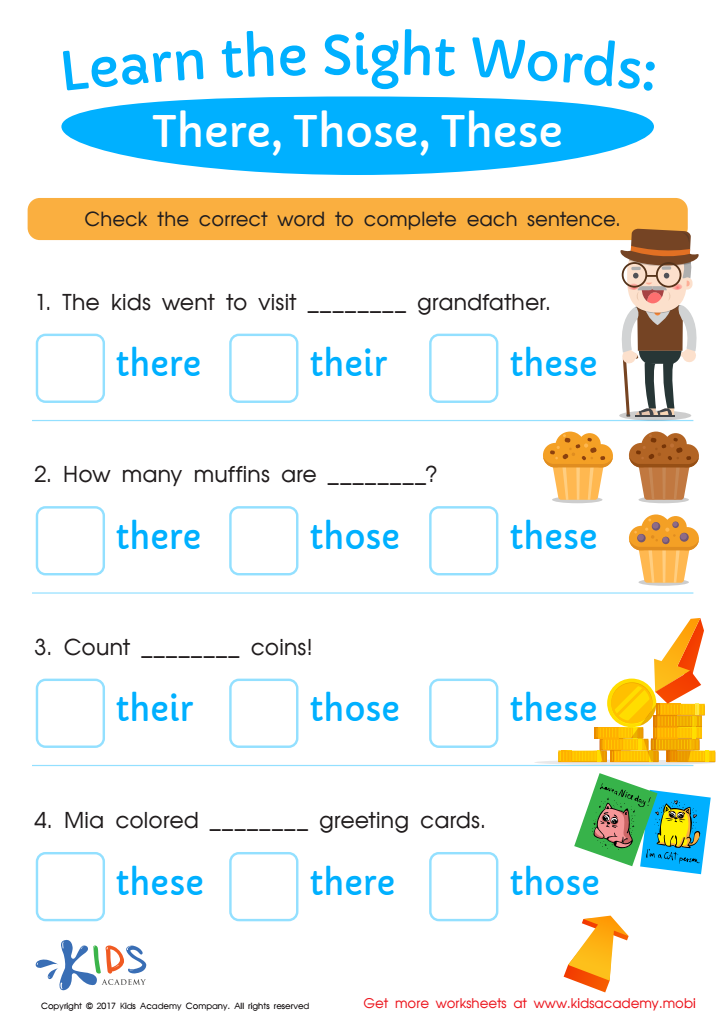
There, Those and These Sight Words Worksheet
Help teach your child to read and use tricky demonstrative pronouns. Use this 2nd grade sight words worksheet: there, those, these. Have them read each sentence and choose the right pronoun by looking at the pictures.
There, Those and These Sight Words Worksheet
Worksheet
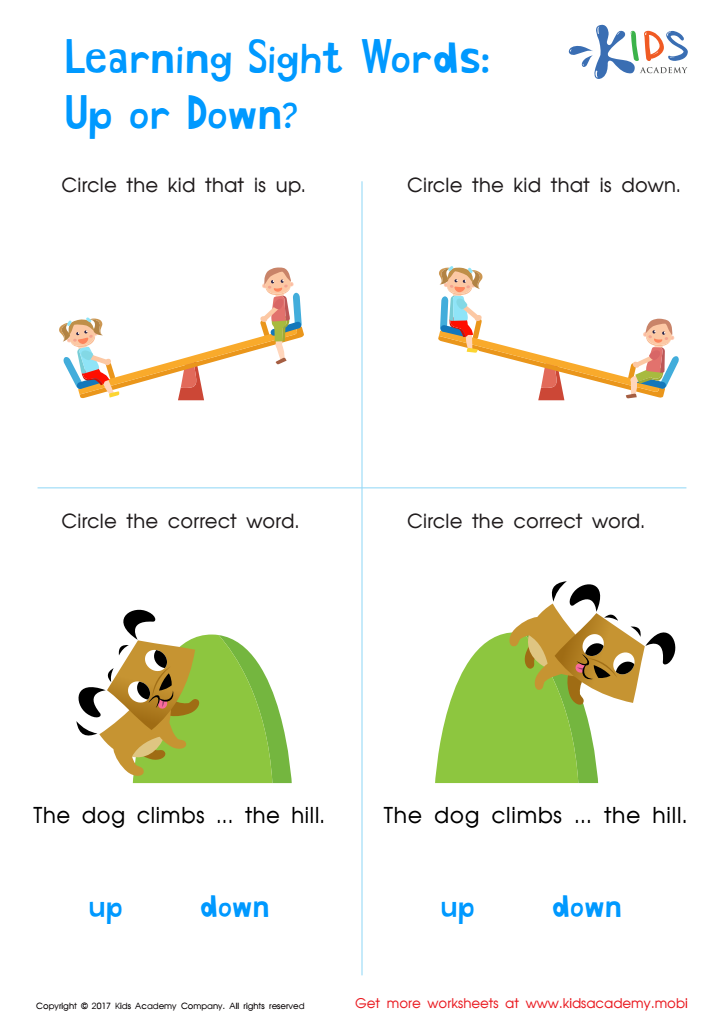
Up or Down Printable Sight Words Worksheet
Help your child identify up and down in print with this sight words worksheet. It has simple sentences, vibrant images and easy-to-read language that allow your little learner to practice these essential sight words. Perfect for early readers!
Help your early reader identify and read up and down with this sight words worksheet. It provides simple sentences, clear language and vibrant images to help them practice these essential sight words. Perfect for toddlers!
Up or Down Printable Sight Words Worksheet
Worksheet
Join Kids Academy for Free
Who is primarily going to use this learning content?








Reading comprehension and sight words play a crucial role in early childhood development for ages 3-7. Sight words are commonly used words that young readers are encouraged to recognize instantly, without needing to sound them out. These words often do not follow standard phonetic rules, making them essential for rote memorization.
Parents and teachers should prioritize these words because they form the foundation of reading fluency. When children can quickly recognize sight words, they read more smoothly and with greater understanding. This leads to boosted confidence, encouraging a love for reading—a pivotal aspect in lifelong learning.
Reading comprehension, the ability to understand and interpret what is being read, is equally vital. During these formative years, children's brains are highly receptive to new information. Strengthening comprehension skills ensures children can follow stories, understand instructions, and later grasp more complex subjects.
Investing time in teaching sight words and reading comprehension helps bridge the gap between knowing letters and becoming proficient readers. This groundwork not only supports academic success but also enhances cognitive abilities like attention and memory. Above all, developing these skills early on fosters a joy for reading, setting children on a path towards academic achievement and intellectual curiosity.