
Word Recognition Word Scramble Worksheets for Ages 3-7
4 filtered results
Difficulty Level
Grade
Age
-
From - To
Subject
Activity
Standards
Enhance your child's reading skills with our engaging Word Recognition Word Scramble Worksheets designed for ages 3-7. These fun and interactive worksheets help young learners improve their word recognition while fostering essential literacy skills. Each worksheet features scrambled words that challenge kids to unscramble and identify familiar vocabulary, promoting cognitive development and critical thinking. Perfect for classroom use or at-home learning, our resources make reading enjoyable and effective. Plus, they encourage independent thinking and boost confidence in young readers. Download now and watch your child become excited about words and learning! Ideal for parents and educators alike.
Favorites
With answer key
Interactive
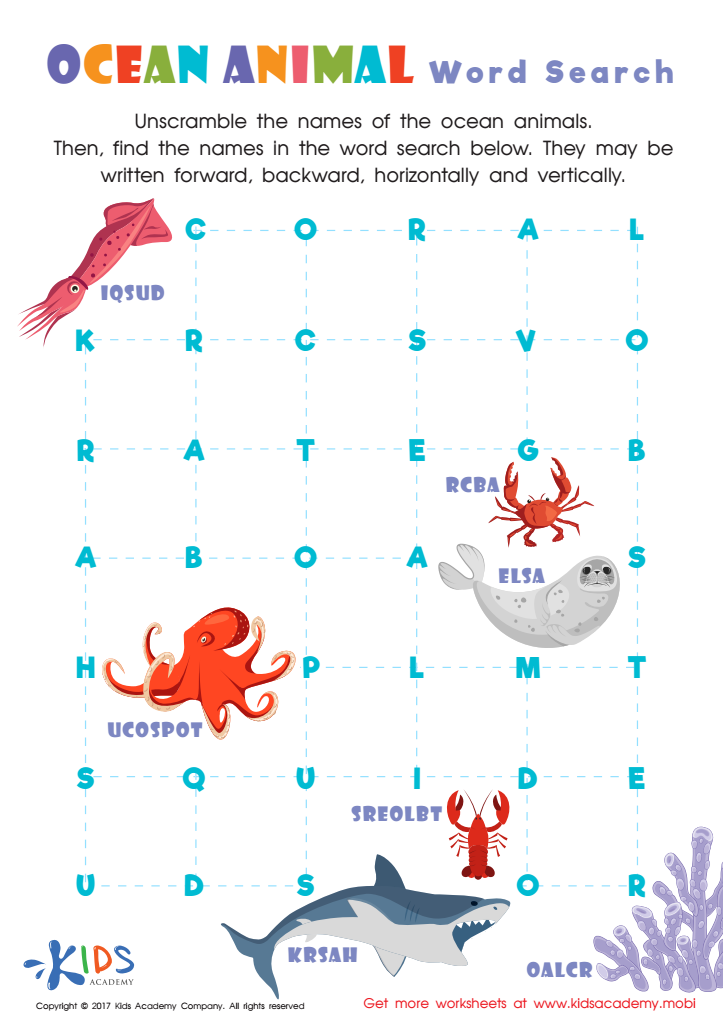
Ocean Animals Word Search Printable
Challenge your child to unscramble the names of ocean animals and find them in the word search. This ocean animals printable is a fun way to teach kids more about these fascinating creatures!
 Assign to My Students
Ocean Animals Word Search Printable
Worksheet
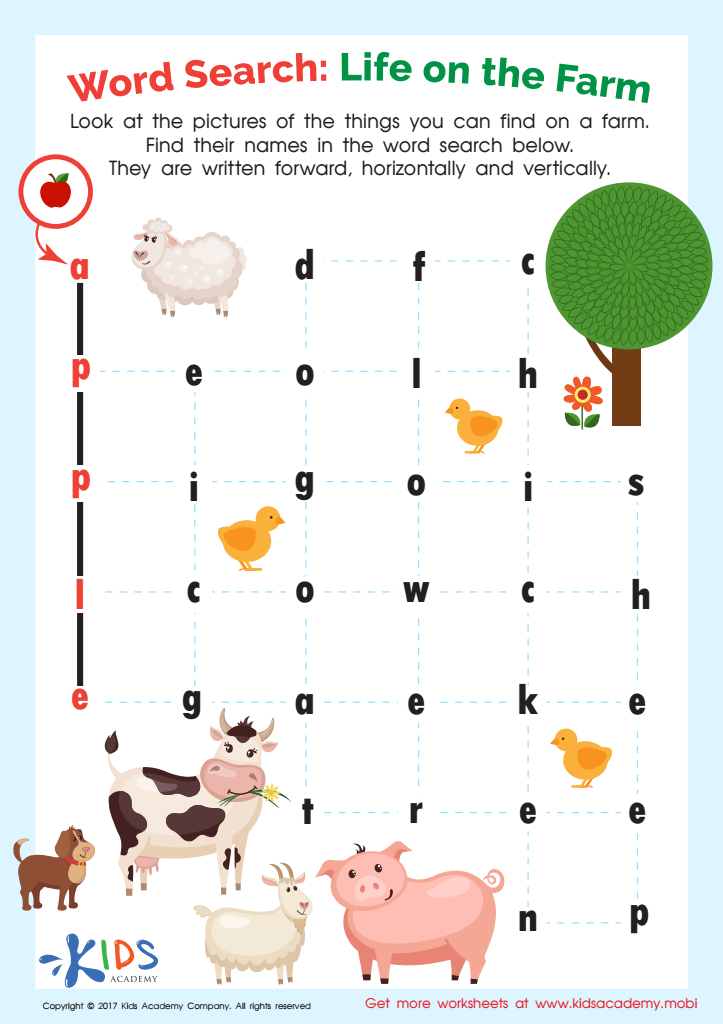
Word Search Puzzles Worksheet
2nd grade word search puzzles are great fun, helping kids flex their knowledge of words and spellings. Kids can use the pictures to find farm-themed words hidden on the page. It's a great way to learn!
Word Search Puzzles Worksheet
Worksheet
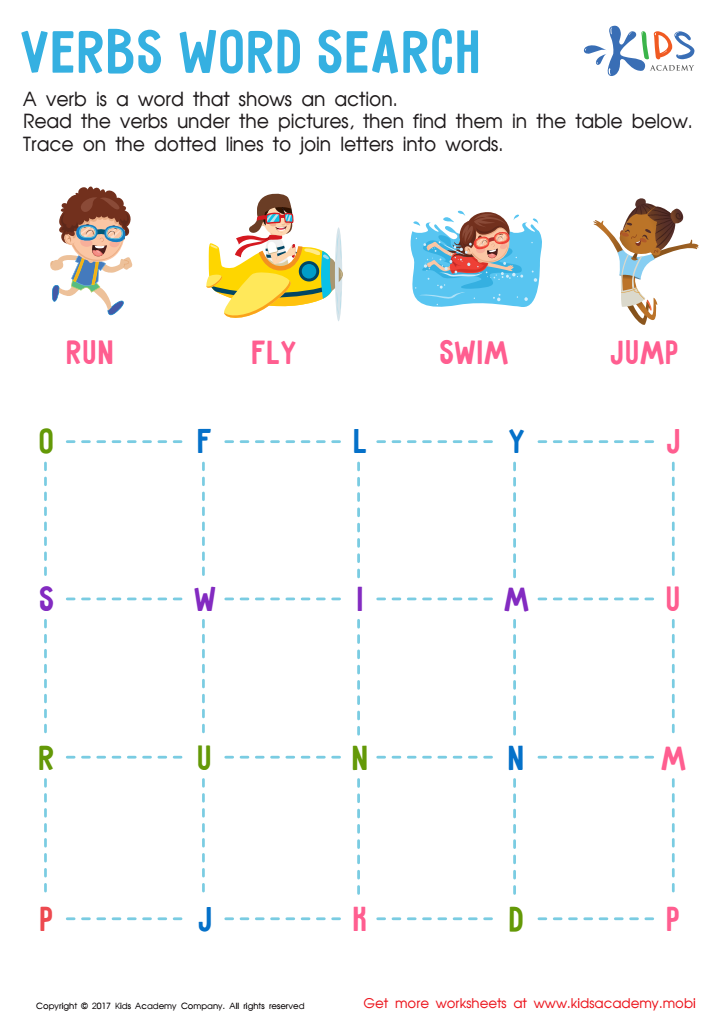
Verbs Word Search Worksheet
Ask your child if they understand the meaning of the word "verb". If not, explain that it's a word that shows an action. Give examples of familiar verbs. Then look at the pictures in the tracing sheet and read the words. Ask your child to follow the dotted lines to find the hidden words. Perfect tool to teach spot and use verbs!
Verbs Word Search Worksheet
Worksheet
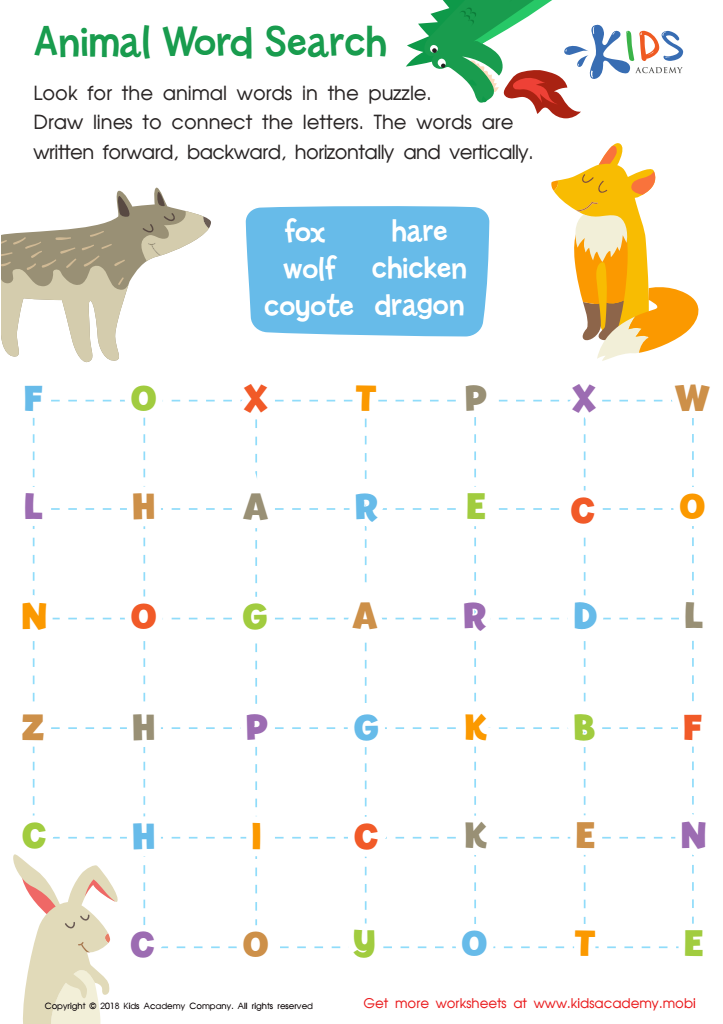
Animal Word Search Worksheet
Students can have fun and strengthen spelling and vocabulary skills with this word search worksheet. Search for animal words and circle the letters in the puzzle. Words can be found forwards, backwards, horizontally or vertically, providing a great challenge to foster critical thinking skills. An enriching activity for all ages!
Animal Word Search Worksheet
Worksheet
Join Kids Academy for Free
Who is primarily going to use this learning content?




Word Recognition Word Scramble games are essential tools for fostering literacy development in young children, aged 3-7. These activities not only engage children in a fun and playful way but also facilitate the crucial skill of word recognition, which serves as a foundation for reading and writing. By rearranging letters to form words, children practice their understanding of letter sounds, patterns, and structures that enhance their reading fluency.
Parents and teachers should care about these games because they support cognitive development and boost children's confidence in their reading skills. Moreover, such activities promote critical thinking and problem-solving as kids work to unscramble words. The appeal of gamified learning can also motivate reluctant readers by making literacy enjoyable.
In addition, word scrambles encourage collaboration and communication among peers, promoting social skills and teamwork. By integrating fun play into educational experiences, adults can instill a lifelong love for reading in young children. Ultimately, Word Recognition Word Scramble games not only align with early childhood educational objectives but also provide a supportive environment where young learners can thrive, paving the way for successful literacy acquisition. Emphasizing such activities at a young age recognizes the critical nature of formative education in shaping future learners.







