
Phonics practice ABC Letters Worksheets for Ages 3-8
3 filtered results
Difficulty Level
Grade
Age
-
From - To
Subject
Activity
Standards
Discover our engaging ABC Letters Worksheets designed for children ages 3-8! Our phonics practice resources help young learners develop essential reading and writing skills through interactive activities. Each worksheet focuses on letter recognition, sound association, and creative phonics exercises, ensuring a fun learning experience. Ideal for homeschooling or classroom settings, these worksheets cater to various skill levels, making phonics accessible and enjoyable for every learner. Boost your child's confidence in language arts while building a strong foundation for future literacy. Explore our collection and embark on a joyful phonics journey today! Perfect for parents, educators, and little learners alike!
Favorites
With answer key
Interactive
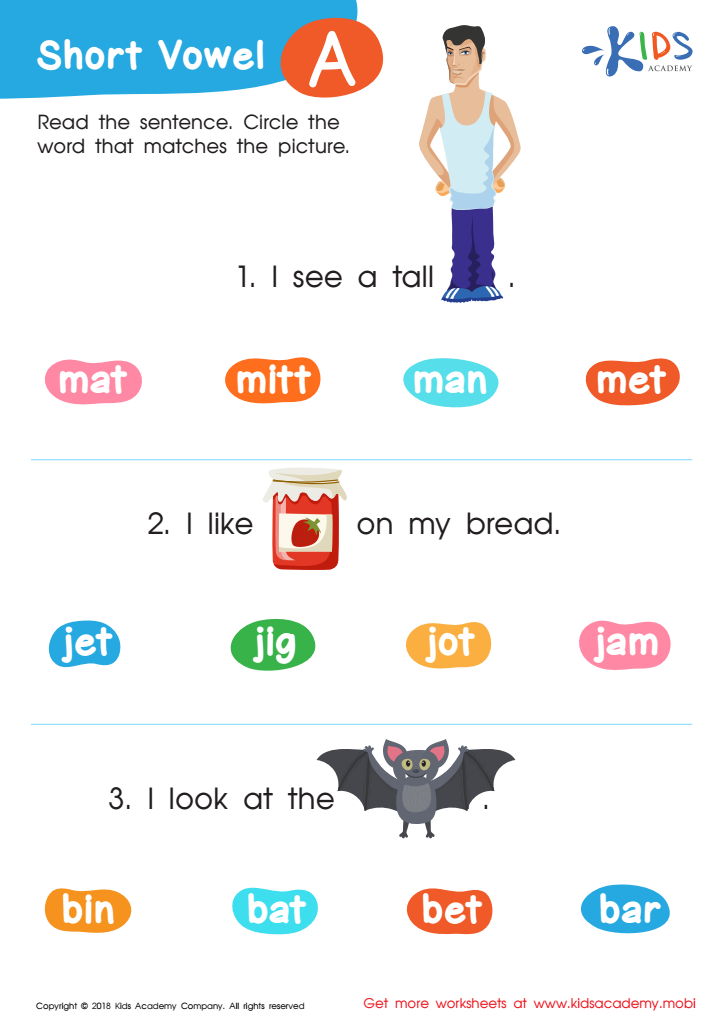
Short Vowel /a/ Worksheet
This free PDF helps new readers use sight words and pictures to read basic sentences. Then, they use accompanying word choices to find the correct word with the short a vowel sound. A key early reading skill, discriminating between short vowel sounds can be tricky in monosyllabic words, so use this PDF to help your reader reinforce it.
Short Vowel /a/ Worksheet
Worksheet

Letter A Coloring Sheet
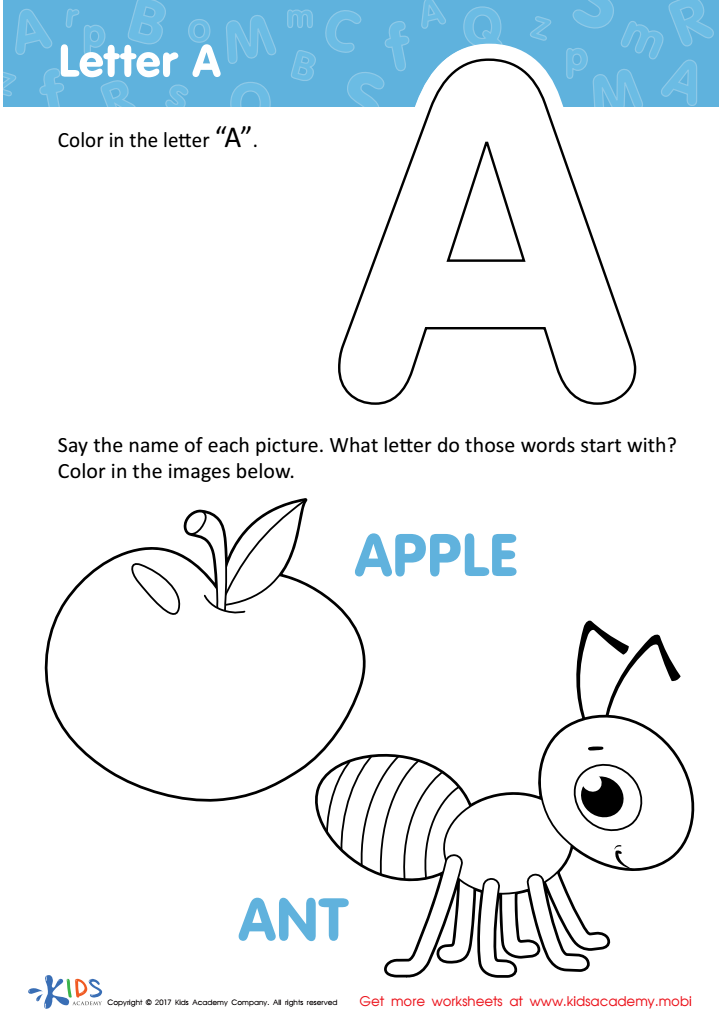
This letter "A" coloring page is great for introducing kids to the alphabet! Let them exercise their creativity while they learn to recognize letters and sounds - it's a fun and easy way to help them get started.
Download (PDF)
 Assign to My Students
Assign to My Students
Letter A Coloring Sheet
Worksheet
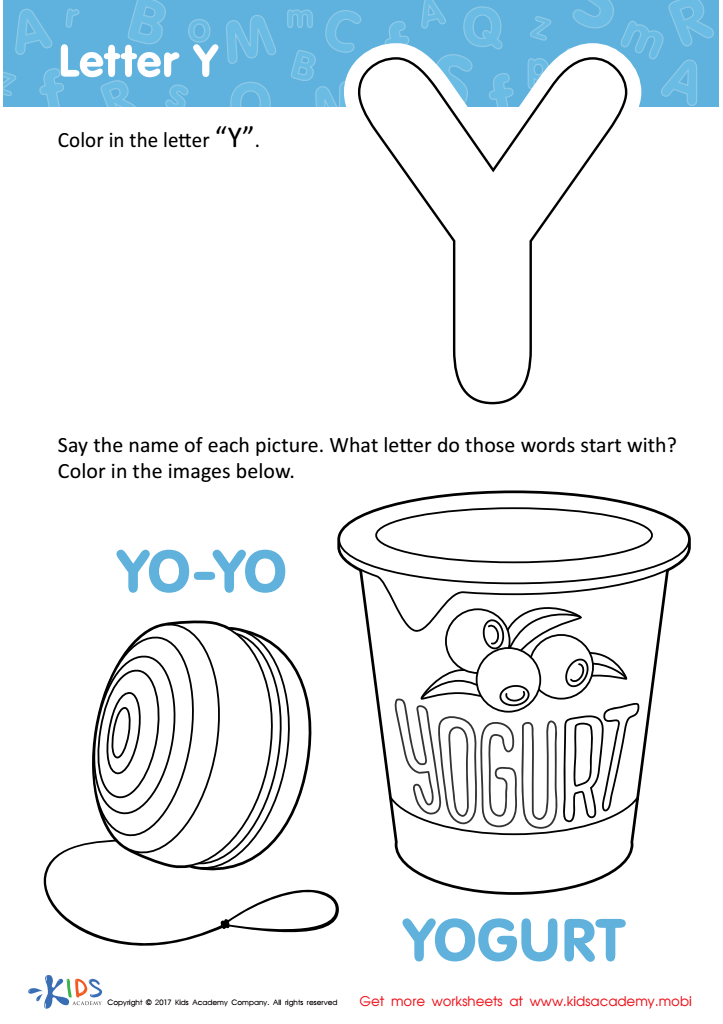
Letter Y Coloring Sheet
Let's celebrate letter "Y"! Here's a fun coloring page that'll help your child learn this end-of-the alphabet letter. It's packed with familiar objects that'll help build their art and literacy skills. So let's say "Yay"!
Download (PDF)
Assign to My Students
Assign to My Students
Letter Y Coloring Sheet
Worksheet
Join Kids Academy for Free
Who is primarily going to use this learning content?








Phonics practice for children aged 3-8 is essential as it forms the foundational building blocks for literacy skills. Understanding the relationship between letters and sounds empowers young learners to decode words, making reading a more accessible and enjoyable experience. When parents and teachers prioritize phonics, they help children develop strong language skills that are critical for academic success.
Additionally, phonics reinforces spelling, writing, and overall communication abilities. Children who master the sounds of individual letters and letter combinations can better express their thoughts and ideas. Early exposure to phonics also boosts self-confidence, encouraging a love for reading that transcends the classroom.
Moreover, phonics practice aids in language acquisition, enhancing vocabulary and comprehension skills essential for future learning. In an increasingly digital world, where communication is often instantaneous, a robust phonics foundation ensures that children can navigate diverse texts and contexts effectively.
Lastly, engaging in phonics activities at home or in school strengthens the bond between caregivers and children. It provides precious opportunities for interactive learning, making literacy an enjoyable shared experience. Thus, prioritizing phonics practice is vital for equipping young learners with the tools they need for academic achievement and lifelong learning.







