Phonics recognition Elementary Phonics Worksheets for Ages 3-8
4 filtered results
-
From - To
Unlock your child's reading potential with our Phonics Recognition Elementary Phonics Worksheets, designed specifically for ages 3-8. These engaging worksheets, available at Kids Academy, make phonics learning fun and interactive. Your child will master letter sounds, blends, and digraphs through playful activities tailored to their developmental stage. Enhance their literacy skills with colorful visuals and engaging exercises that build a strong phonetic foundation. Perfect for both home and classroom use, our worksheets support early readers in recognizing and pronouncing words confidently. Start your child's phonics journey today and watch their reading skills soar!
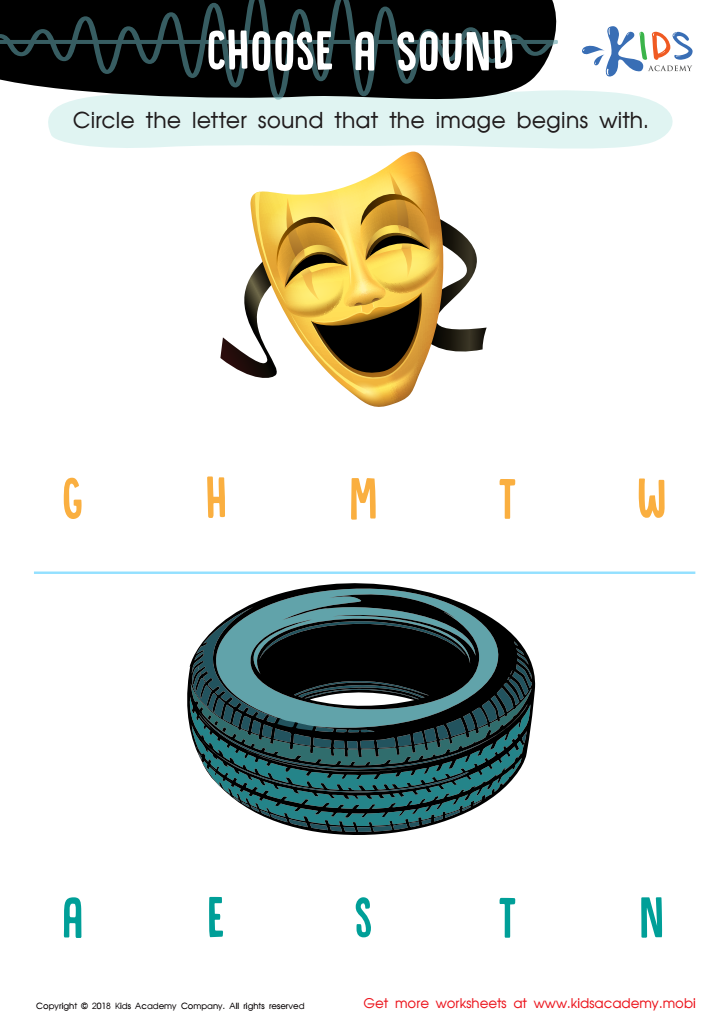
Choose a Sound Worksheet
 Assign to My Students
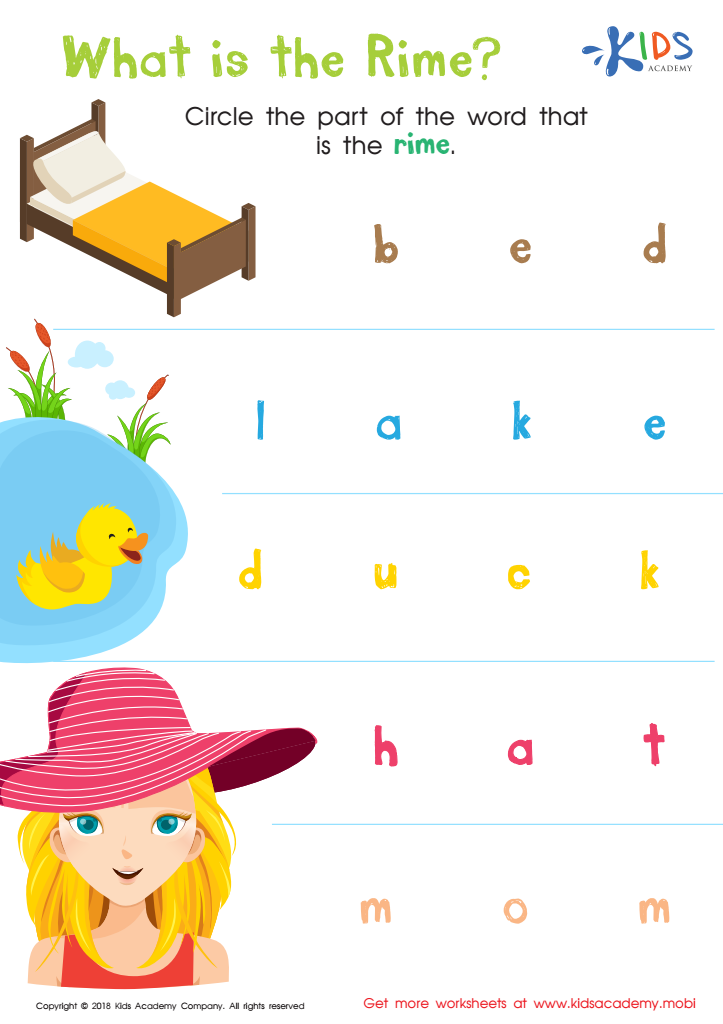
What Is the Rime? Worksheet
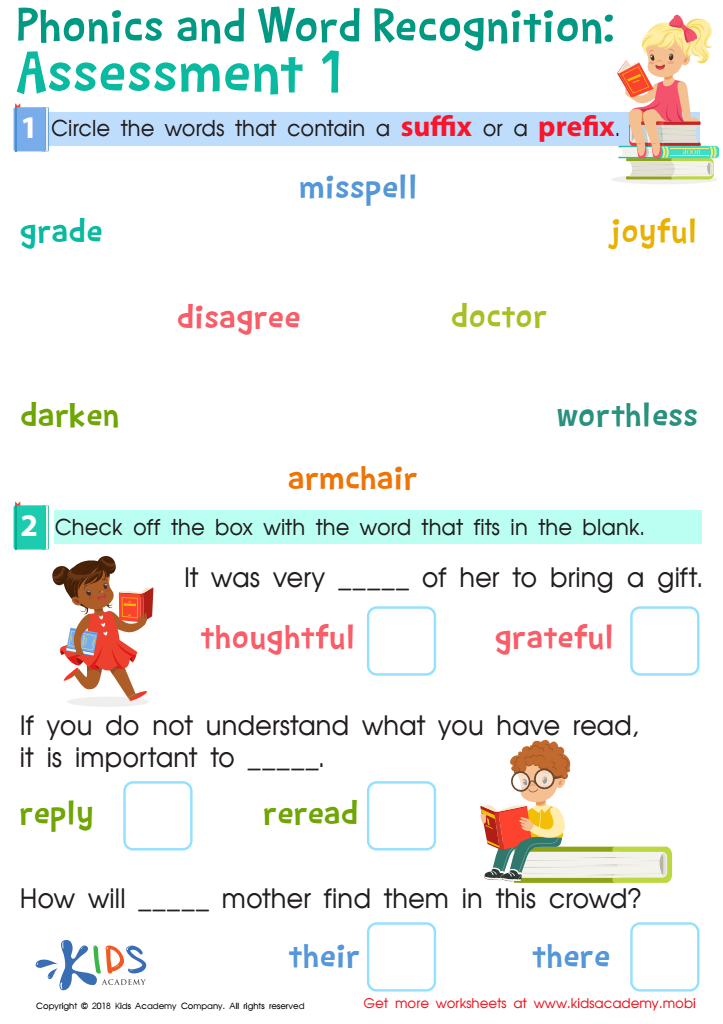
Phonics and Word Recognition: Assessment 1 Worksheet
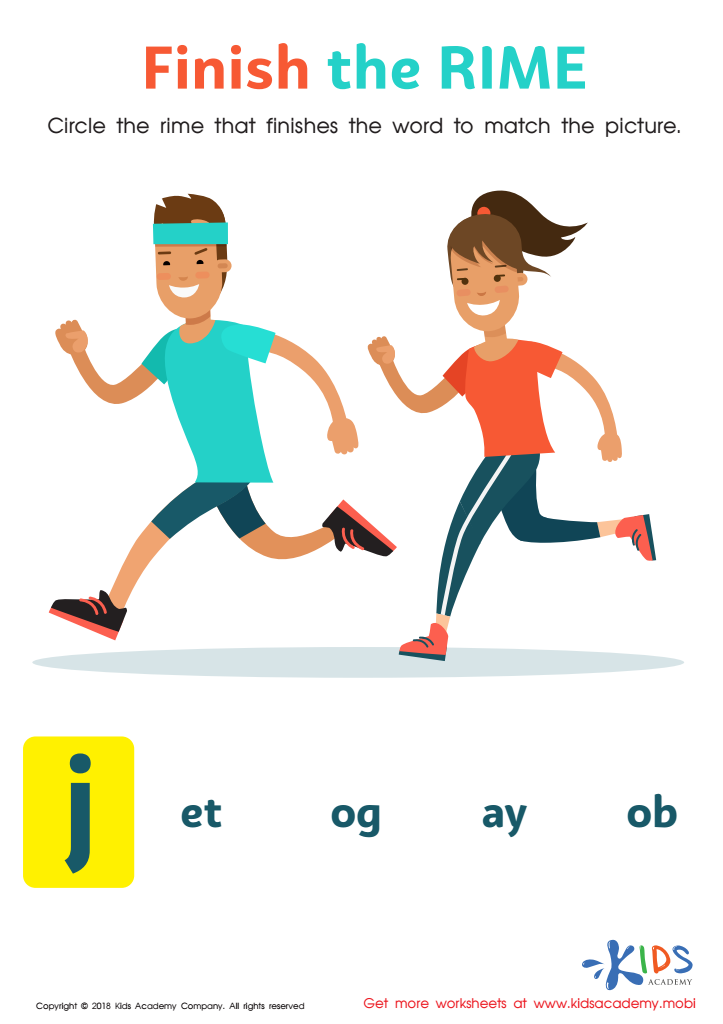
Finish the Rime Worksheet




Phonics recognition is a crucial foundational skill for young learners aged 3-8, integral to building effective reading abilities. Parents and teachers should prioritize phonics because it aids children in understanding how letters combine to form sounds, which paves the way for decoding words. Mastery in phonics offers students the tools to read unfamiliar words independently, fostering confidence and a love for reading.
During these formative years, children’s brains are highly receptive to language acquisition. Introducing phonics early helps solidify the relationship between letters and sounds, enhancing their ability to spell accurately and read fluently. Phonemic awareness, a component of phonics, is also vital as it involves recognizing and manipulating individual sounds—skills directly linked to successful reading and writing.
Moreover, consistent phonics instruction conveys significant long-term academic benefits. Children who excel in reading in the early grades develop better comprehension skills, experience broader vocabulary growth, and achieve overall higher academic performance. For at-risk or struggling readers, targeted phonics instruction provides an essential lifeline, offering systematic and supportive practice that significantly improves their reading outcomes.
Overall, phonics is more than just a reading strategy—it's a critical component of literacy development that lays the groundwork for lifelong learning and intellectual curiosity. Hence, both parents and teachers play a pivotal role in ensuring children receive quality phonics education.







