Sound identification Elementary Phonics Worksheets for Ages 3-8
4 filtered results
-
From - To
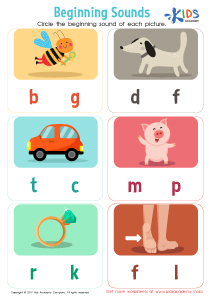
Welcome to our Sound Identification Elementary Phonics Worksheets for Ages 3-8! Designed to support young learners in mastering phonics, these engaging worksheets help children recognize and differentiate sounds associated with letters and words. Each activity is crafted to enhance listening skills and reinforce letter-sound correspondence, ensuring a strong foundation for reading success. With vibrant illustrations and interactive exercises, kids will find learning fun and engaging. Perfect for parents or educators looking to enrich their phonics curriculum, these worksheets are an essential tool for developing essential literacy skills. Explore our diverse offerings and watch your child thrive in their reading journey!
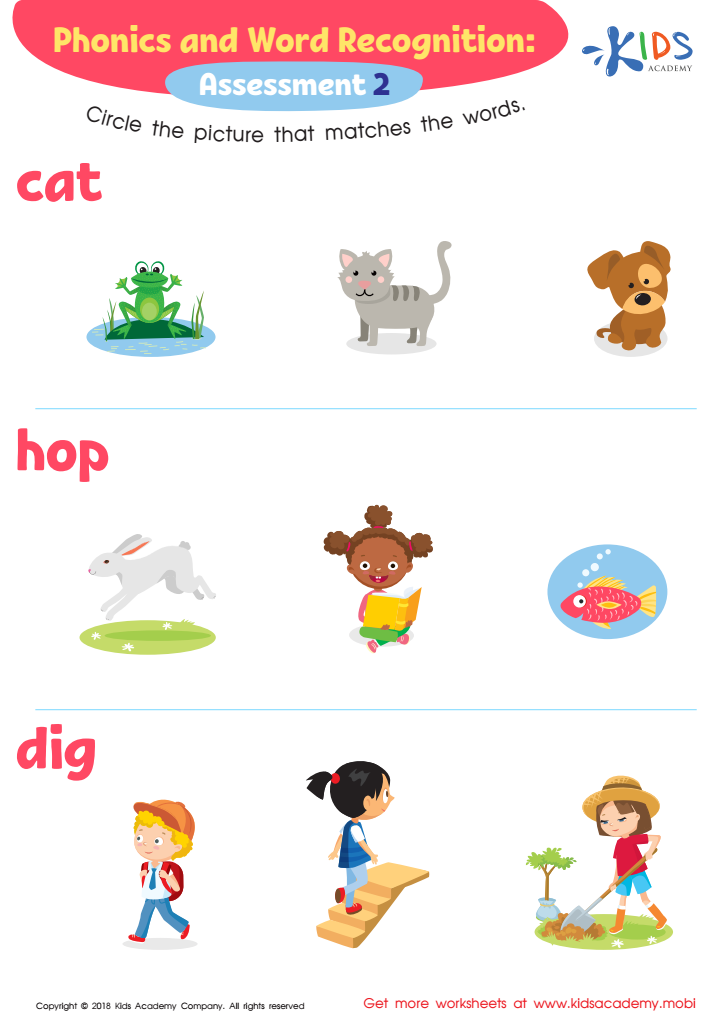
Phonological Awareness: Assessment 2 ELA Worksheet
 Assign to My Students
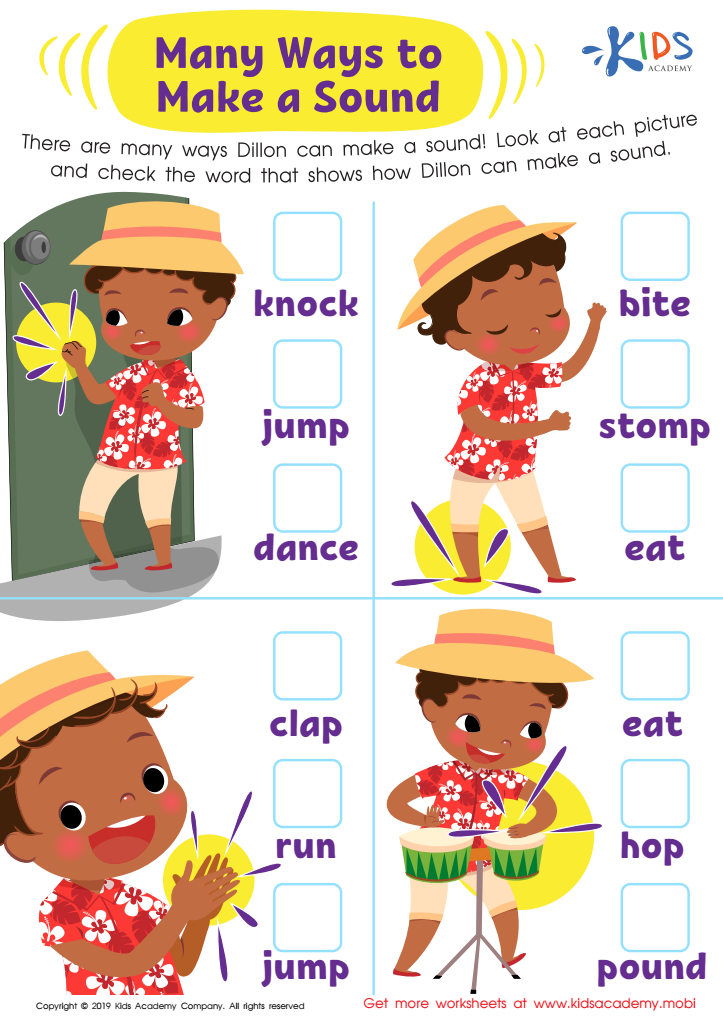
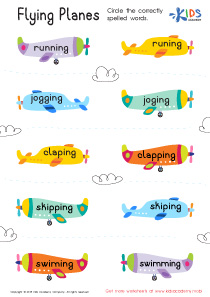
Many Ways to Make a Sound Worksheet
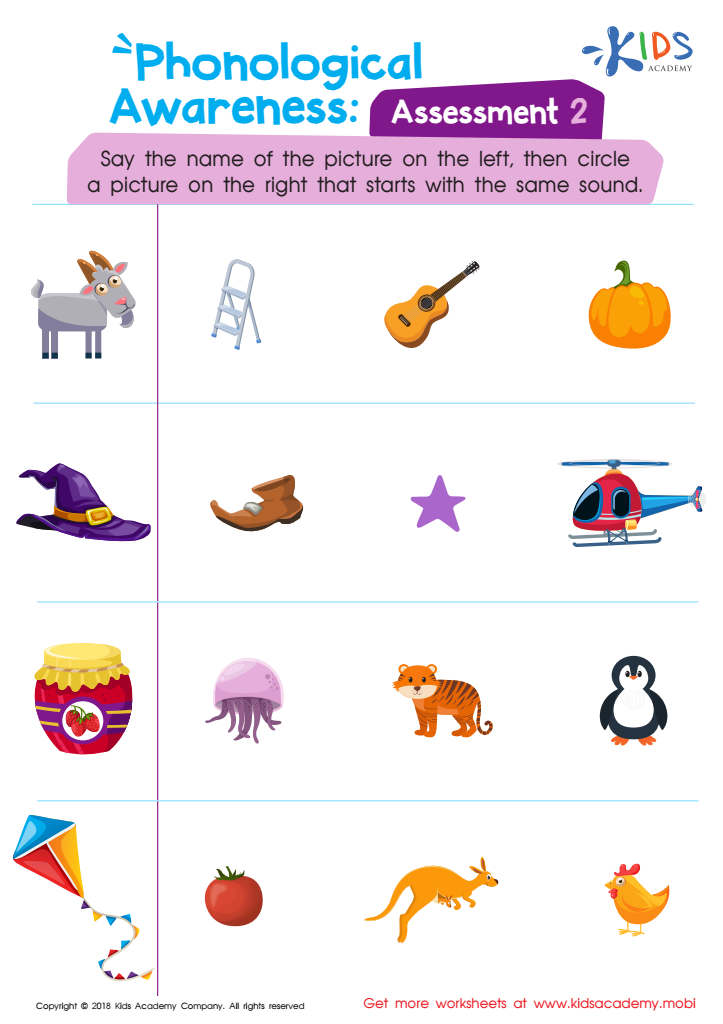
Phonological Awareness: Assessment 2 Worksheet
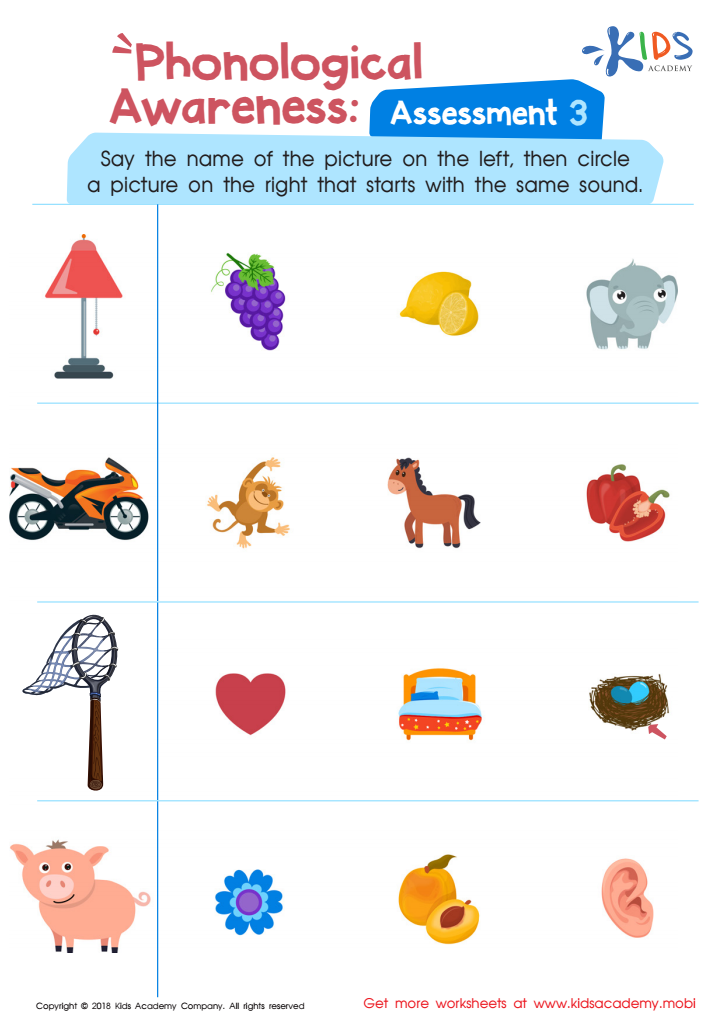
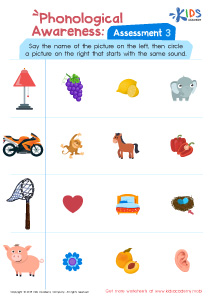
Phonological Awareness: Assessment 3 Worksheet




Sound identification is a foundational skill in early literacy development, critical for children aged 3-8. Parents and teachers should prioritize this element of phonics as it lays the groundwork for effective reading and writing. Understanding sounds helps children decode words, enhancing their ability to recognize and articulate different phonemes, which are the building blocks of language.
Phonics instruction fosters a child's ability to connect letters with sounds, facilitating smooth reading and comprehension. Early proficiency in sound identification can boost a child's confidence and motivation, making them more enthusiastic about learning. Additionally, a solid grasp of phonics supports vocabulary expansion, critical thinking, and language skills, providing a well-rounded educational foundation.
Moreover, sound identification is integral in fostering early communication skills. By recognizing and producing sounds, children engage in language more interactively, helping them articulate thoughts and emotions effectively. Support from parents and teachers in nurturing these skills through engaging activities, games, and reading can instill a lifelong love for learning and literacy. Ultimately, prioritizing sound identification equips children with the necessary tools to succeed academically and socially, making it a vital focus for any educational environment.