Vocabulary development Elementary Phonics Worksheets for Ages 3-8
4 filtered results
-
From - To
Enhance your child's vocabulary with our engaging Elementary Phonics Worksheets designed specifically for ages 3-8. These interactive worksheets combine phonics skills with vocabulary development, fostering essential language skills in young learners. Each activity encourages children to explore new words through fun exercises that promote reading, comprehension, and pronunciation. Ideal for both classroom and home learning, our resources help kids build a strong foundation in literacy while boosting their confidence. Perfect for early education settings, our worksheets provide a variety of topics and themes to keep learning exciting. Dive into our collection and watch your child flourish in their linguistic journey!
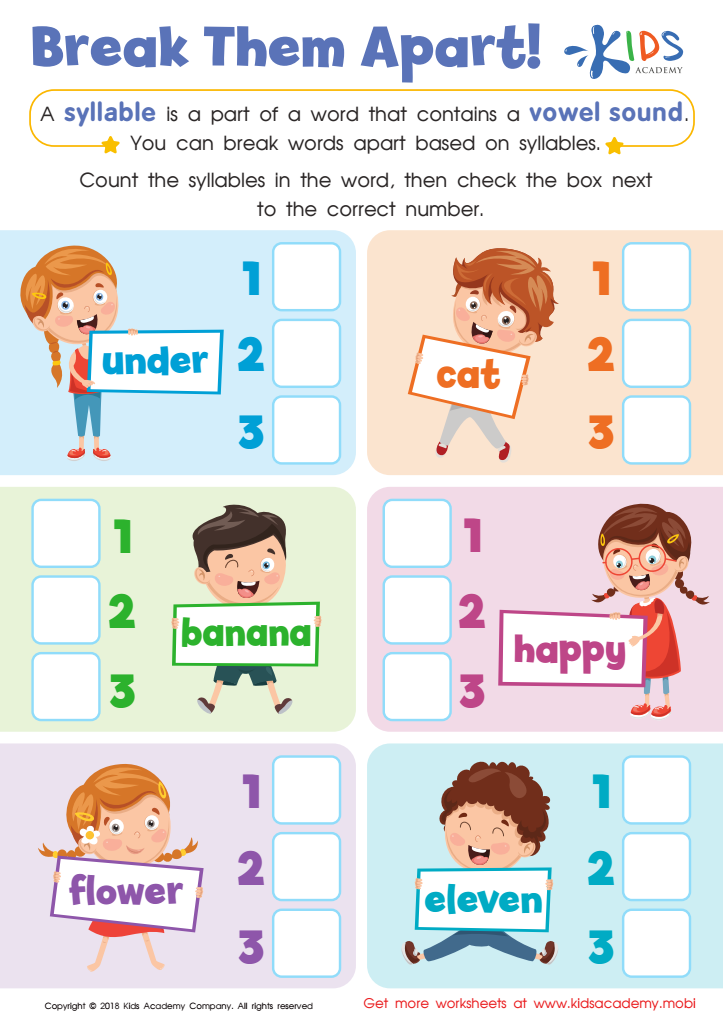
Reading: Break Them Apart Worksheet
 Assign to My Students
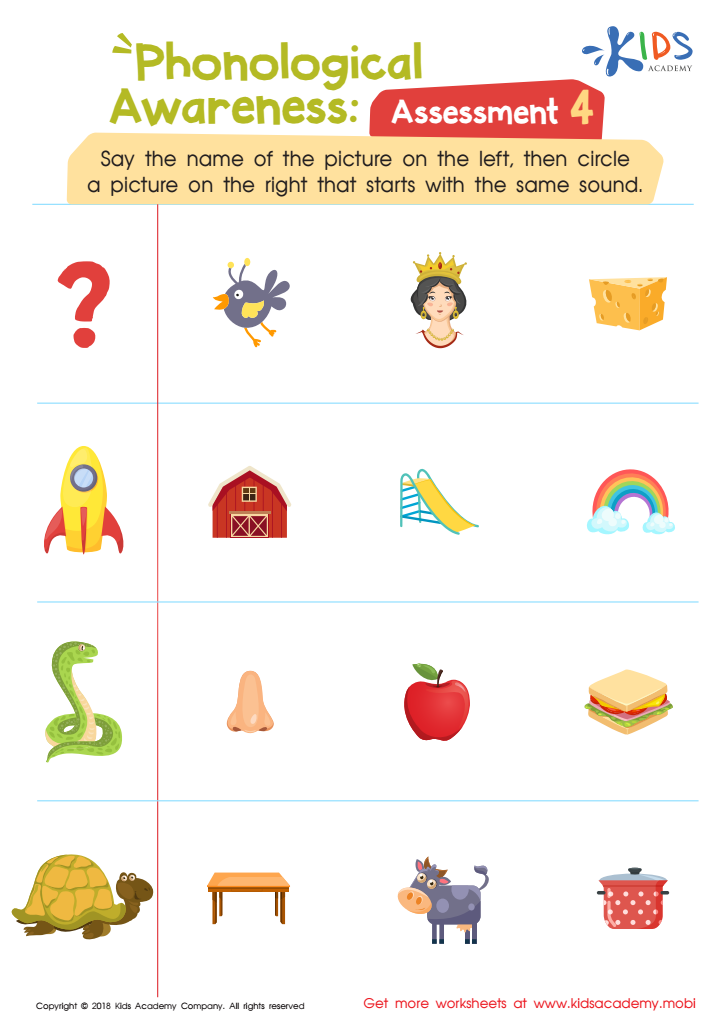
Phonological Awareness: Assessment 4 Worksheet
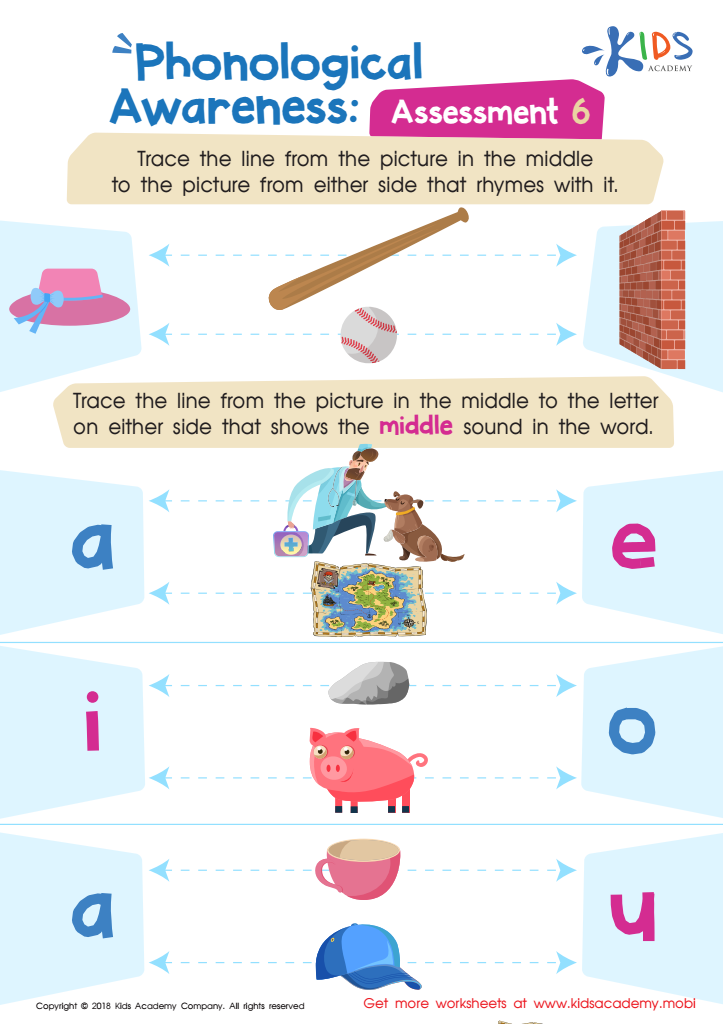
Phonological Awareness: Assessment 6 Worksheet
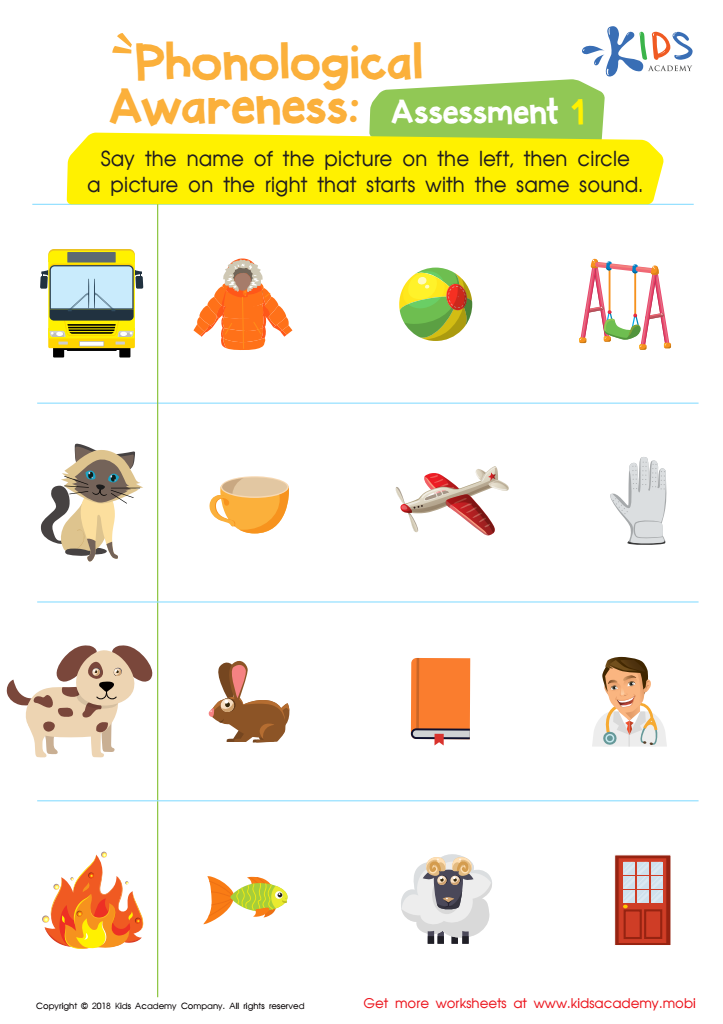
Phonological Awareness: Assessment 1 Worksheet




Vocabulary development and phonics are crucial components of early literacy for children aged 3-8. Understanding and mastering vocabulary significantly influences a child's reading and writing abilities, which are essential for overall academic success. When children build a strong vocabulary, they become better equipped to comprehend texts, express themselves clearly, and engage in meaningful conversations.
Phonics, on the other hand, helps children understand the relationship between sounds and letters, forming the foundation for decoding words. This skill not only enhances their reading fluency but also cultivates confidence in their ability to tackle new texts.
Parents and teachers play a pivotal role in fostering a rich language environment. By engaging in interactive activities like reading aloud, playing word games, and encouraging discussions, adults can provide valuable exposure to new vocabulary and contexts. This interaction fuels curiosity and a love for learning, making it easier for children to retain linguistic knowledge.
Ultimately, investing time in vocabulary and phonics development at this early stage promotes stronger communication skills, laying the groundwork for future academic and social success. By caring about these areas, parents and teachers contribute to building knowledgeable, articulate, and confident learners.







