Alphabetical order Alphabet Worksheets for Ages 3-8
3 filtered results
-
From - To
Introduce your child to the world of alphabetical order with our specially-designed Alphabet Worksheets for Ages 3-8. At Kids Academy, we make learning fun through engaging, colorful activities that bolster early literacy skills. Ideal for preschool to early elementary grades, these worksheets guide little learners in recognizing letter sequences, fostering alphabet familiarity, and developing essential reading abilities. Perfect for classroom or home use, our printable worksheets are designed to support young minds in mastering alphabetical order while enjoying an interactive, playful learning experience. Set the stage for a lifetime of learning success with Kids Academy's educational resources.
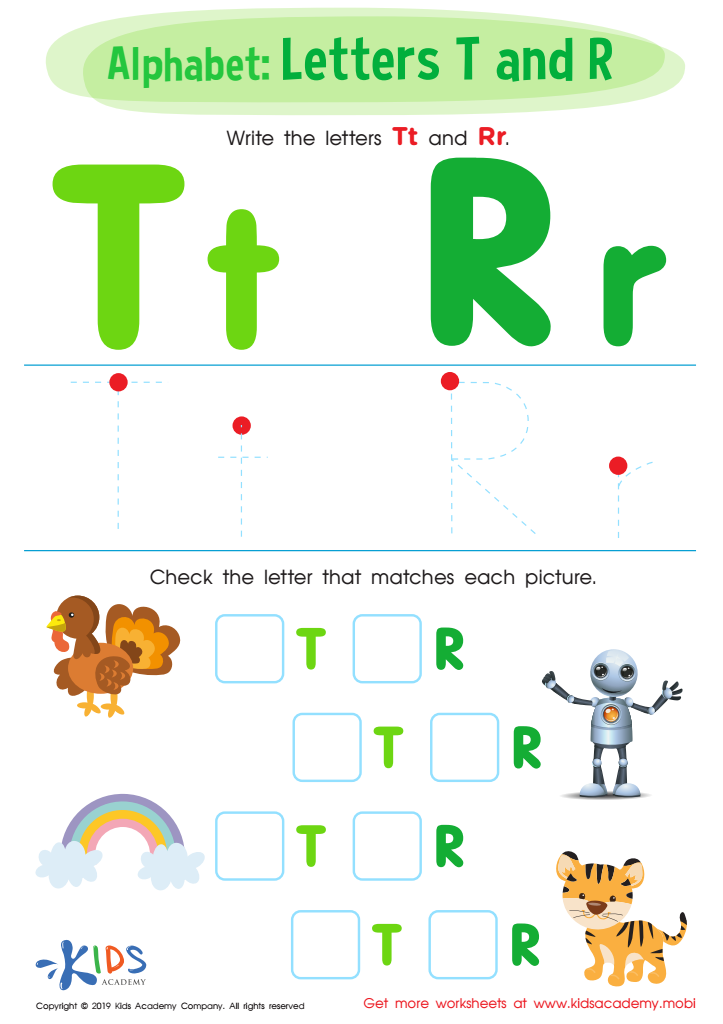
Letters T and R Worksheet
 Assign to My Students
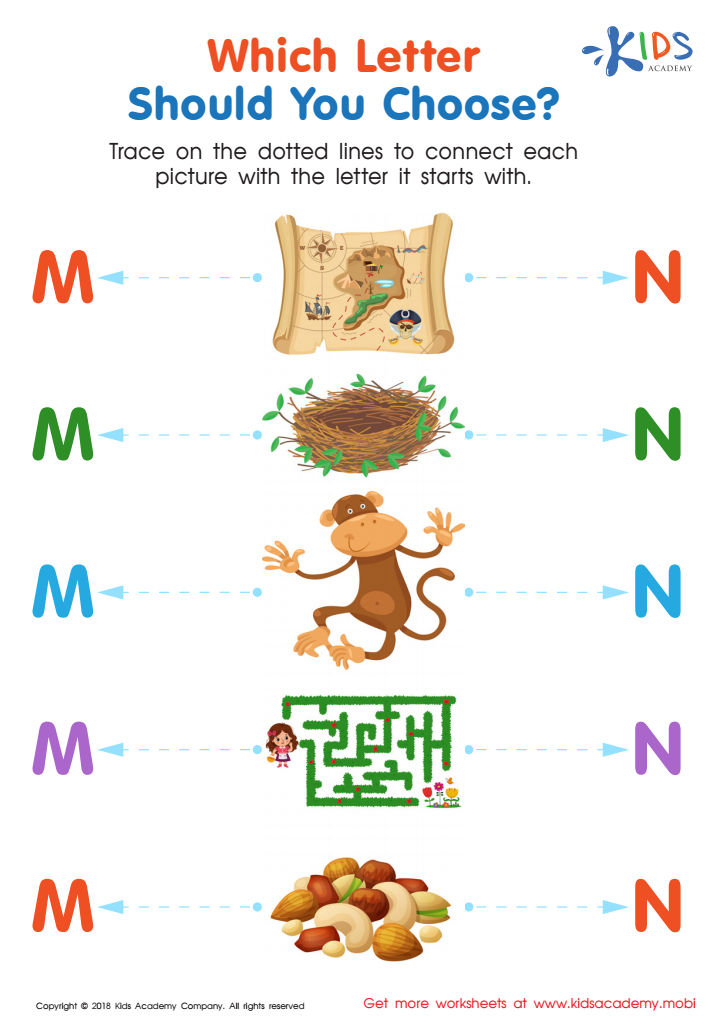
Which Letter Should you Choose? Worksheet
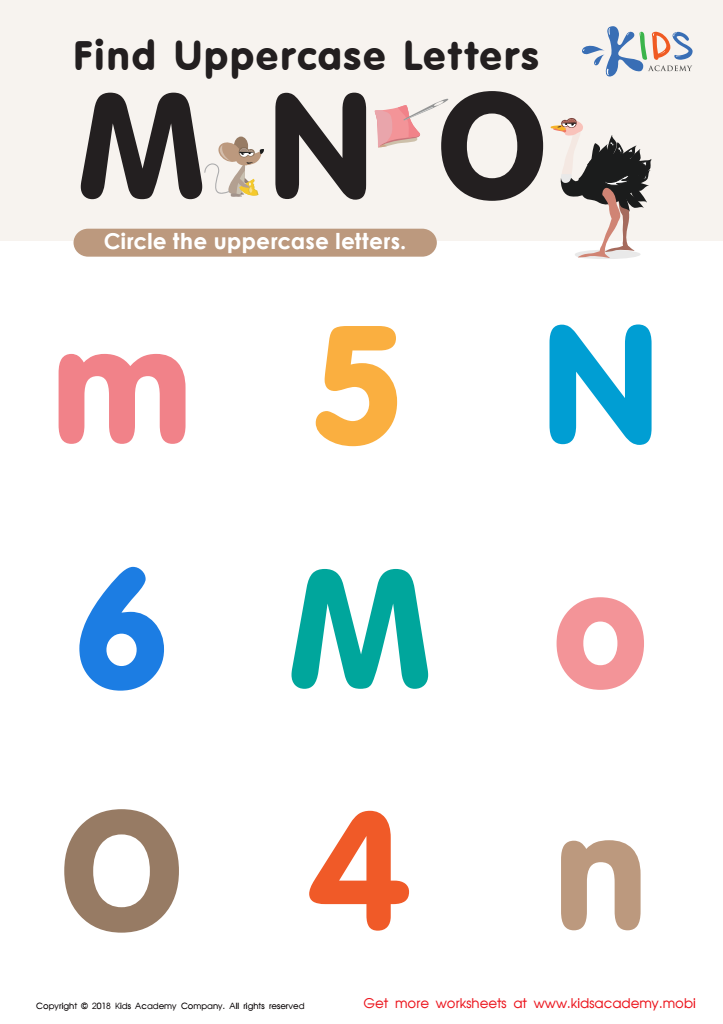
Find Uppercase Letters M, N, and O Worksheet








Introducing children to alphabetical order between the ages of 3 and 8 forms a critical foundation for their developing literacy skills. During these early years, young minds are highly receptive to absorbing foundational concepts that will support their future learning.
When children learn the alphabet and understand its order, they sharpen their letter recognition, a cornerstone of reading proficiency. This knowledge aids with phonemic awareness—identifying that letters represent specific sounds—and helps demystify the construction of words. Moreover, sequencing skills taught through alphabetical order foster critical thinking and problem-solving aptitudes, beneficial not just for literacy but for overall cognitive growth.
Parents and teachers should care deeply about instilling this knowledge, as it extends beyond the obvious academic benefits. Understanding alphabetical order equips children with practical skills for everyday tasks, such as looking up words in dictionaries or navigating indexes in books. These skills are also essential for digital literacy in an age where proficiently handling technology can significantly enhance educational experiences.
Furthermore, alphabet-based activities, like sorting and alphabet games, make learning interactive and fun, bolstering a child’s confidence and enthusiasm for school. Thus, prioritizing knowledge of alphabetical order nurtures a vital part of a child’s growth, setting a strong scaffold for lifelong learning and curiosity.







