
Fine motor development Alphabet Worksheets for Ages 3-8
3 filtered results
Difficulty Level
Grade
Age
-
From - To
Subject
Activity
Standards
Enhance your child's fine motor skills while learning the alphabet with our engaging Fine Motor Development Alphabet Worksheets designed for ages 3-8. These worksheets are specifically tailored to foster hand-eye coordination and dexterity through fun activities and exercises. Each worksheet combines letter recognition and tracing with delightful visuals, making learning both enjoyable and effective. Perfect for preschoolers and early learners, these resources can be easily integrated into home or classroom settings. Help your child build a strong foundation for writing while mastering the letters of the alphabet. Explore our collection today and watch them thrive!
Favorites
With answer key
Interactive
Uppercase Letters J, K, and L Worksheet
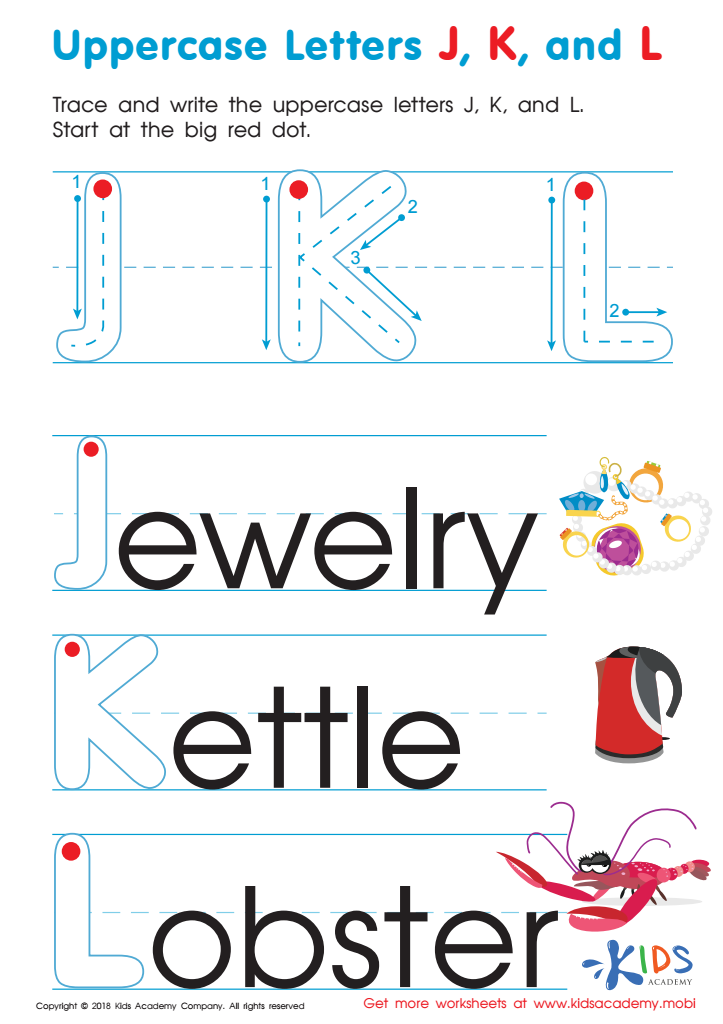
Jewelry, kettle and lobster share a common trait: their names start with J, K and L, 3 letter neighbors found in the middle of the alphabet. This traceable worksheet helps kids learn letter sounds and practice writing. Arrows and tracing lines make it easy to form neat pencil strokes. Red dot shows where kids should start. Perfect for preschoolers and kindergarteners!
 Assign to My Students
Uppercase Letters J, K, and L Worksheet
Worksheet
Letter W Tracing Page
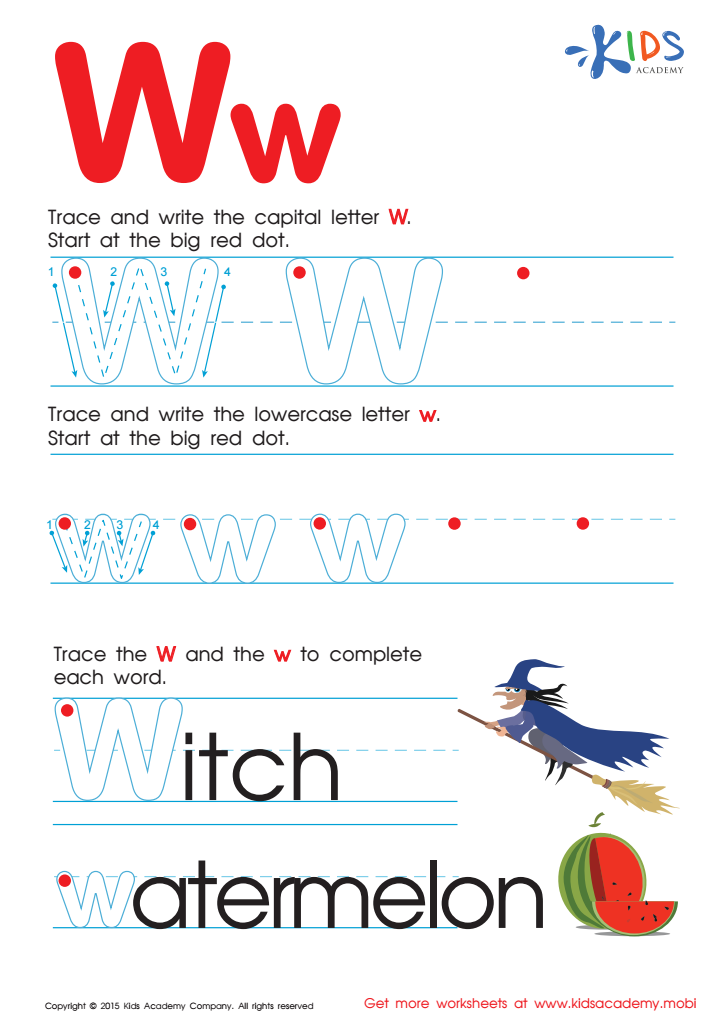
Trace and write the capital and lowercase letter W with this free letter tracing worksheet by Kids Academy. Complete the words "Witch" (capital) and "watermelon" (lowercase). Check out our other kindergarten alphabet worksheets!
Letter W Tracing Page
Worksheet
Cursive ABCs: Uppercase E
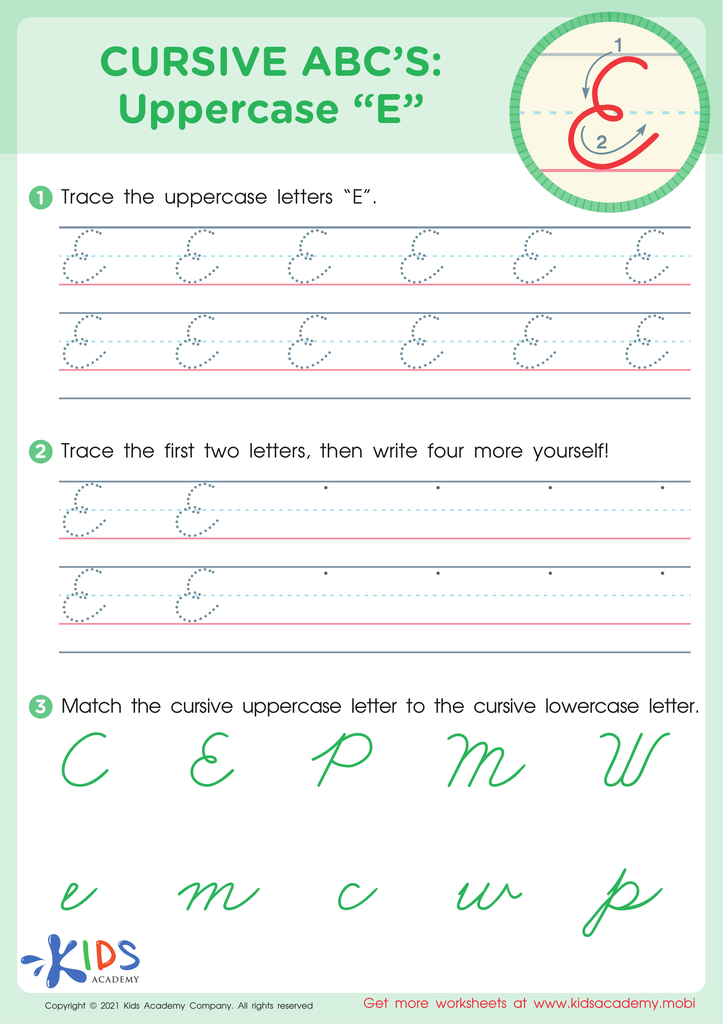
Ask your child if they can identify the letter 'E' and give examples. Each letter is unique, so provide coaching. Have them trace cursive 'E' to become familiar and boost confidence. Then, ask them to write it on their own.
Cursive ABCs: Uppercase E
Worksheet
Join Kids Academy for Free
Who is primarily going to use this learning content?







Fine motor development is crucial for children aged 3-8 as it lays the foundation for various skills necessary for academic success and daily life. During this stage, children are refining the precision and control of their hand movements, which is essential for tasks such as writing, cutting with scissors, and buttoning clothing. These skills not only enhance children's ability to express their creativity through art and writing but also boost their confidence in completing tasks independently.
Incorporating the alphabet into fine motor activities, like tracing letters, building letters with play dough or blocks, and practicing writing, helps children develop both their motor skills and literacy. Engaging in these activities also reinforces their understanding of letter shapes and sounds, which is vital for reading development.
Additionally, fine motor skills are intertwined with cognitive development. Activities that promote fine motor skills can strengthen neural connections in the brain, improving concentration and focus. Teachers and parents who prioritize fine motor development help cultivate essential life skills in children, ultimately promoting their readiness for school and future learning. By fostering fine motor skills through engaging, alphabet-based activities, parents and teachers can support holistic development and help set children on a path to success.







