Fine motor skills improvement Alphabet Worksheets for Ages 3-8
5 filtered results
-
From - To
Enhance your child's fine motor skills while learning the alphabet with our engaging worksheets designed for ages 3-8! Our fun-filled activities encourage children to practice tracing, writing, and identifying letters, promoting dexterity and coordination. Each worksheet is thoughtfully crafted to support the development of essential hand-eye coordination and grip strength, ensuring a solid foundation for early writing skills. Perfect for parents, teachers, or homeschooling, these printable resources make learning exciting and effective. Watch your little learners build confidence as they master the letters of the alphabet while improving their fine motor abilities. Discover the joy of learning today!
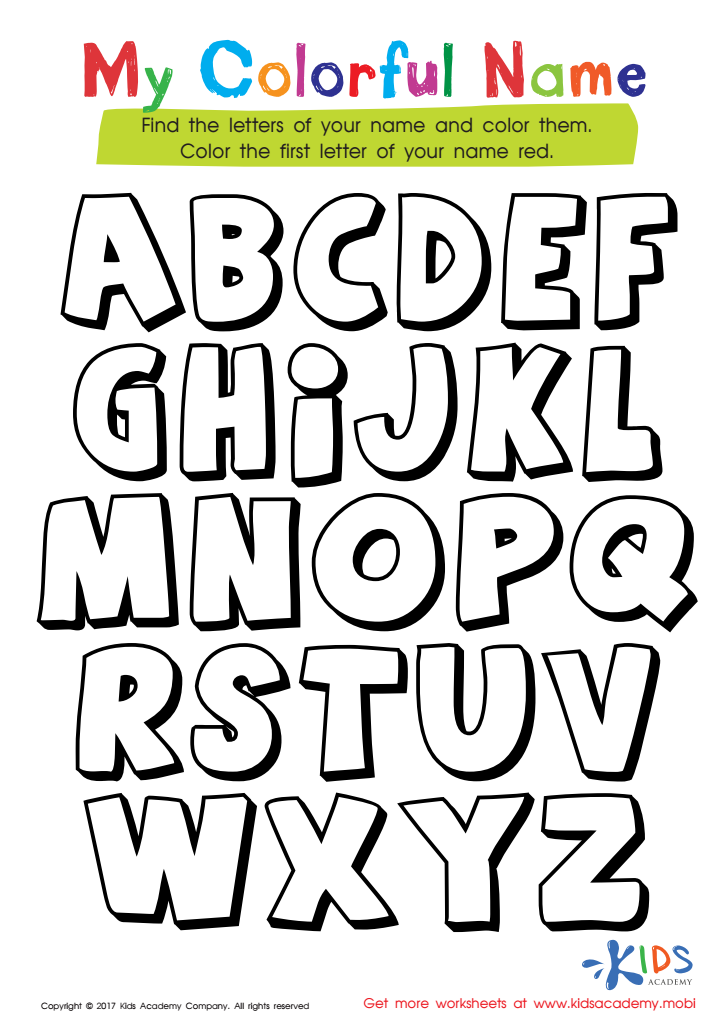
My Colorful Name Worksheet
 Assign to My Students
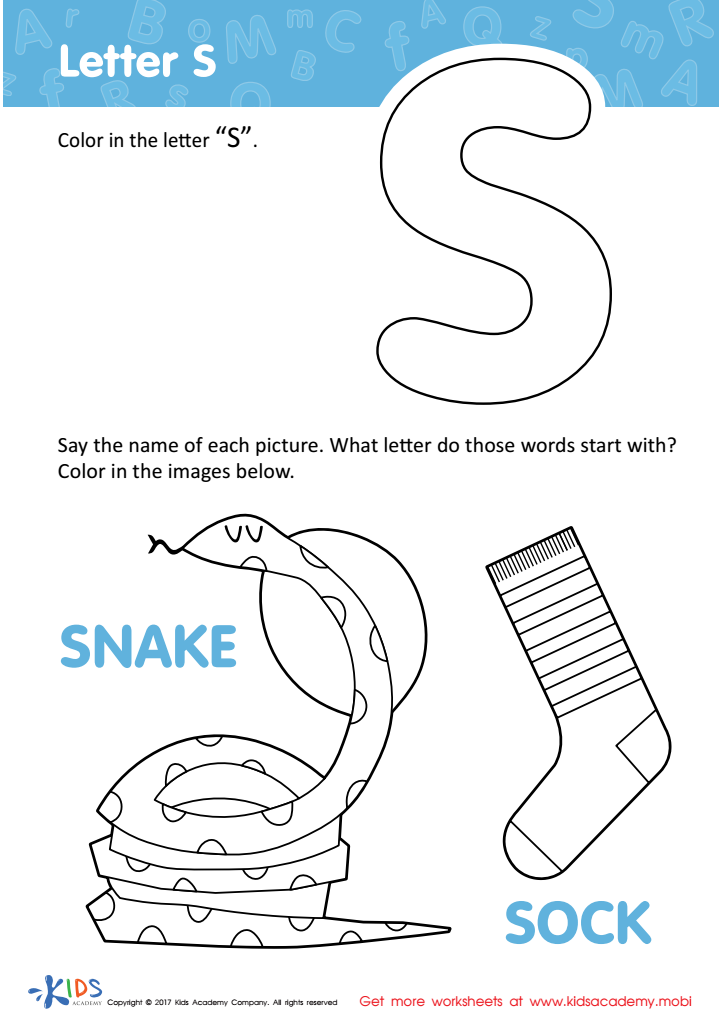
Letter S Coloring Sheet
Assign to My Students
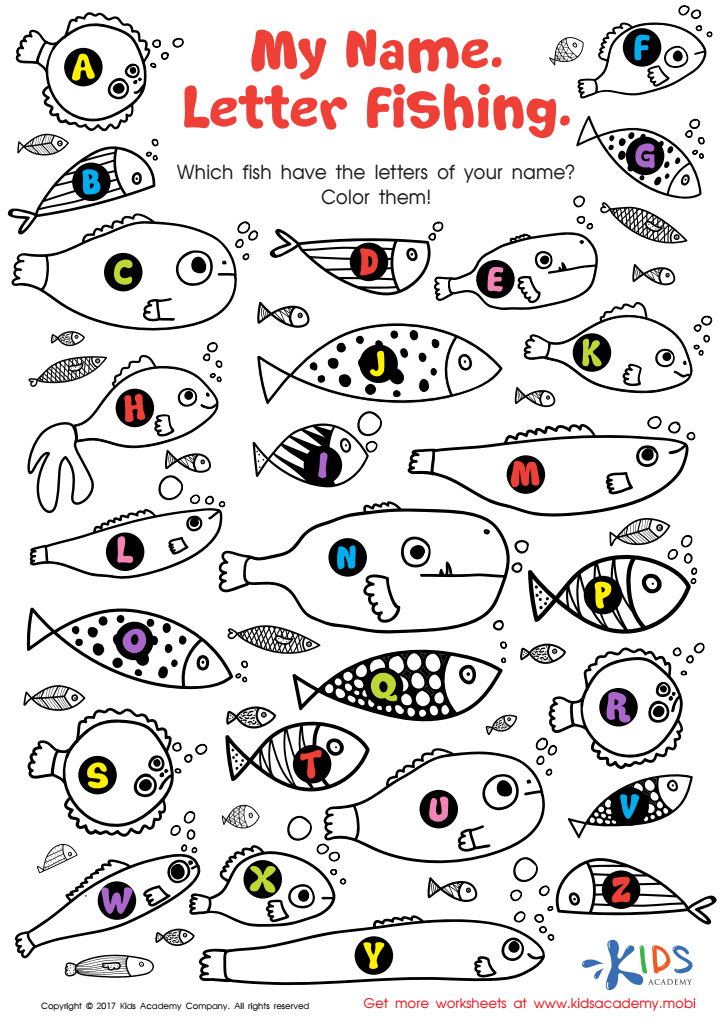
My Name: Letter Fishing Worksheet
Assign to My Students
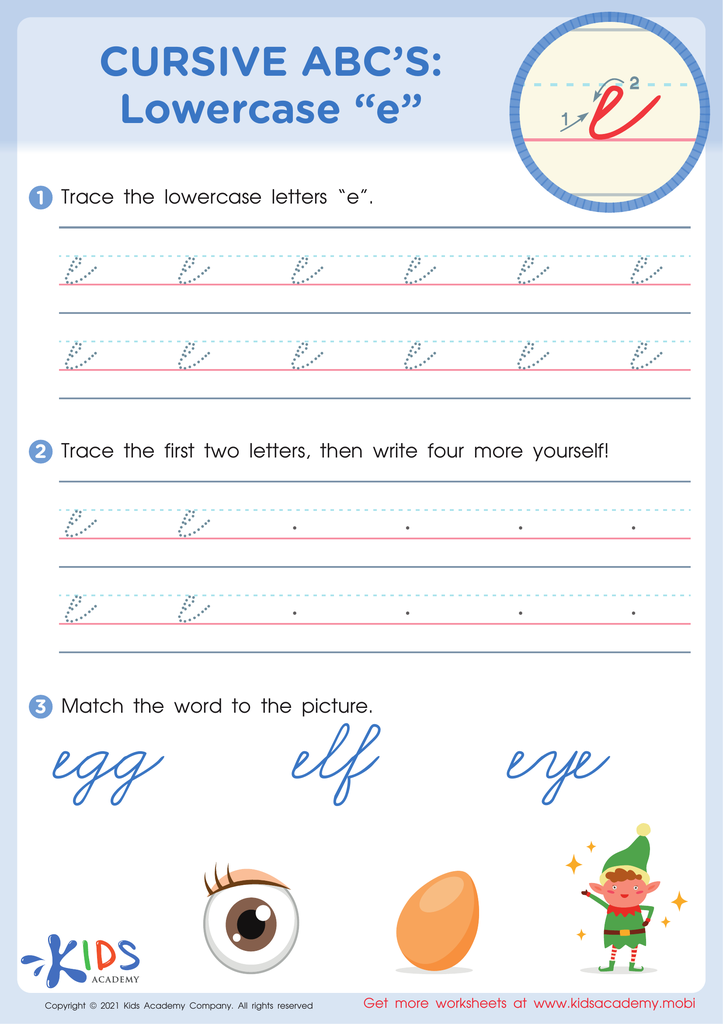
Cursive ABCs: Lowercase e
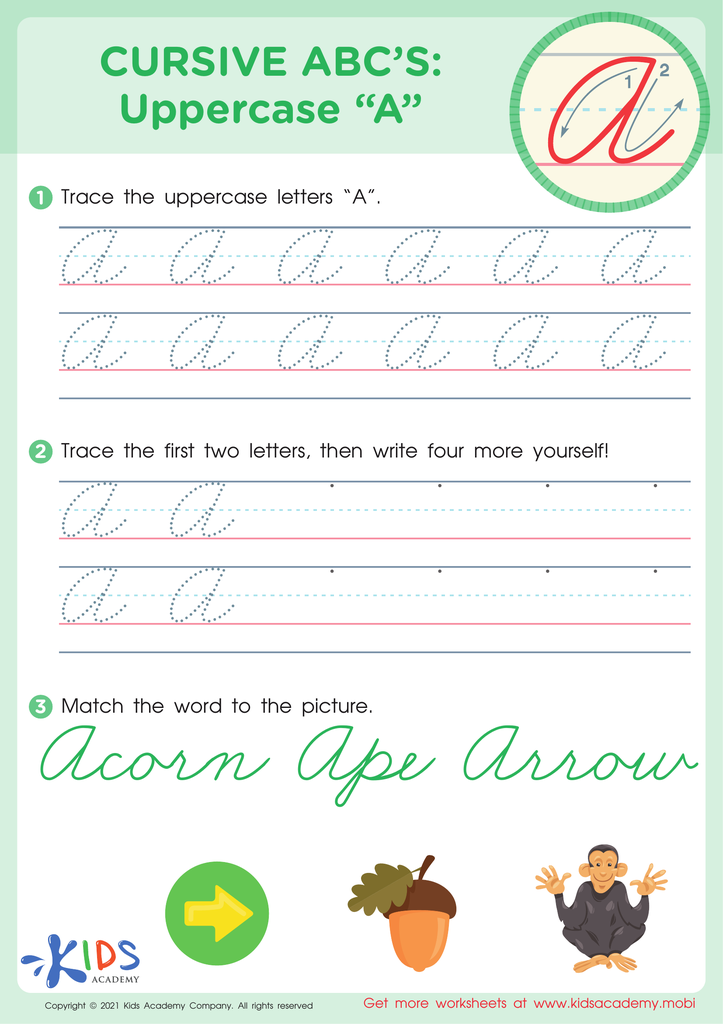
Cursive ABCs: Uppercase A







Fine motor skills are crucial for young children's overall development and play a significant role in their readiness for reading and writing, particularly when learning the alphabet. As children aged 3-8 refine these skills, they develop the ability to manipulate small objects, which aids in crafting letters with precision. Improved fine motor skills enhance hand-eye coordination and dexterity, providing a strong foundation for penmanship.
For parents and teachers, fostering fine motor skills is vital because it directly impacts a child's confidence and independence in school and daily activities. Children who master these skills are better equipped to handle writing utensils, cutting with scissors, and engaging in other learning activities that require precision. Additionally, developing fine motor skills through engaging activities, such as drawing or building with blocks, promotes cognitive development and problem-solving abilities.
These skills also carry social benefits. As children participate in group activities and share materials, they enhance their social interactions and learn turn-taking and collaboration. Ultimately, by supporting fine motor skills improvement, parents and teachers can help set children on a path to academic success, ensuring they are well-prepared for the challenges of literacy and beyond.







