Long vowel recognition Alphabet Worksheets for Ages 3-8
3 filtered results
-
From - To
Elevate your child's reading skills with our engaging Long Vowel Recognition Alphabet Worksheets designed for ages 3-8! These expertly crafted worksheets help young learners distinguish and pronounce long vowel sounds, a fundamental step in mastering reading. Each worksheet combines fun illustrations with practice activities to reinforce learning and keep kids engaged. Ideal for both classroom settings and at-home learning, these resources support early literacy development through a variety of interactive and kid-friendly exercises. Guide your child towards reading fluency, boosting their confidence and love for learning with these valuable educational tools.
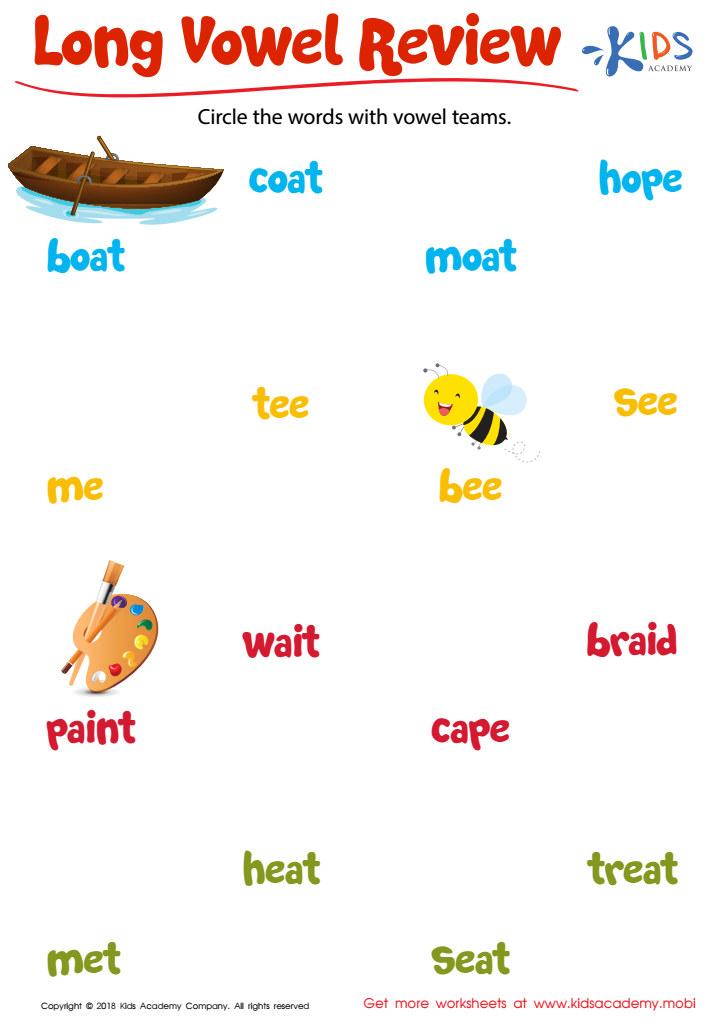
Long Vowel Review Worksheet
 Assign to My Students
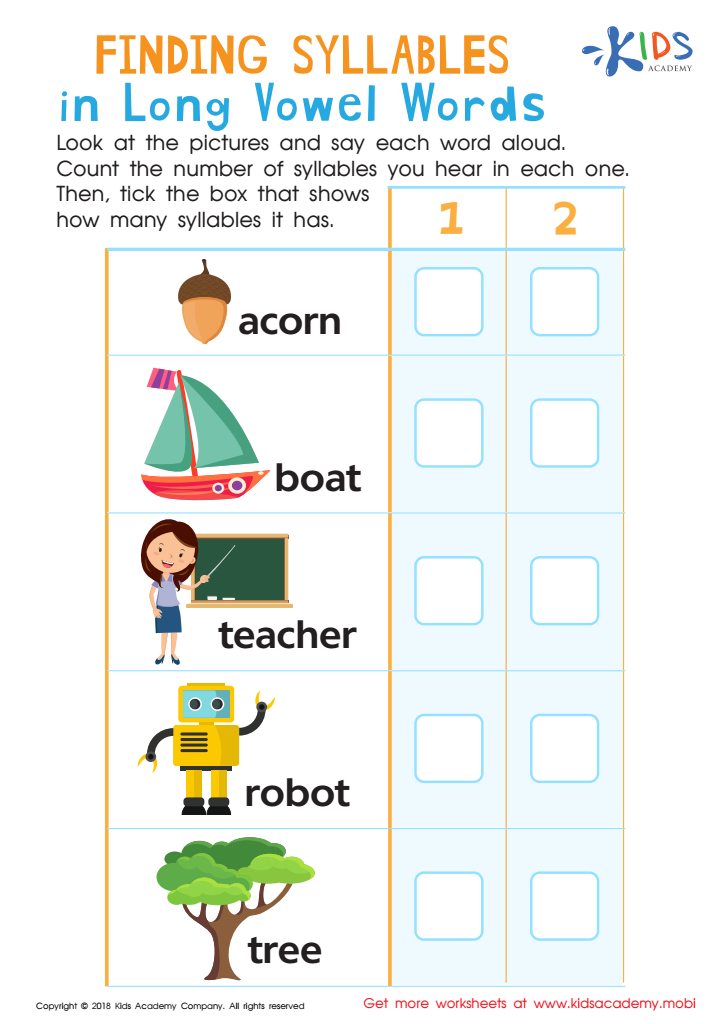
Finding Syllables in Long Vowel Words Worksheet
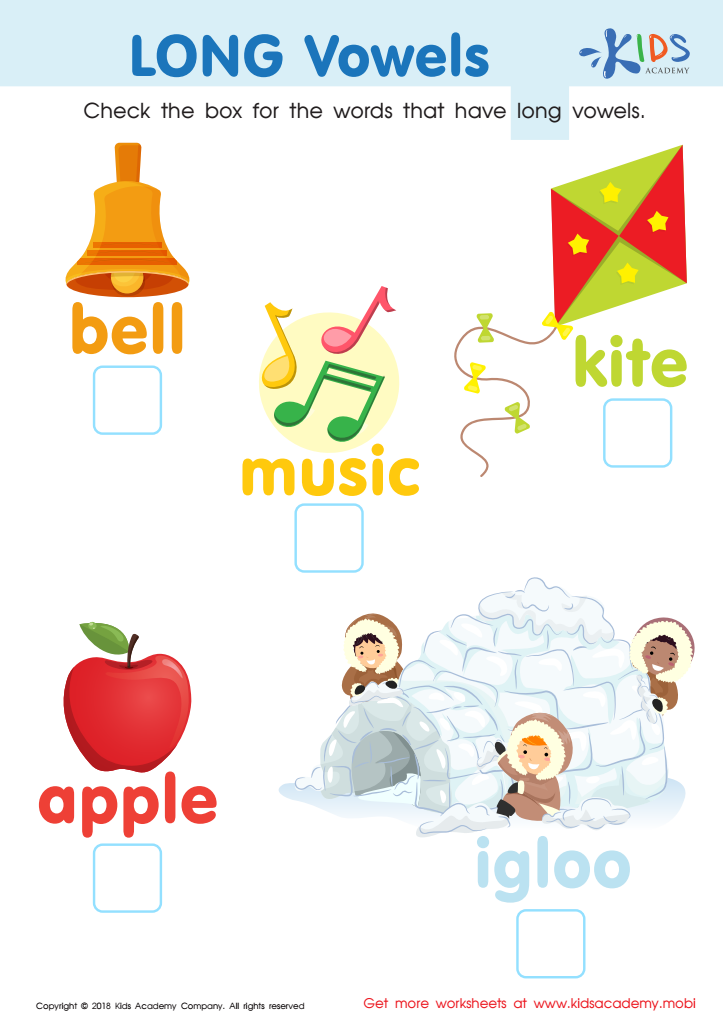
long vowels Worksheet






Long vowel recognition is crucial in early literacy development, and both parents and teachers should prioritize it for children aged 3-8. Understanding long vowels enhances phonemic awareness, which is the ability to hear, identify, and manipulate phonemes. This skill is foundational for reading and spelling proficiency.
When children grasp the concept of long vowels—where the vowel sounds like its name (e.g., "a" in "cake")—they can better decode and predict words. This predictability fosters confidence and fluency in reading, reducing frustration and encouraging a love for learning.
Moreover, long vowel recognition aids in distinguishing between similar-sounding short and long vowel words (e.g., "cap" vs. "cape"). This differentiation enhances comprehension and enriches vocabulary, essential for effective communication. It also lays groundwork for more complex linguistic skills, such as syllabication, enabling children to tackle multisyllabic words with ease.
Engaging activities, such as songs, games, and read-alouds that highlight long vowels, can make learning enjoyable and effective. By nurturing this skill early on, parents and teachers contribute to a child’s lifelong academic success and confidence. Investing time in long vowel recognition during these formative years sets a strong foundation for future educational endeavors.







