Rhyming skills Alphabet Worksheets for Ages 3-8
5 filtered results
-
From - To
Enhance your child's learning journey with our Rhyming Skills Alphabet Worksheets designed specifically for ages 3-8. These engaging and interactive worksheets promote literacy development by helping young learners recognize rhyming patterns and sounds. Each page is thoughtfully crafted to introduce letters and their corresponding sounds through fun activities that make learning enjoyable. Your child will develop essential phonemic awareness while building their vocabulary and comprehension skills. Perfect for home or classroom use, these worksheets are a valuable resource for parents and educators alike. Download our Rhyming Skills Alphabet Worksheets today and watch your child’s confidence soar as they master the joy of rhyming!
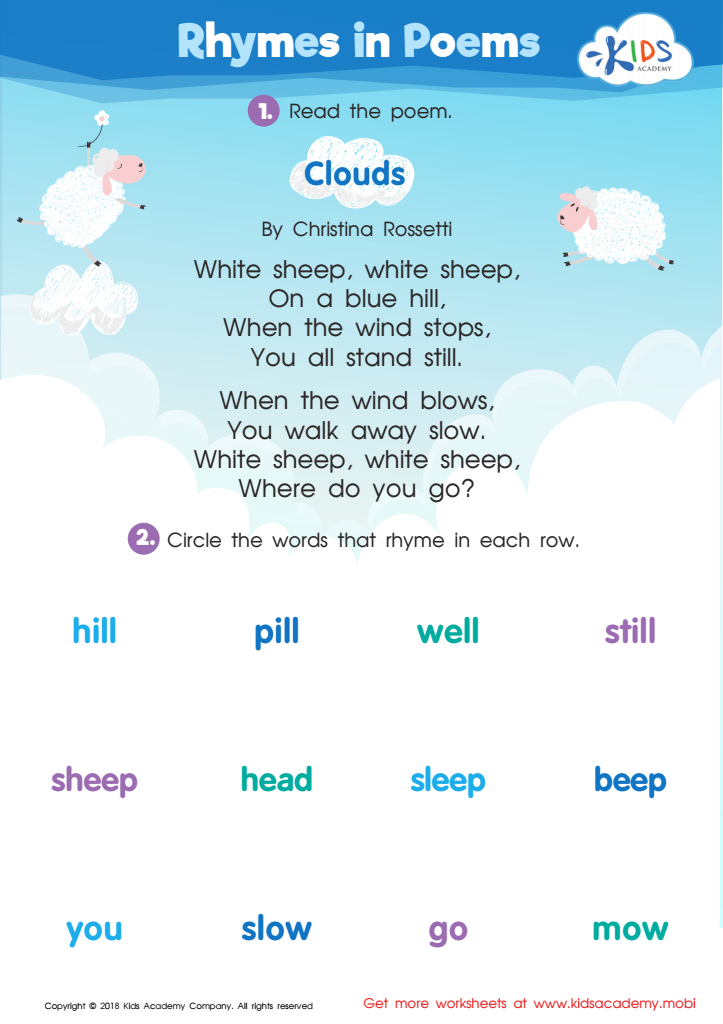
Rhymes in Poems Worksheet
 Assign to My Students
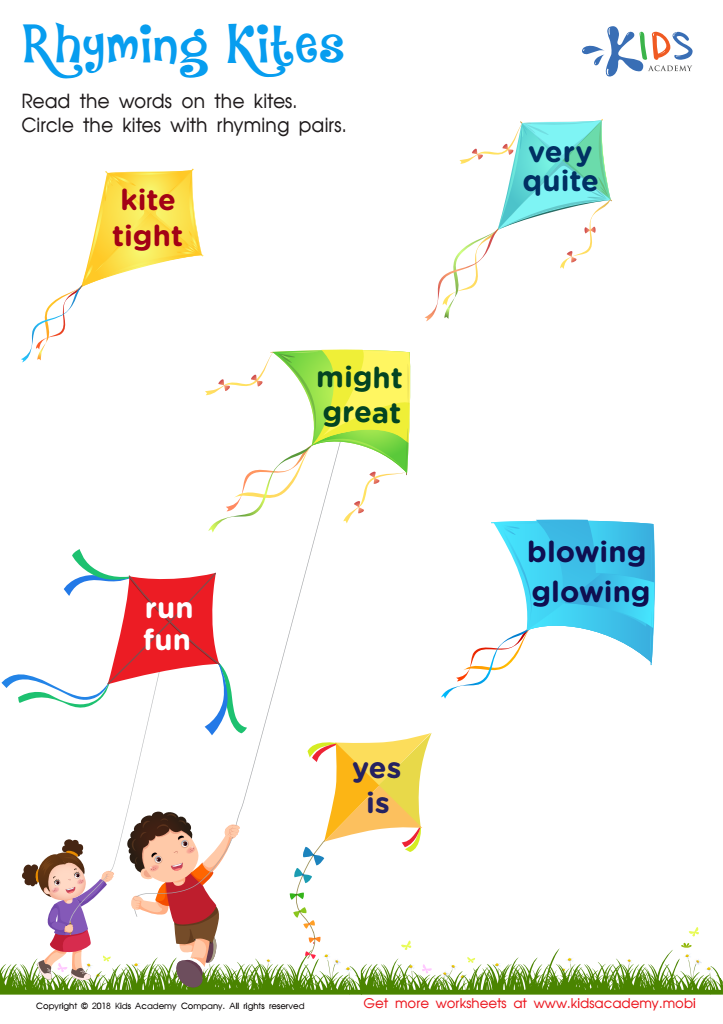
Rhyming Kites Worksheet
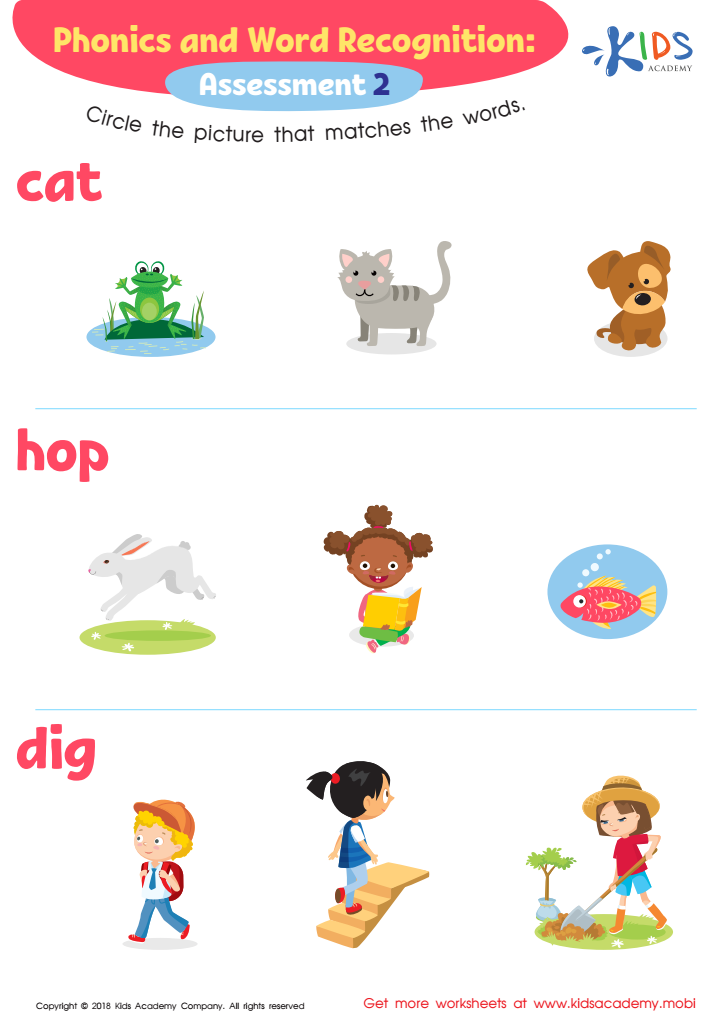
Phonological Awareness: Assessment 2 ELA Worksheet
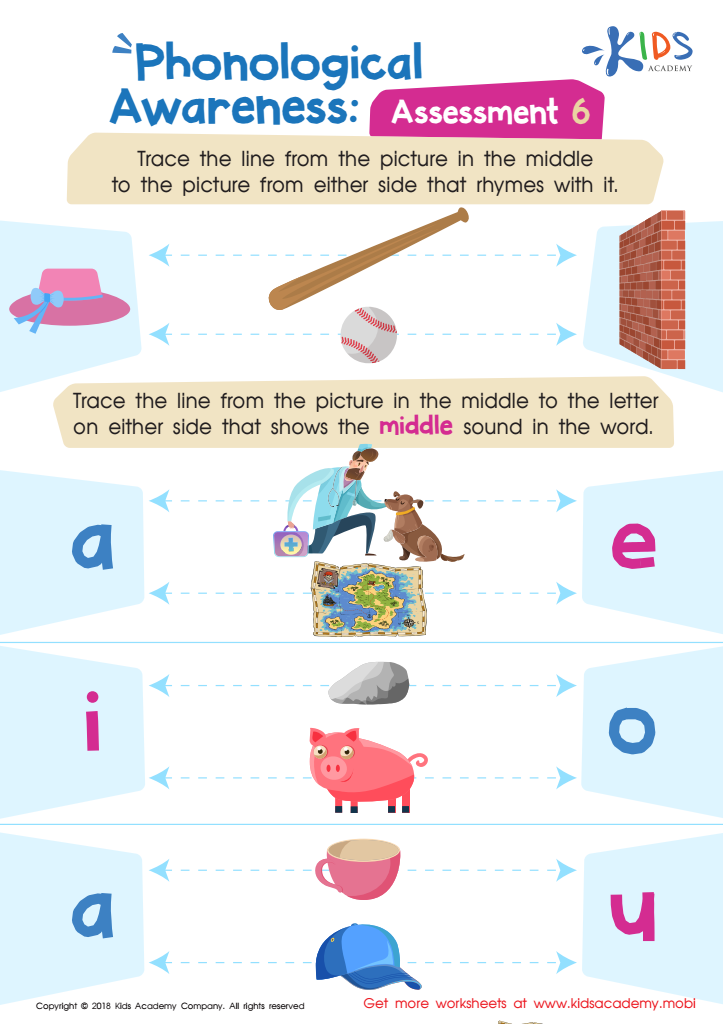
Phonological Awareness: Assessment 6 Worksheet
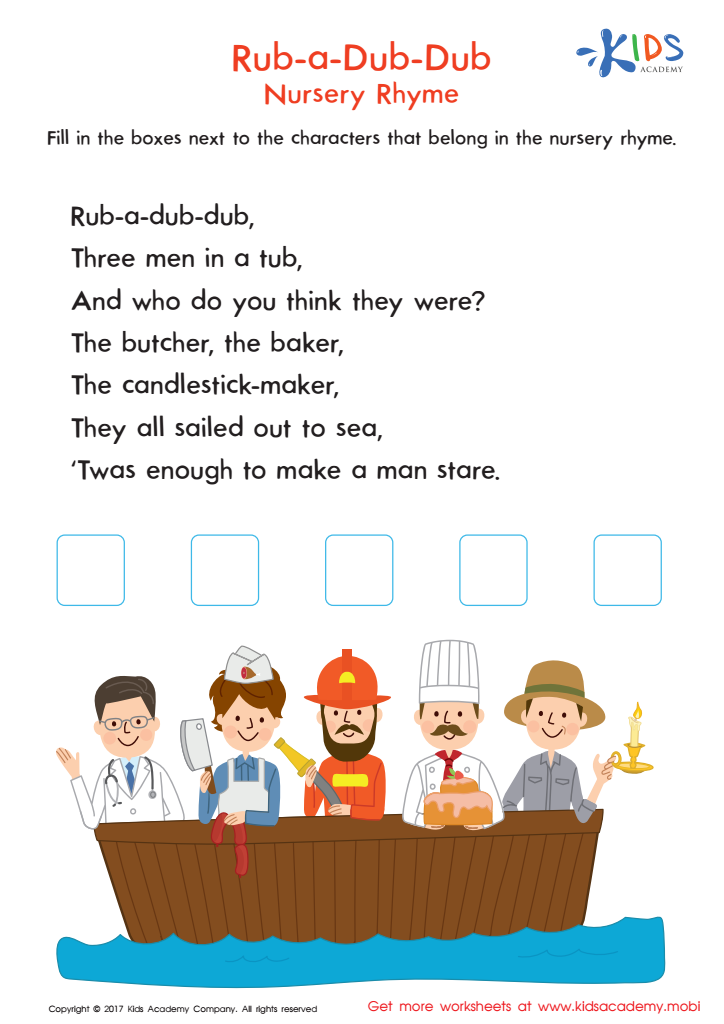
Rub a Dub Dub Printable








Rhyming skills are crucial for young children aged 3-8 as they significantly contribute to early literacy development. First, rhyming helps enhance phonological awareness, a foundational skill for learning to read. When children recognize and produce rhyming words, they sharpen their auditory discrimination abilities, allowing them to manipulate sounds within words—a key pre-reading skill.
Moreover, engaging with rhymes makes learning enjoyable and memorable. Rhymes foster a sense of rhythm and musicality in language, encouraging children to play with words. This playful interaction with language can boost vocabulary development and improve their ability to express ideas clearly.
In addition, rhyming activities strengthen memory and recall, as they often involve repetitive patterns that are easier for children to remember. These skills not only aid in reading but also promote critical thinking and creative play, as children begin to create their own rhymes and stories.
Therefore, parents and teachers should prioritize rhyming exercises in their teaching strategies, recognizing it as a vital stepping stone to literacy. By promoting rhyming, they equip children with essential skills for reading success and a lifelong love for language.







