
Alphabetical understanding Letter Recognition Worksheets for Ages 3-8
3 filtered results
Difficulty Level
Grade
Age
-
From - To
Subject
Activity
Standards
Discover a world of fun and learning with our Alphabetical Understanding Letter Recognition Worksheets, designed for children ages 3-8! These engaging resources foster essential letter recognition skills, helping young learners identify and differentiate between letters. Each worksheet is crafted to promote not only academic growth but also fine motor skills and cognitive development. With a variety of activities that captivate young minds, your child will enjoy tracing, coloring, and matching letters to enhance their understanding of the alphabet. Perfect for home or classroom use, these worksheets pave the way for reading readiness and lifelong literacy skills. Start your child's alphabet journey today!
Favorites
With answer key
Interactive
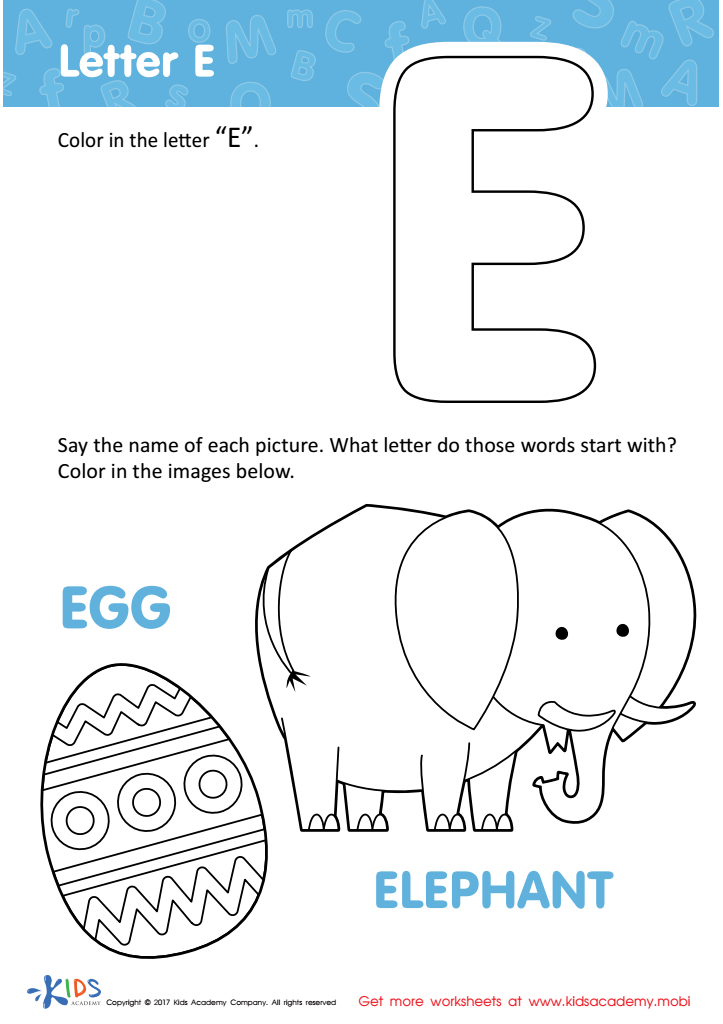
Letter E Coloring Sheet
Coloring pages are great for teaching kids the alphabet and words! This "E" page features a cute elephant and Easter egg. Kids will love it and learn the letter "E" at the same time. 80 words
Download (PDF)
 Assign to My Students
Assign to My Students
Letter E Coloring Sheet
Worksheet
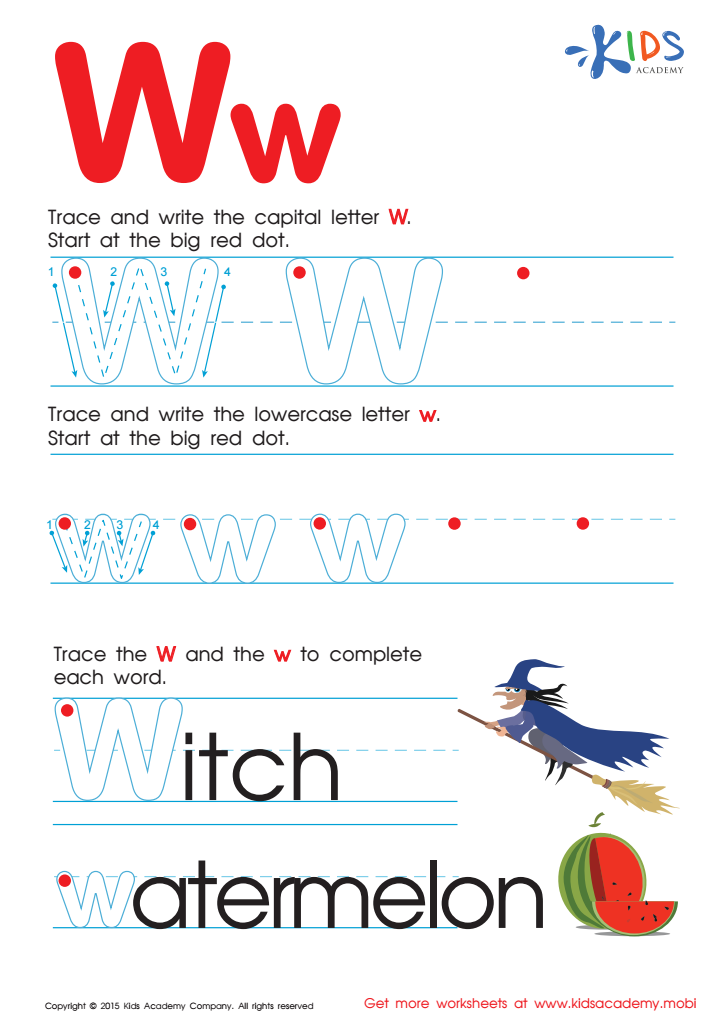
Letter W Tracing Page
Trace and write the capital and lowercase letter W with this free letter tracing worksheet by Kids Academy. Complete the words "Witch" (capital) and "watermelon" (lowercase). Check out our other kindergarten alphabet worksheets!
Letter W Tracing Page
Worksheet
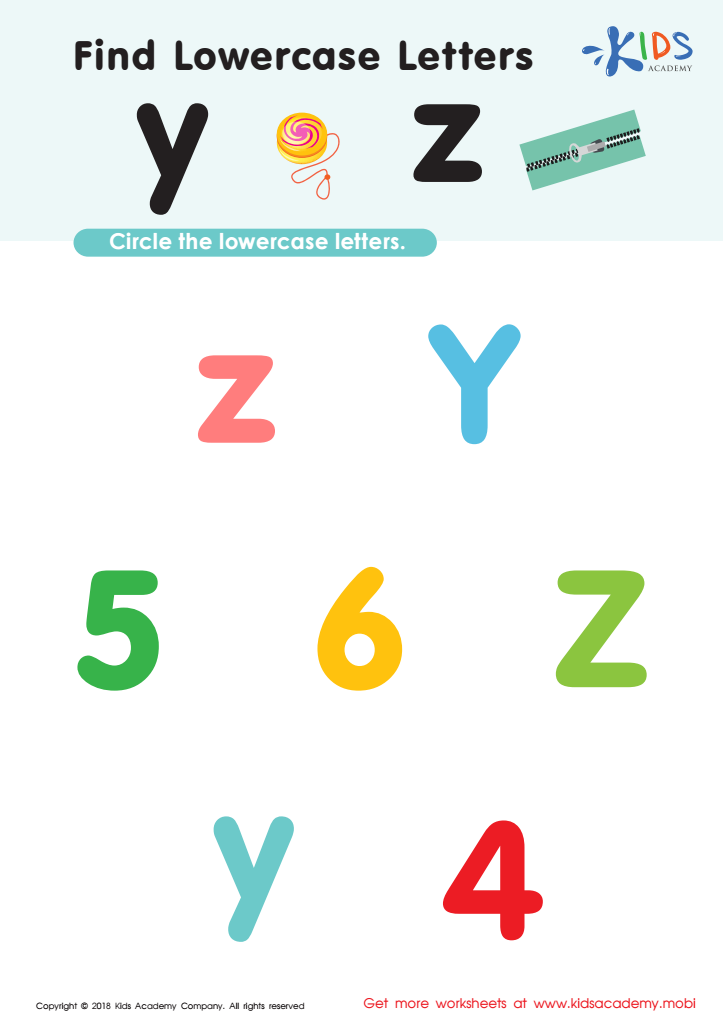
Find Lowercase Letters y z Worksheet
Help your kid learn the alphabet. Before they can move on to words and reading, they must first know the lower and uppercase letters. Show them how to find the letters y and z in this worksheet, which is filled with uppercase letters and numbers. Together, find and circle them.
Find Lowercase Letters y z Worksheet
Worksheet
Join Kids Academy for Free
Who is primarily going to use this learning content?








Alphabetical understanding and letter recognition are foundational skills crucial for children aged 3-8 as they serve as the building blocks for literacy and academic success. When children are able to recognize letters and understand the concept of alphabetization, they begin to unlock the realm of reading and writing. This knowledge empowers them to decode words, making reading a less daunting task and fostering a love for literature early on.
For parents and teachers, nurturing alphabetical understanding helps boost children's confidence, encouraging them to participate actively in learning activities. Recognizing letters also enhances vocabulary development and spelling skills, as children learn to connect sounds with symbols.
Moreover, early letter recognition is linked to future academic performance. Studies show that children who grasp these concepts early are more likely to excel in reading and writing later in their educational journey. Addressing alphabetic understanding sets the stage for effective communication skills and strengthens cognitive development by encouraging critical thinking through language.
In summary, fostering alphabetical understanding and letter recognition signifies a commitment to a child's lifelong learning journey, ultimately aiding in their social and academic growth. This foundational skill lies at the heart of literacy, making it a priority for both parents and educators.







