Vocabulary Building Letter Recognition Worksheets for Ages 3-8
3 filtered results
-
From - To
Welcome to our "Vocabulary Building Letter Recognition Worksheets" page, designed for children ages 3-8! These engaging worksheets combine the essential skills of letter recognition and vocabulary expansion in a fun, interactive way. Each activity encourages young learners to identify letters while exploring new words, making it easier to remember their sounds and meanings. Perfect for preschool and early elementary students, our resources promote early literacy skills through colorful designs and engaging exercises. Help your child enhance their vocabulary and confidence in reading by exploring our thoughtfully crafted worksheets. Start building a strong foundation for lifelong learning today!
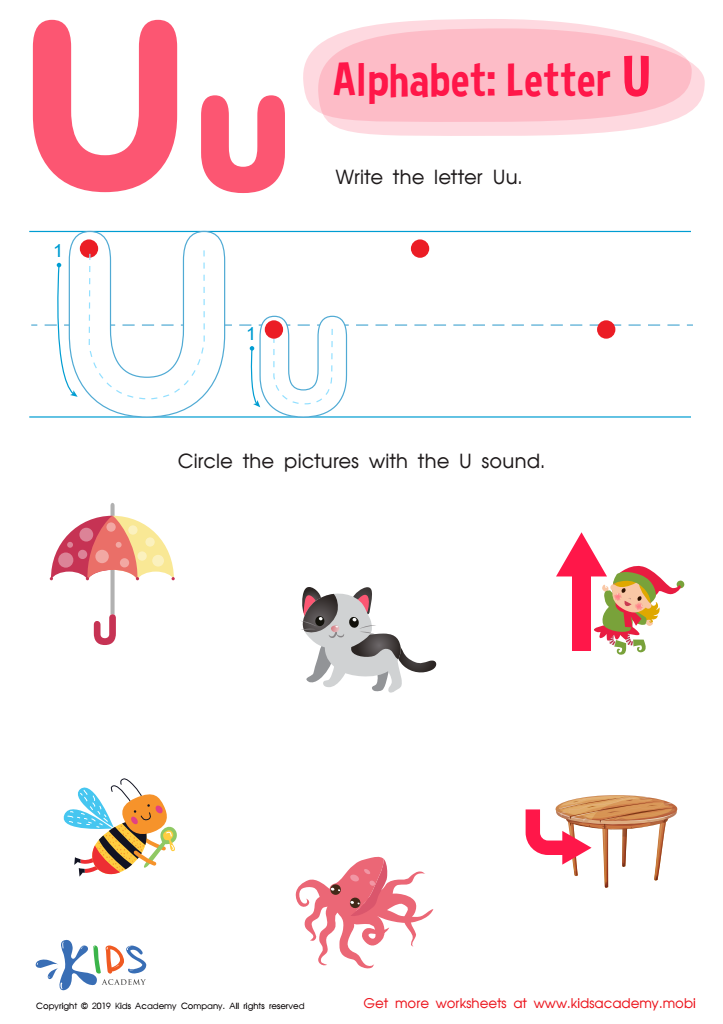
Letter U Tracing Worksheet
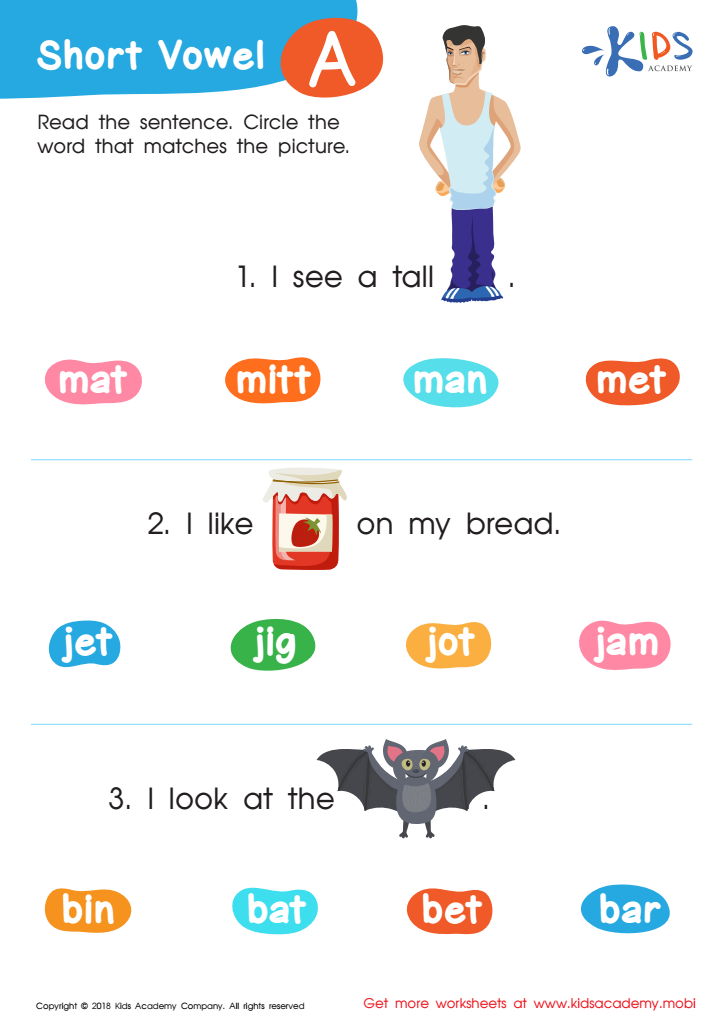
Short Vowel /a/ Worksheet
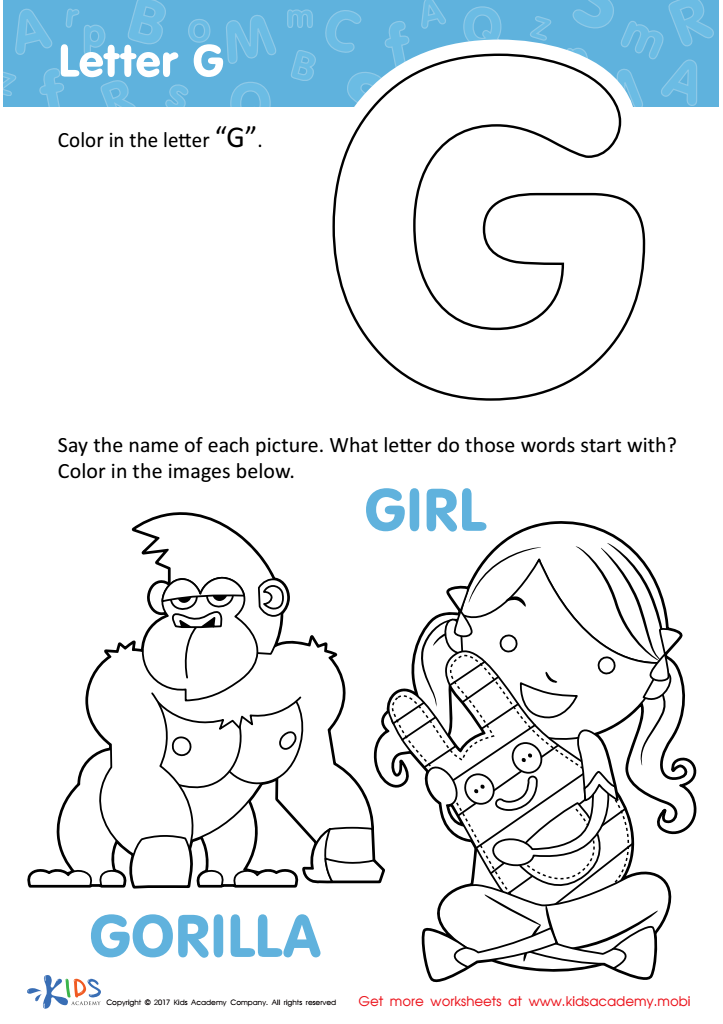
Letter G Coloring Sheet
 Assign to My Students








Vocabulary building and letter recognition for children aged 3-8 are critical components in early literacy development. At this stage, children's brains are exceptionally receptive, making it an ideal time to introduce them to letters and vocabulary. When parents and teachers prioritize these skills, they set the foundation for effective communication and comprehension.
Firstly, strong vocabulary skills enhance reading abilities, allowing children to better understand and enjoy stories. Recognizing letters is the first step in learning to read, and it fosters a love for books and language. Additionally, a robust vocabulary helps children express their thoughts and feelings clearly, boosting their confidence and social interactions.
Moreover, vocabulary and letter recognition are linked to academic success across all subjects. Understanding basic words enables children to grasp more complex concepts as they progress in school. It also aids in their writing skills, helping them formulate sentences and articulate ideas.
Finally, fostering these skills helps bridge gaps in literacy development. Children who lack vocabulary and letter knowledge may struggle in later grades, leading to academic challenges. Engagement from parents and educators in vocabulary building thus empowers children and instills lifelong learning habits, ensuring they are well-prepared for future educational endeavors.







