Vocabulary development Letter Sounds Worksheets for Ages 3-8
7 filtered results
-
From - To
Enhance your child's vocabulary development with our engaging Letter Sounds Worksheets, designed for ages 3-8! These fun, interactive worksheets provide young learners with the foundational skills needed for reading and language mastery. Each worksheet focuses on letter sounds and vocabulary building, allowing children to connect letters to words through captivating activities. Parents and teachers can easily access these printable resources, facilitating an enjoyable learning experience in homes or classrooms. Foster your child's curiosity and communication skills while making learning exciting and effective. Start shaping confident readers and expressive communicators today with our essential Letter Sounds Worksheets!
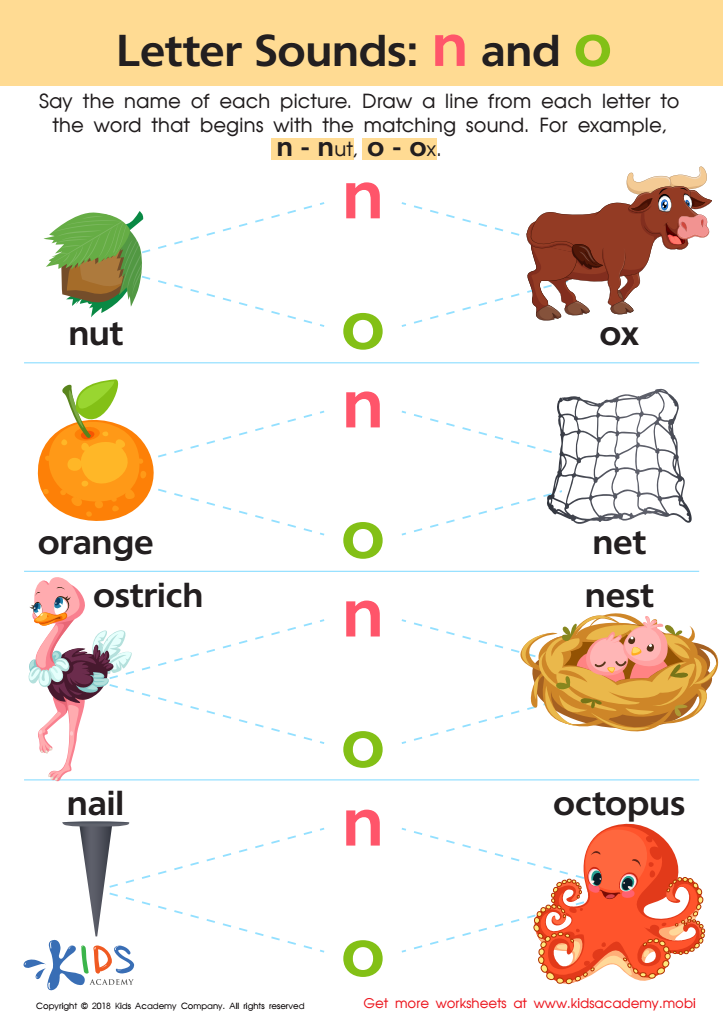
Letter N and O Sounds Worksheet
 Assign to My Students
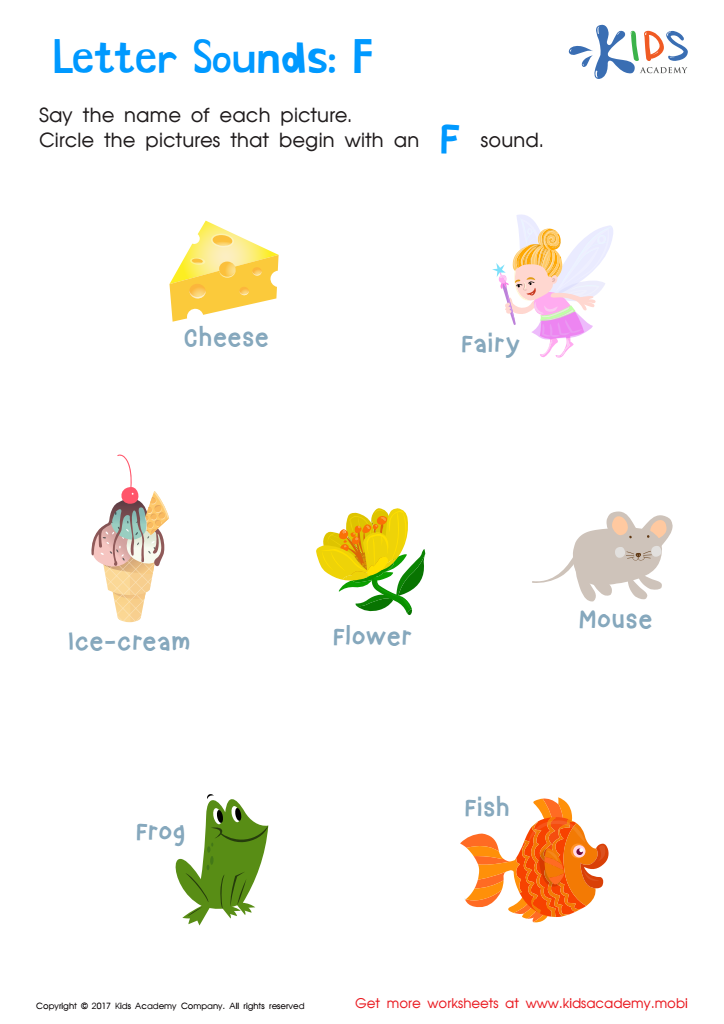
Letter F Sounds Worksheet
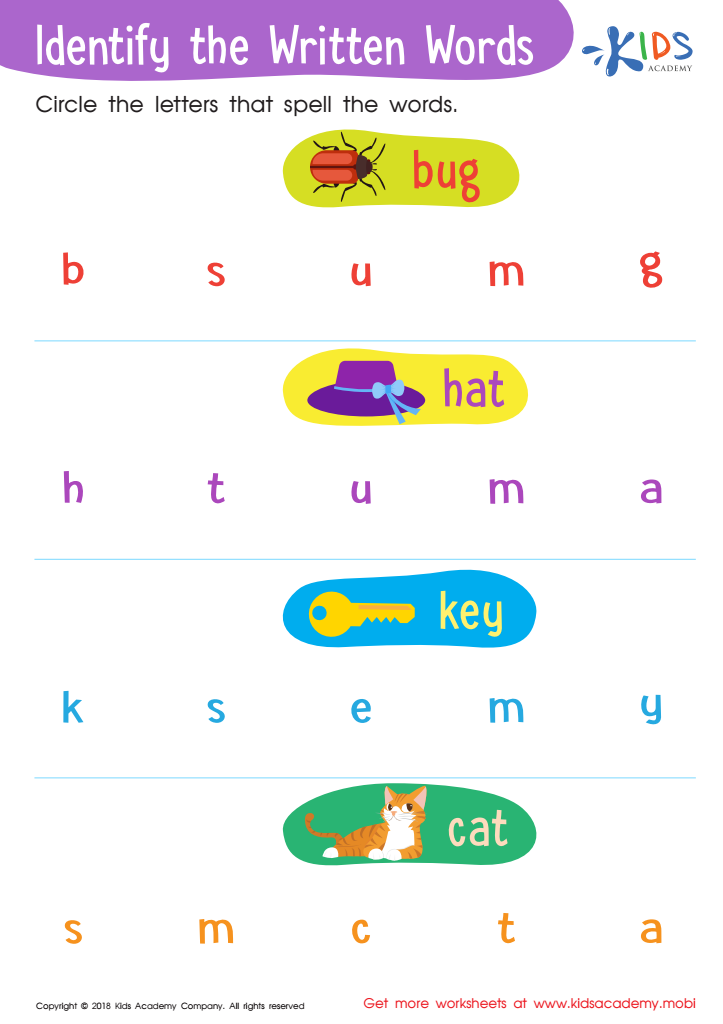
Identify the Written Words Worksheet
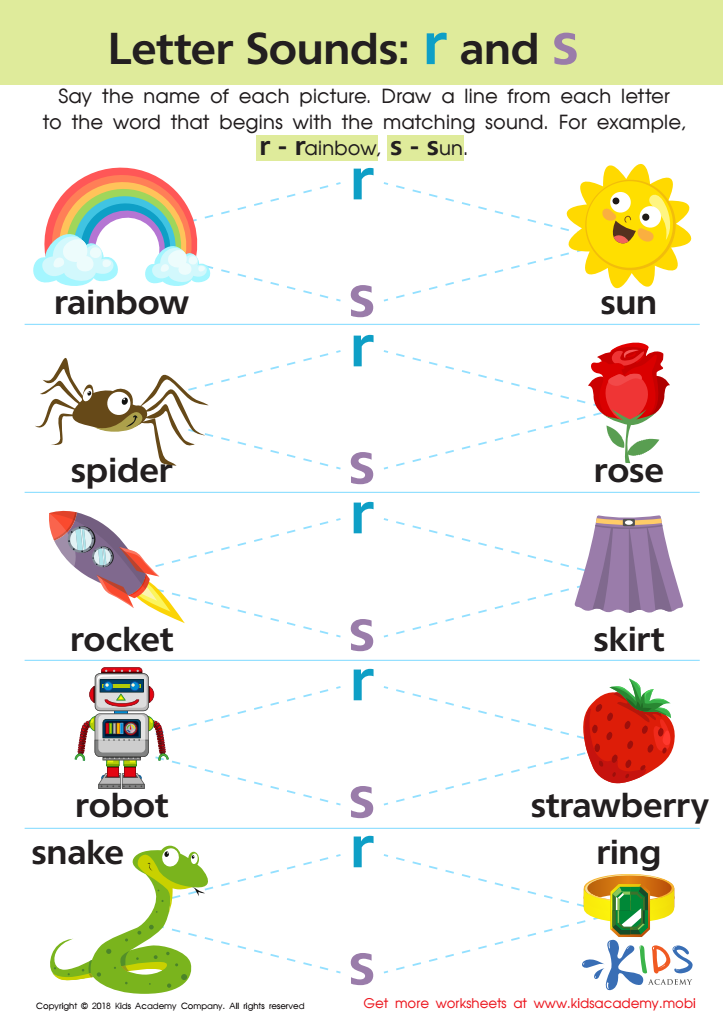
Letter R and S Sounds Worksheet
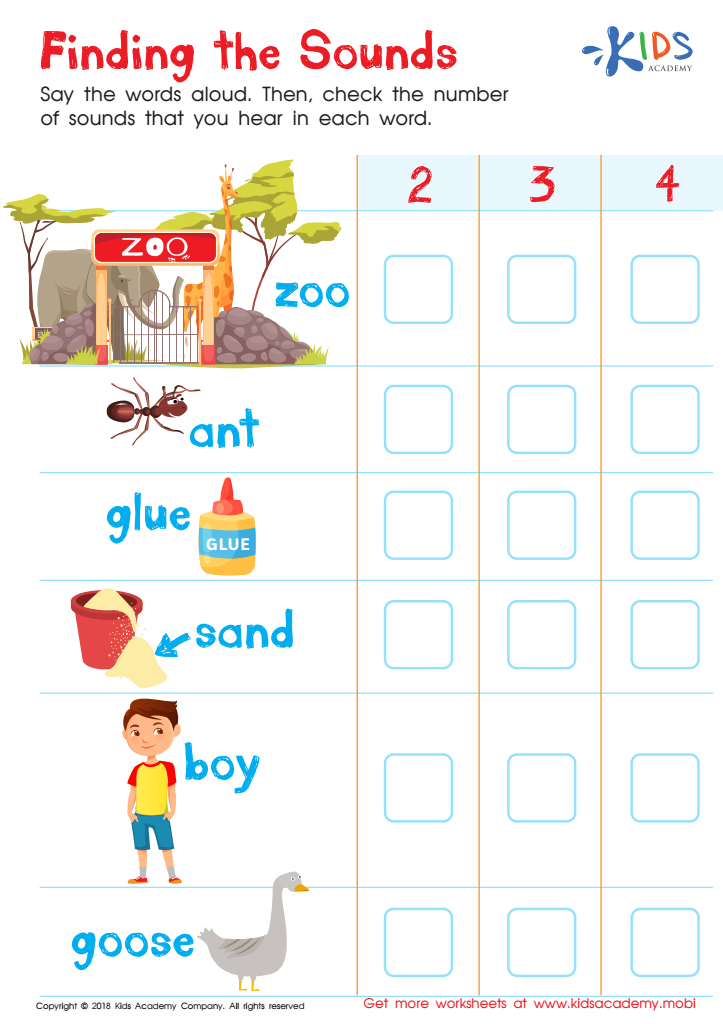
Finding the Sounds Worksheet
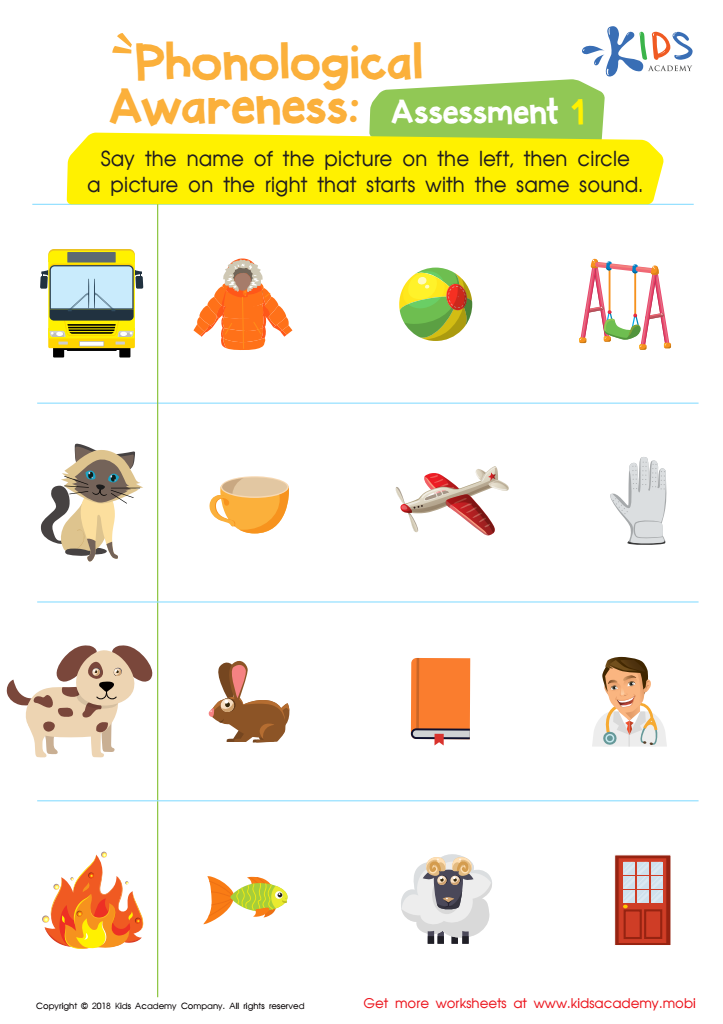
Phonological Awareness: Assessment 1 Worksheet
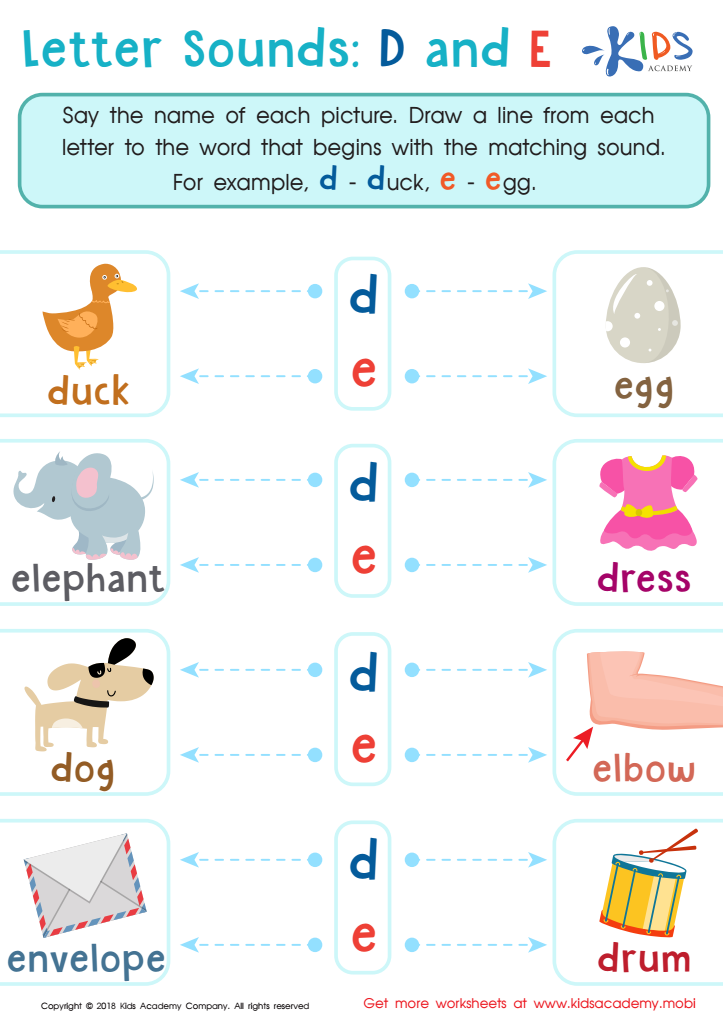
Letter D and E Sounds Worksheet








Vocabulary development and letter sounds are critical components of early literacy for children ages 3-8, playing a crucial role in their overall educational journey. For parents and teachers, promoting strong vocabulary skills is essential because they serve as the foundation for reading comprehension, writing fluency, and effective communication. Children who possess a robust vocabulary can better understand texts, express their thoughts clearly, and engage meaningfully in conversations.
Additionally, mastering letter sounds is fundamental to phonemic awareness, which helps children decode words while reading. This skill allows them to blend sounds to form words, promoting confidence and enjoyment in reading. For young learners, the ability to recognize and articulate letter sounds can significantly influence their early reading success, laying the groundwork for future academic achievements.
Moreover, engaging children in vocabulary and letter sound activities fosters a love for language and learning, shaping their educational experience positively. These foundations not only enhance literacy but also encourage critical thinking and problem-solving skills. Therefore, parents and teachers who prioritize vocabulary development and letter sounds equip children with essential tools for lifelong learning, social interaction, and future academic pursuits. Ultimately, investing in these skills is an investment in a child's future success.







