Middle Sounds Worksheets for Ages 3-8
4 filtered results
-
From - To
Discover our engaging Middle Sounds Worksheets, specifically designed for children aged 3-8! These resources focus on enhancing phonemic awareness by helping young learners identify and practice the middle sounds of words. Our worksheets are colorful and interactive, fostering creativity while making learning enjoyable. Each activity promotes important skills in sound recognition and language development. Perfect for parents and teachers alike, these worksheets support early literacy and can easily be integrated into home or classroom activities. Download and watch your child thrive in their reading journey as they confidently explore the fascinating world of middle sounds!
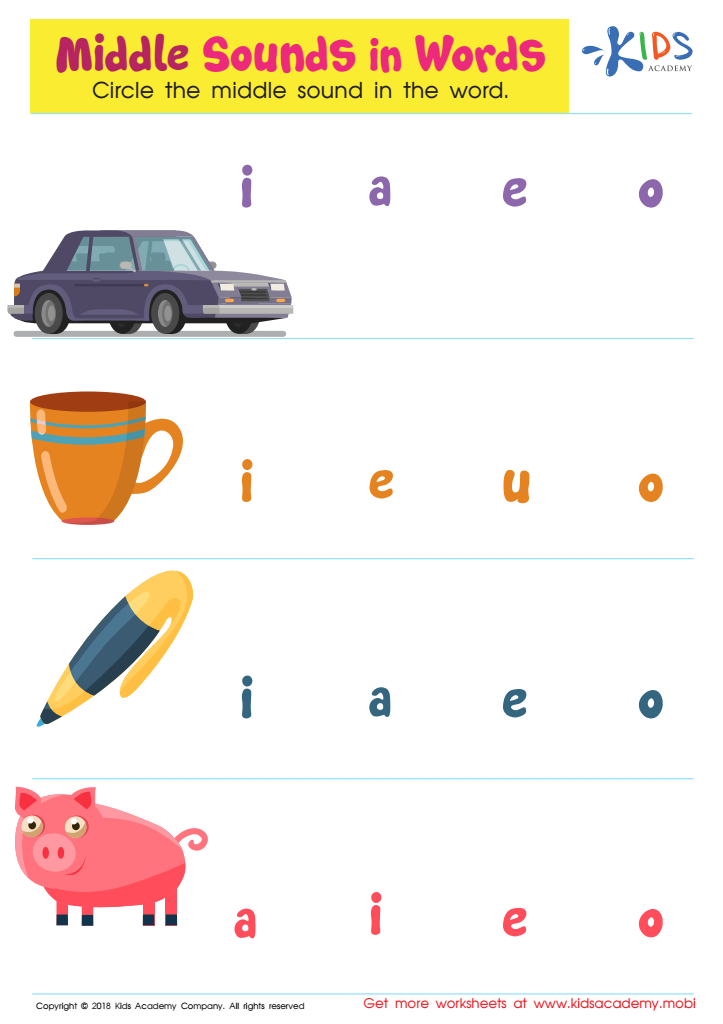
Middle Sounds in Words Worksheet
 Assign to My Students
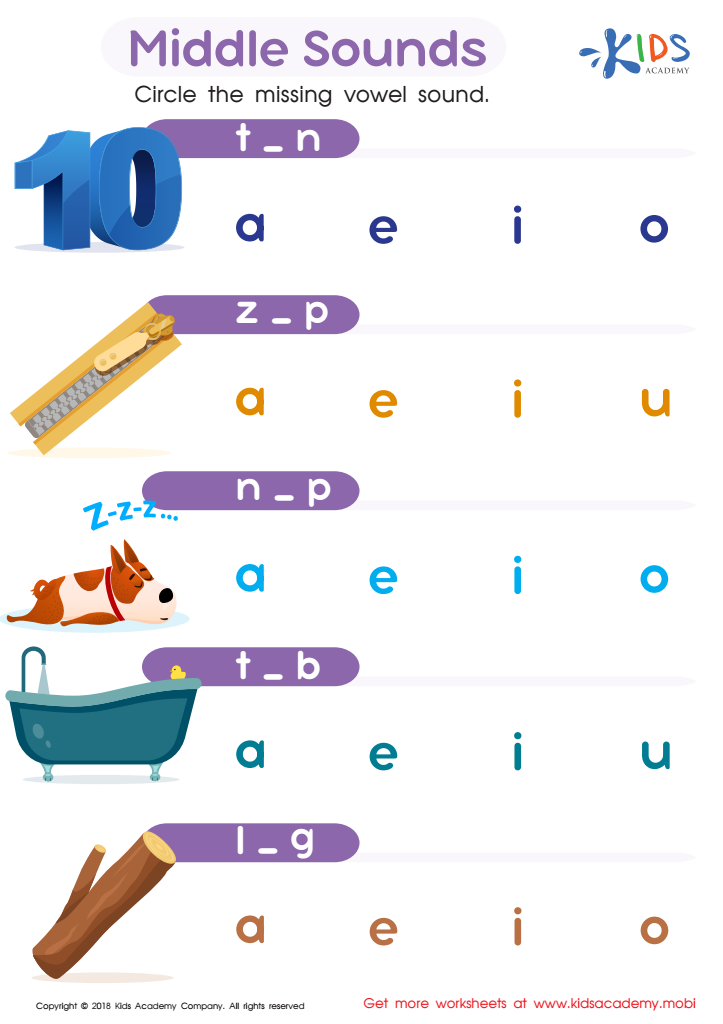
Middle Sounds Worksheet
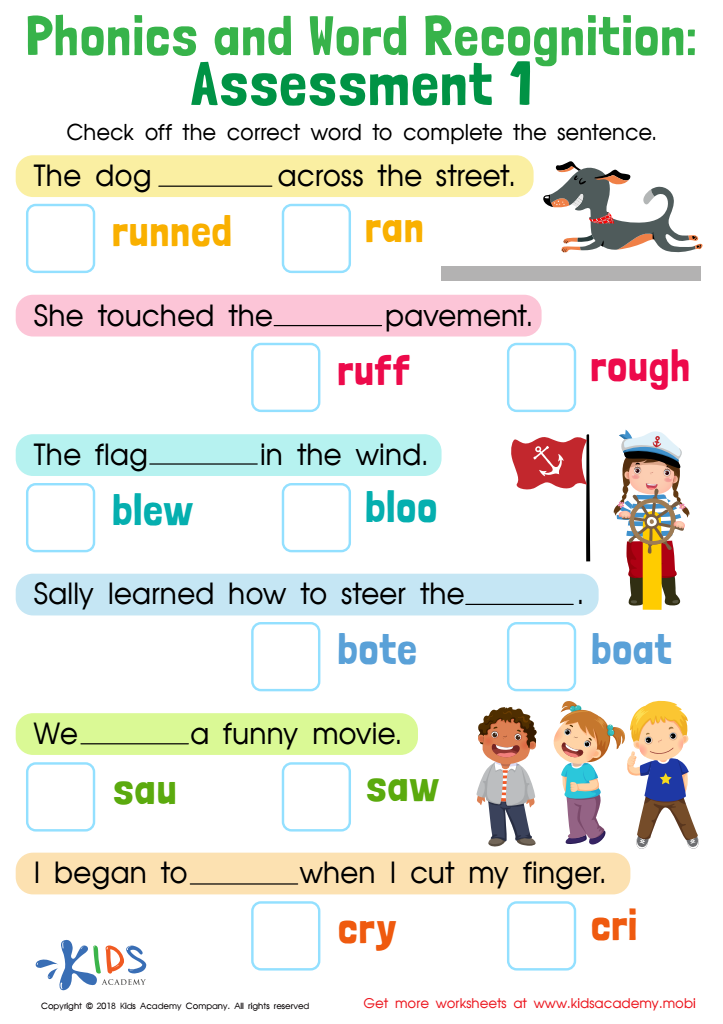
Phonics and Word Recognition: Assessment 1 Worksheet
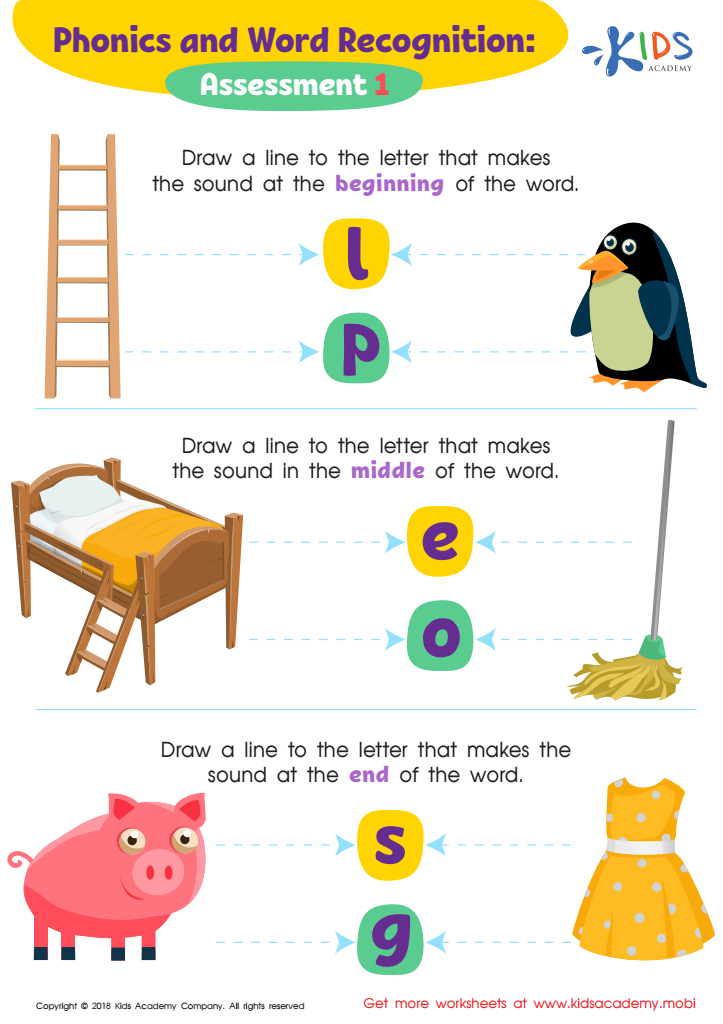
Phonics and Word Recognition: Assessment 1 ELA Worksheet





Middle sounds play a crucial role in the phonemic awareness and literacy development of children aged 3-8. This stage in a child's education lays the foundation for reading and writing skills, making it essential for parents and teachers to prioritize middle sounds. Understanding middle sounds supports children as they learn to blend sounds, which is vital for decoding unfamiliar words.
By focusing on middle sounds, children enhance their ability to differentiate between similar sounds within words. This skill not only aids in reading fluency but also in spelling accuracy as children begin to write. Furthermore, strong phonemic awareness correlates with broader language skills, fostering better vocabulary development and communication skills.
For parents and teachers, grounding young learners in the understanding of middle sounds encourages a positive attitude toward learning. Engaging children in fun activities that emphasize these sounds, such as rhymes, songs, and phonics games, makes learning enjoyable and memorable. Ultimately, the emphasis on middle sounds equips children with the essential tools to become confident readers and writers, ensuring they are primed for future academic success. Investing time in this area during early education can lead to long-lasting benefits in their literacy journey.








