Improve reading skills Phonics Worksheets for Ages 3-8
3 filtered results
-
From - To
Unlock your child's reading potential with our Phonics Worksheets designed for ages 3-8! Perfect for early learners, these engaging printables introduce key sounds and letter blends, fostering foundational reading skills. Each worksheet is expertly crafted to make learning fun with colorful illustrations and interactive activities. From mastering the alphabet to recognizing vowel and consonant sounds, our phonics exercises boost confidence and reading fluency. Ideal for both classroom and home use, help your child embark on an exciting reading journey today! Visit [website] to explore our vast collection of Phonics Worksheets and watch their reading skills soar.
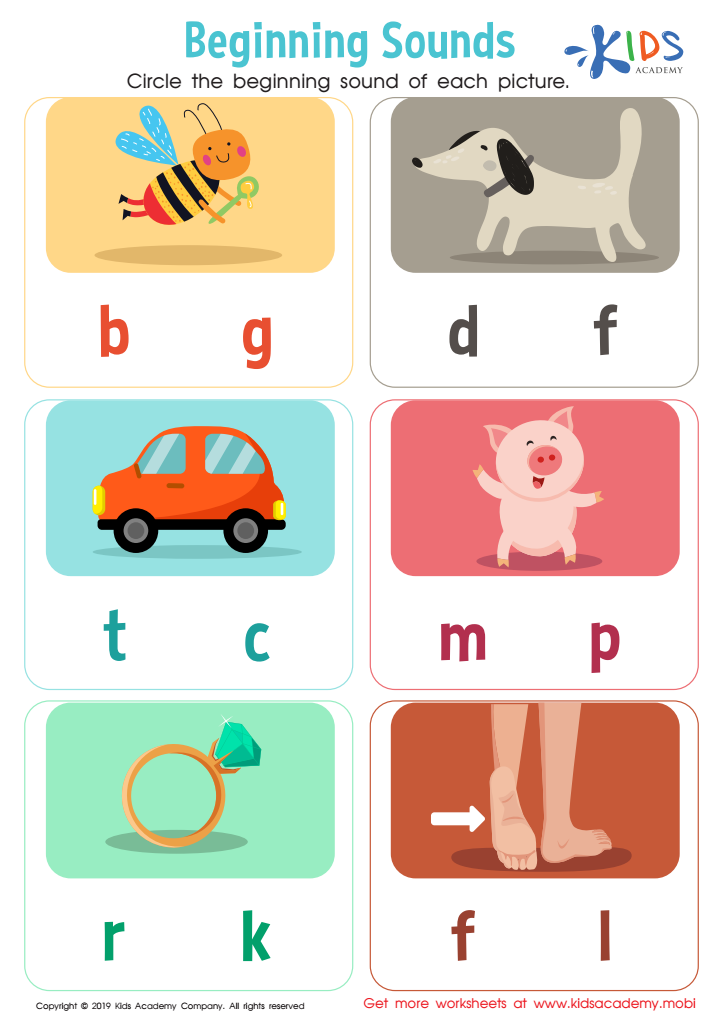
Beginning Sounds Worksheet
 Assign to My Students
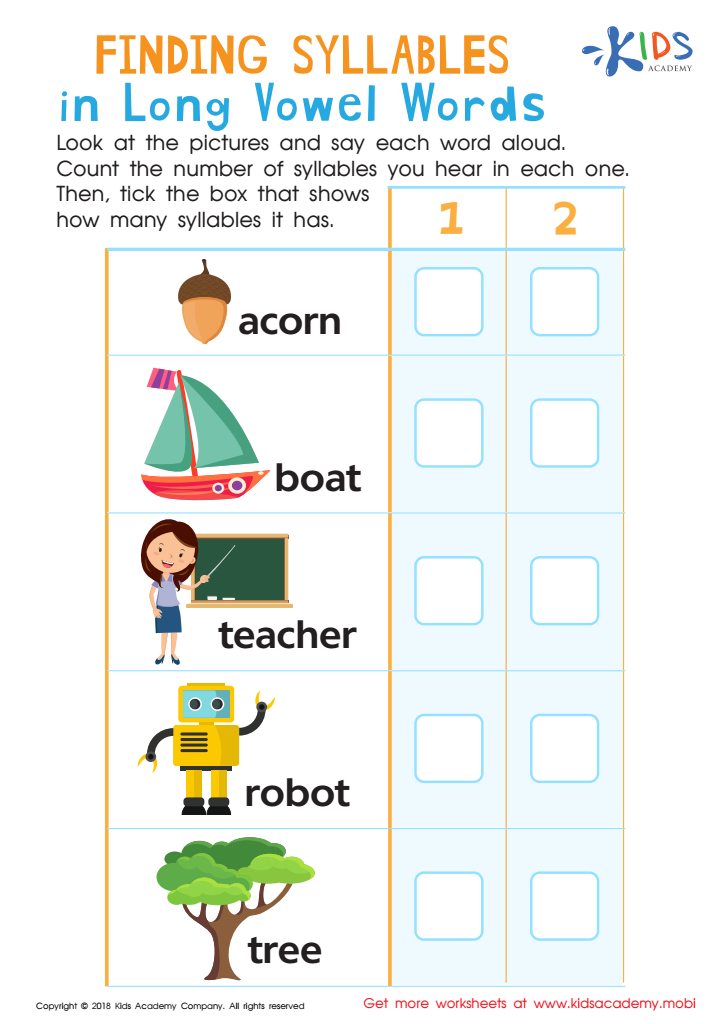
Finding Syllables in Long Vowel Words Worksheet
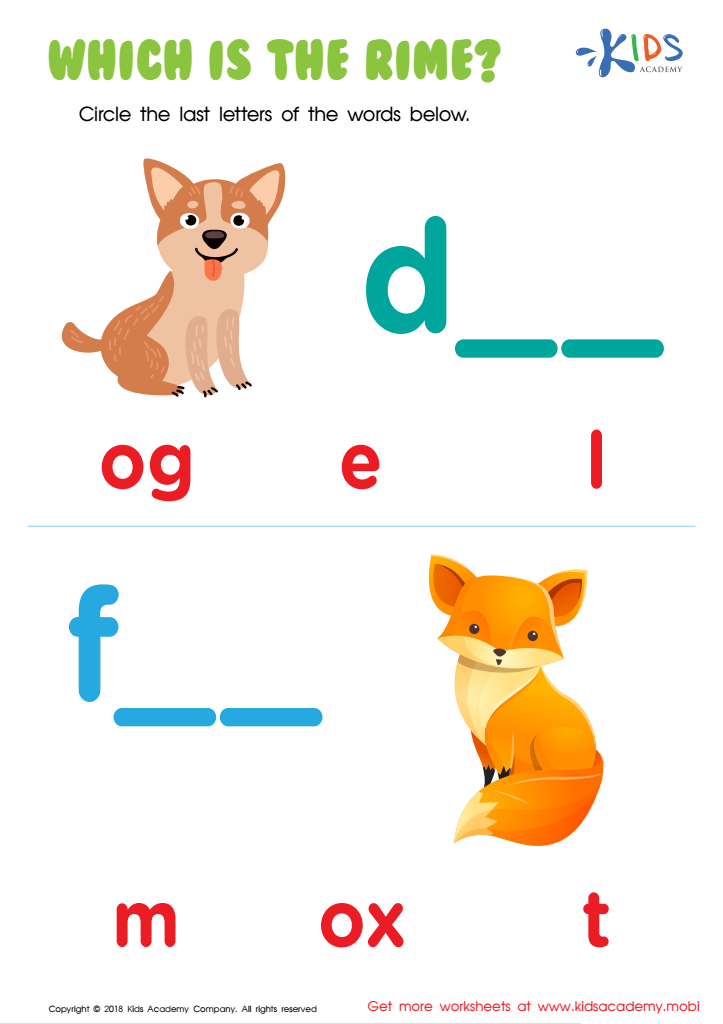
Which Is the Rime? Worksheet








Improving reading skills through phonics for children ages 3-8 is crucial, and both parents and teachers should prioritize this developmental milestone due to its lasting impact on academic and overall success. Phonics is a method that teaches children to connect sounds with letters or groups of letters, making it easier for them to decode new words independently.
Firstly, strong phonics skills lay the foundation for literacy. When children understand the relationship between letters and sounds, they can read fluently, which enhances their comprehension and enjoyment of reading. Early reading proficiency is directly linked to better performance in various academic subjects, as most learning materials require good reading skills.
Secondly, developing reading skills at a young age boosts cognitive and emotional development. As children improve their reading abilities, they also enhance their critical thinking skills and expand their vocabulary. This, in turn, allows them to articulate thoughts clearly and confidently. Furthermore, successful reading experiences foster a love for learning and increase self-esteem.
Investing in phonics instruction at an early age also narrows achievement gaps. Children who struggle with reading are at risk of falling behind, but early intervention can help them stay on track. By focusing on phonics for ages 3-8, parents and teachers equip children with the tools needed for lifelong learning and success.







