
Letter identification Phonics Worksheets for Ages 3-8
3 filtered results
Difficulty Level
Grade
Age
-
From - To
Subject
Activity
Standards
Discover our engaging Letter Identification Phonics Worksheets designed for children aged 3 to 8. These worksheets provide a fun and interactive way to enhance early literacy skills through letter recognition and phonics practice. Each worksheet focuses on identifying letters, connecting them to corresponding sounds, and strengthening fine motor skills through tracing and coloring activities. Perfect for home or classroom use, our resources cater to various learning styles, making it easy for kids to build confidence as they progress. Keep your little learners excited about reading and writing with our colorful, age-appropriate worksheets that foster a love for learning!
Favorites
With answer key
Interactive
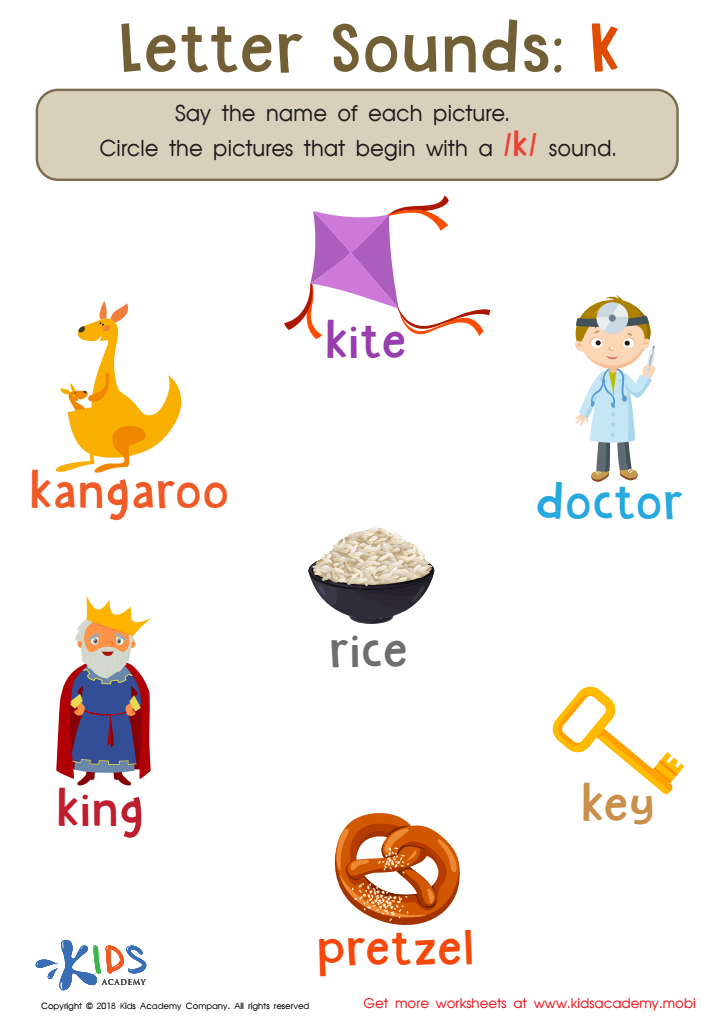
Letter K Sounds Worksheet
Help your child practice phonics with Kids Academy's illustrated worksheet! Have them look at the pictures, read the words and say them aloud. Only circle those that start with a hard 'K' sound. Perfect for preschoolers and kindergarteners! Plus, they'll learn the silent K used in a few words.
 Assign to My Students
Letter K Sounds Worksheet
Worksheet
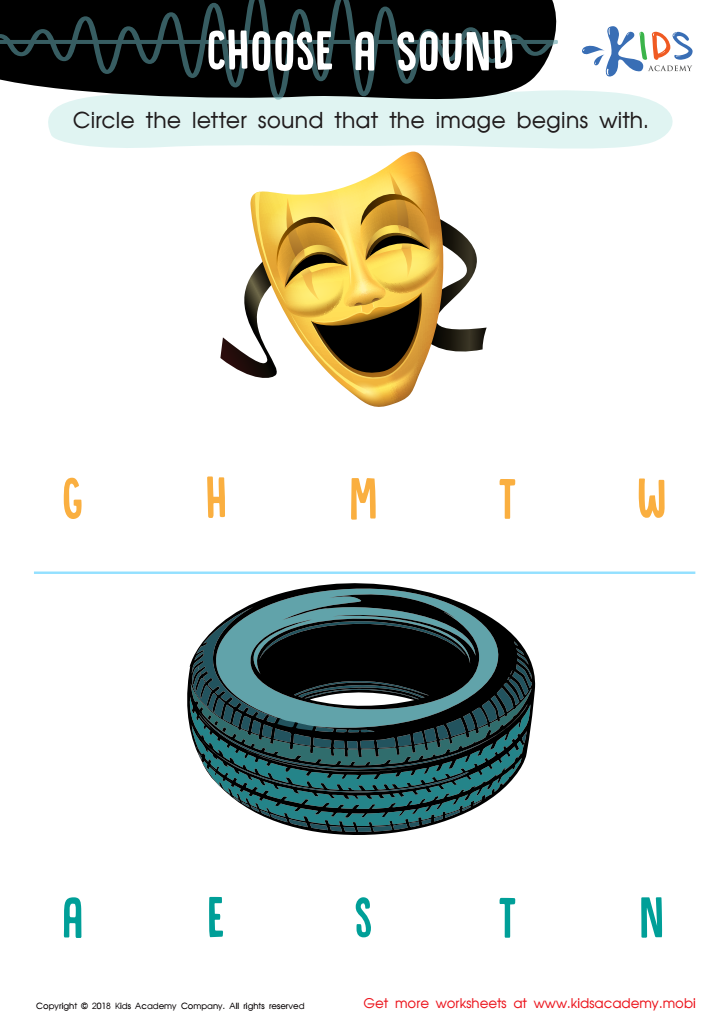
Choose a Sound Worksheet
Help your child hone pre-reading skills with this colorful worksheet! They'll practice tracing letter sounds, develop phoneme awareness, and gain confidence. Plus, it's a fun way to work on their fine motor skills.
Choose a Sound Worksheet
Worksheet
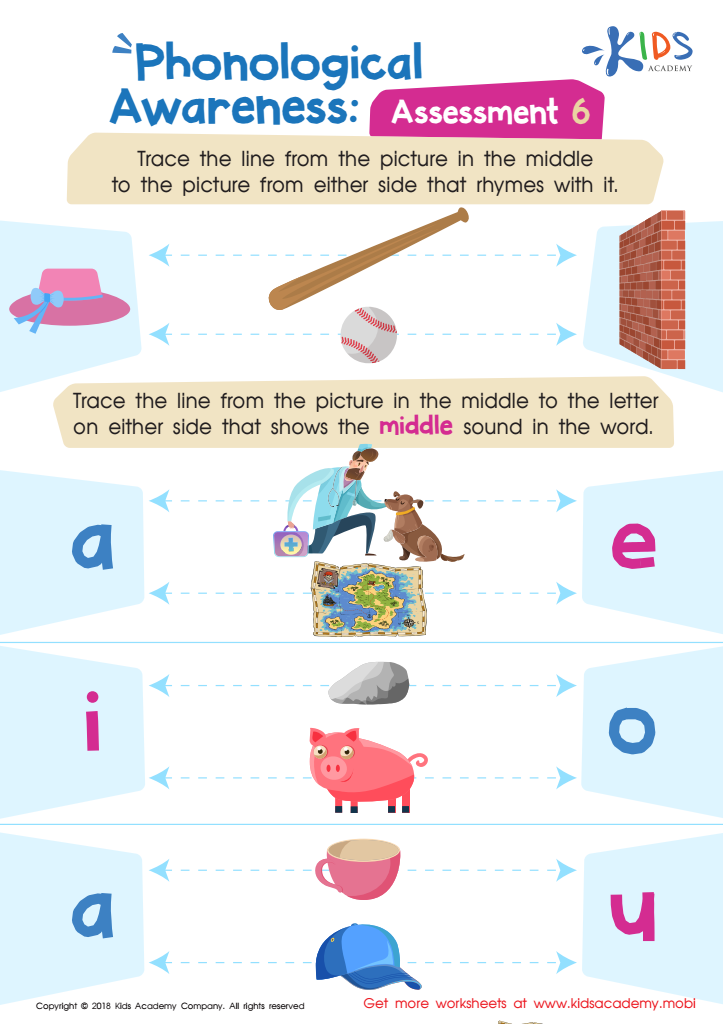
Phonological Awareness: Assessment 6 Worksheet
Check your child's ability to recognize middle word sounds using this free worksheet. Help them learn phonics by practicing with rhyming. Trace the line from the image to its rhyming match then encourage them to name each image aloud to identify which letter matches the sound. It's a great way to assess letter and sound recognition.
Phonological Awareness: Assessment 6 Worksheet
Worksheet
Join Kids Academy for Free
Who is primarily going to use this learning content?








Letter identification and phonics are foundational skills essential for children aged 3-8, forming the building blocks of literacy. For children in this age group, developing the ability to recognize letters and understand their corresponding sounds enhances reading and writing skills, which are crucial for academic success.
Parents and teachers should care deeply about these skills because they significantly influence a child’s future learning experiences. Proficiency in letter identification promotes confidence, encouraging children to engage with texts, ask questions, and express themselves clearly. This early attention to phonics lays the groundwork for fluency, vocabulary development, and comprehension, critical for more complex literacy in later grades.
Moreover, fostering strong literacy skills helps bridge any gaps in learning and ensures more equitable access to education. Kids who are adept at letter recognition and phonics often exhibit improved social skills through storytelling and conversations sparked by reading.
Investment in these foundational skills can ignite a lifelong love of reading, resulting in enthusiastic learners who are equipped to navigate their educational journey successfully. Therefore, by prioritizing letter identification and phonics, parents and teachers can significantly impact a child's academic, emotional, and social development.







