Long vowel recognition Phonics Worksheets for Ages 3-8
3 filtered results
-
From - To
Enhance your child’s reading skills with our Long Vowel Recognition Phonics Worksheets, designed for ages 3-8. These engaging worksheets help young learners identify and understand long vowel sounds, essential for reading fluency. Through fun activities like matching, tracing, and coloring, kids practice identifying long vowels in various words. Perfect for home or classroom use, these worksheets provide a hands-on approach to early reading skills by making learning enjoyable and effective. Parents and educators will love how these activities build confidence in young readers, laying the foundation for future literacy success. Discover our comprehensive resources to support your child’s learning journey today!
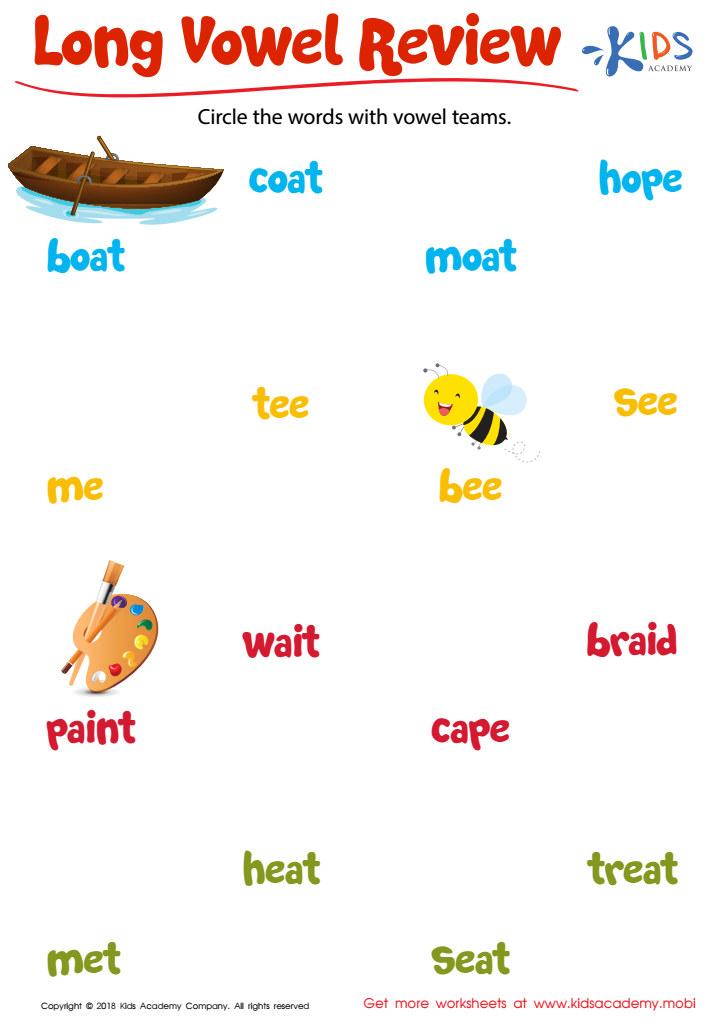
Long Vowel Review Worksheet
 Assign to My Students
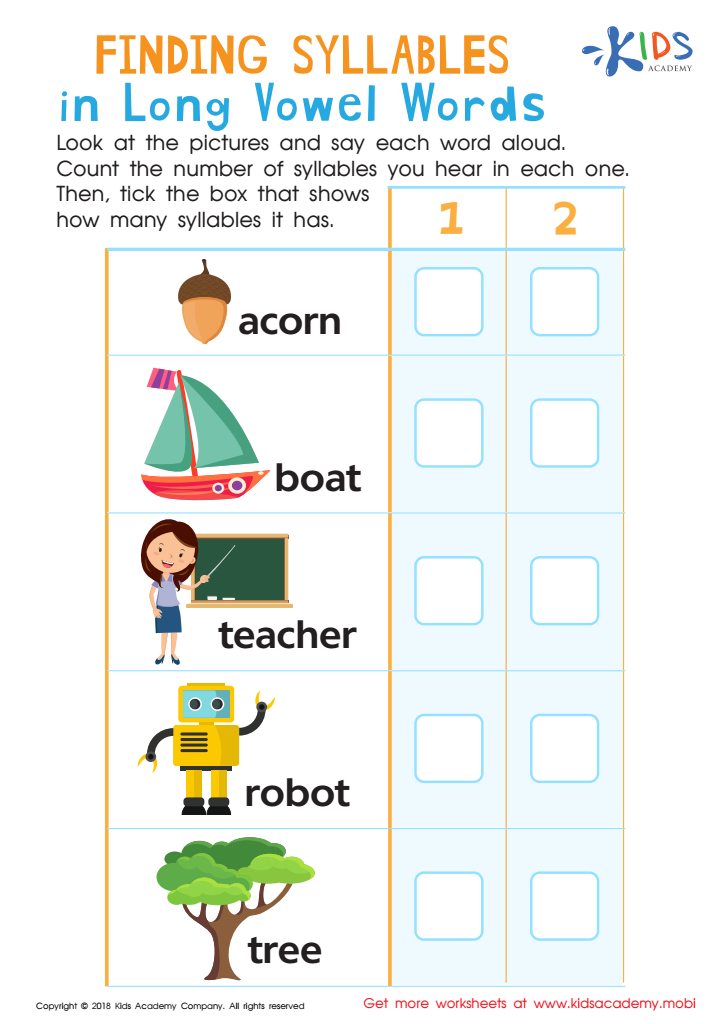
Finding Syllables in Long Vowel Words Worksheet
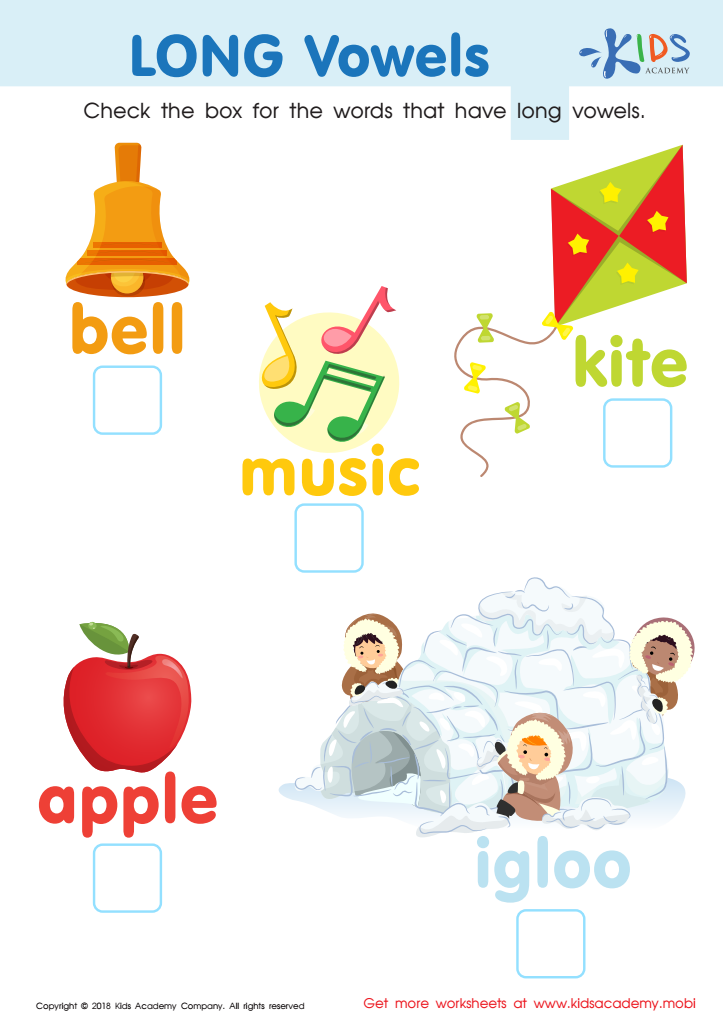
long vowels Worksheet








Long vowel recognition phonics is a fundamental component of early literacy development for children ages 3-8. At this crucial stage, children are laying the foundation for their reading and writing skills. Long vowel sounds, which occur when vowels say their name, are integral to understanding word formation and pronunciation.
Recognition of long vowel sounds aids in the development of phonemic awareness, the ability to hear and manipulate individual sounds in words, which is a significant predictor of successful reading achievement. When children can identify long vowel sounds, they find it easier to decode and spell words. This skill leads to more accurate reading and contributes to oral fluency, boosting confidence and reading comprehension.
For parents and teachers, emphasizing long vowel phonics means providing children with the tools to tackle more complex texts. Mastery of long vowel sounds enables children to grow multitiered vocabulary and engage with content-rich material early on, promoting a love for reading.
Moreover, early proficiency in phonics, including long vowel sounds, has positive, long-lasting impacts on overall academic performance. Students who become confident readers in the early grades are better prepared to learn across subjects, setting the stage for lifelong learning and success. By focusing on long vowel phonics, educators and parents support the cognitive and language development crucial during these formative years.







