Rhyme recognition Phonics Worksheets for Ages 3-8
5 filtered results
-
From - To
Discover our engaging Rhyme Recognition Phonics Worksheets, specially designed for children ages 3-8! These worksheets make learning phonics fun and interactive, helping young learners develop essential literacy skills. Through vibrant activities, kids will enhance their ability to identify rhyming words while boosting their phonemic awareness. With a variety of exercises tailored to different levels, our resources cater to the diverse needs of early learners. Perfect for home or classroom use, these worksheets support children in building a strong foundation in reading and writing. Join us on this exciting phonics adventure and watch your child's confidence soar!
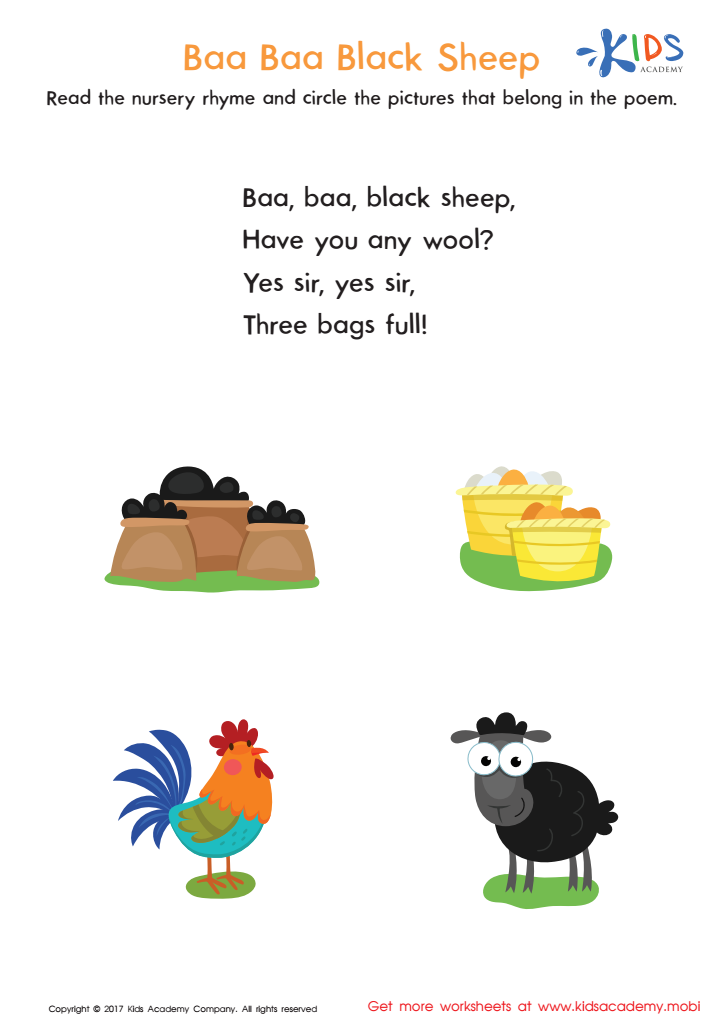
Baa Baa Black Sheep Printable
 Assign to My Students
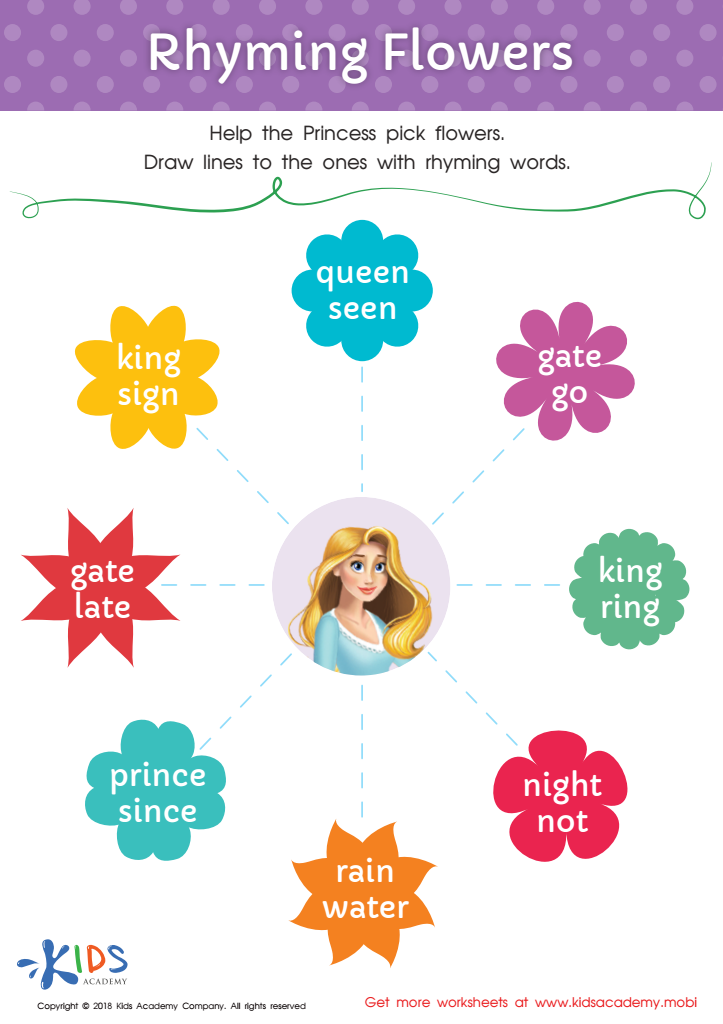
Rhyming Flowers Worksheet
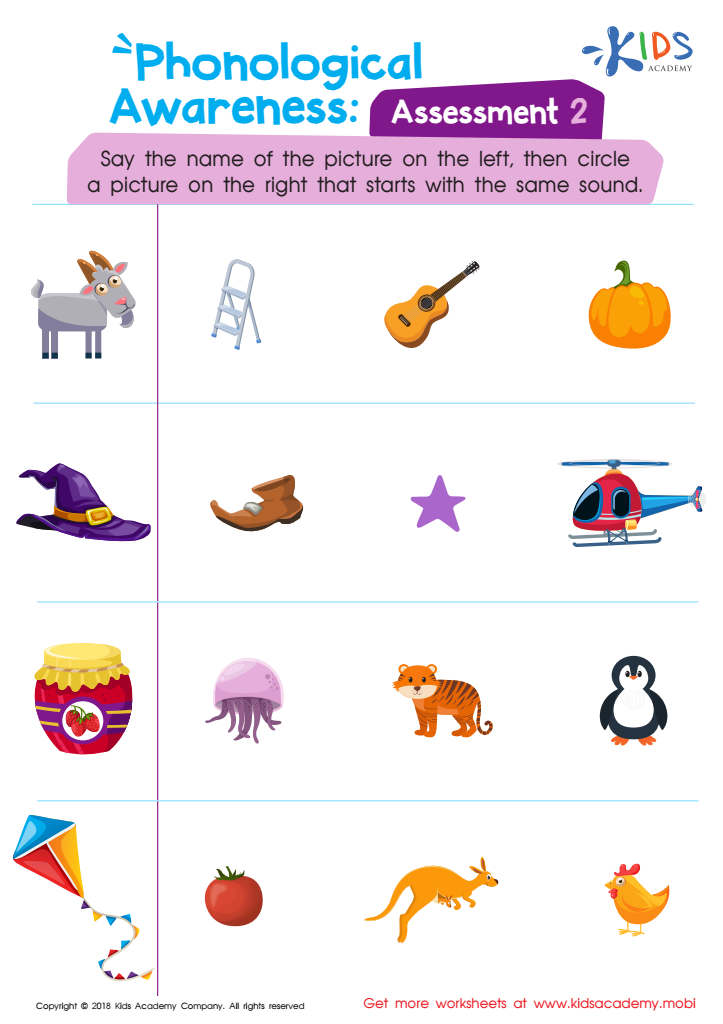
Phonological Awareness: Assessment 2 Worksheet
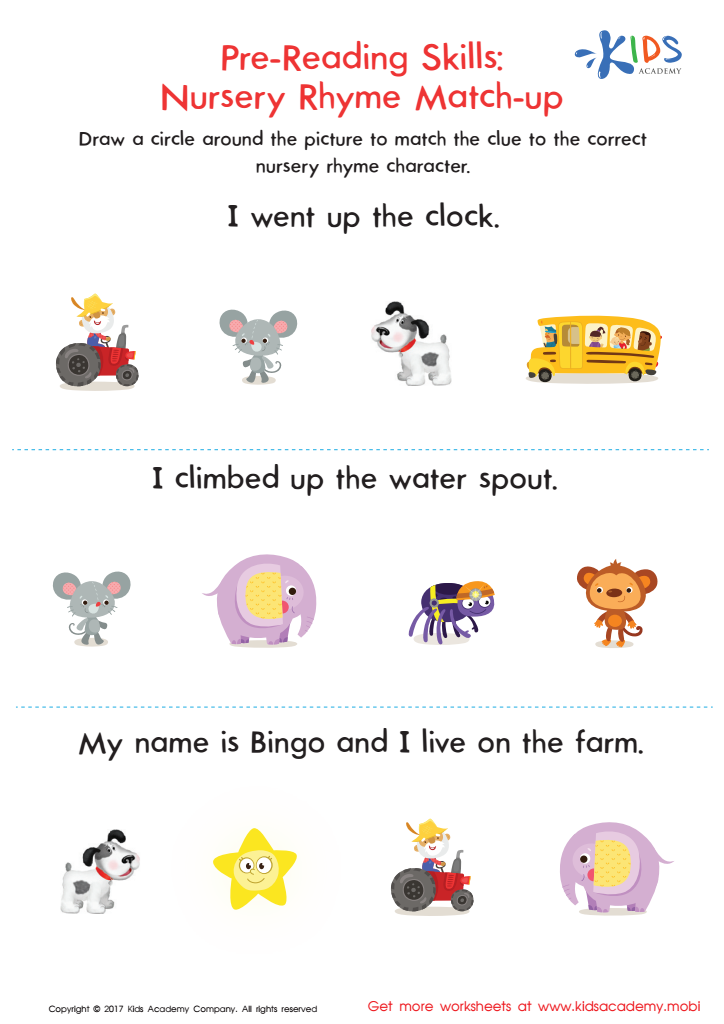
Nursery Rhyme Match–Up Worksheet
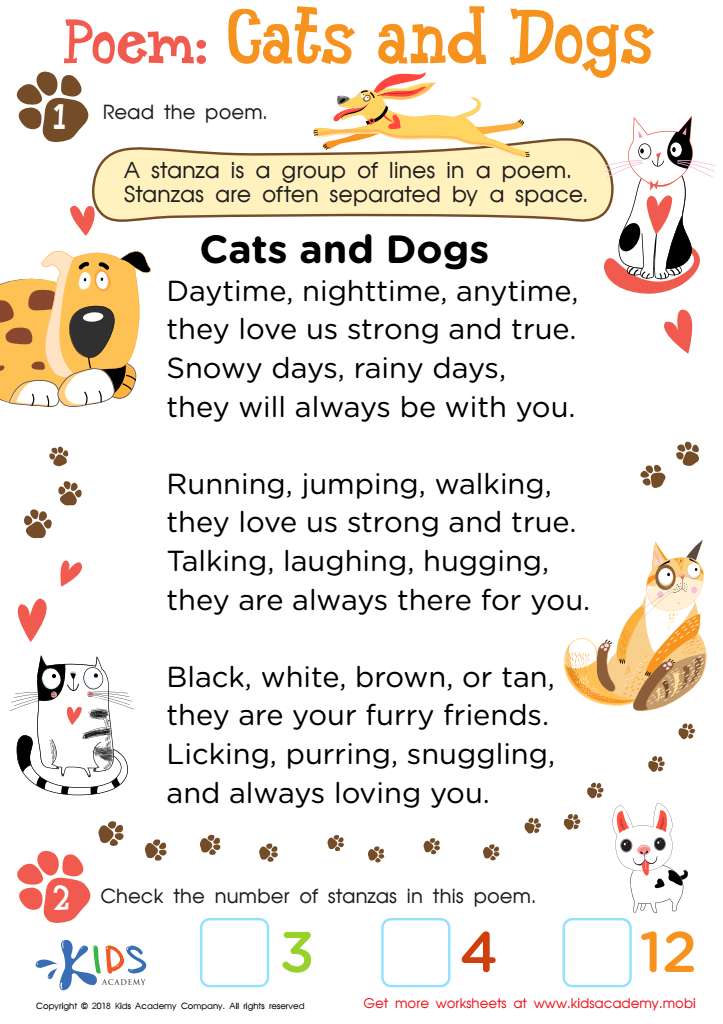
Poem: Cats and Dogs Worksheet








Rhyme recognition phonics plays a vital role in early literacy development for children ages 3-8. Understanding rhyme helps children identify and manipulate sounds in language, which is crucial for their phonemic awareness—the ability to hear, recognize, and work with phonemes. This skill sets the foundation for reading and writing by allowing children to decode and encode words more effectively.
When children engage in rhyming activities, they develop auditory discrimination and enhance their vocabulary. Recognizing patterns in sounds makes learning to read more enjoyable and less intimidating, fostering a positive attitude towards literacy. Furthermore, incorporating rhyme in learning—through songs, poems, and games—makes the process fun and engaging, capturing the attention of young learners.
Parents and teachers who prioritize rhyme recognition phonics can help children enhance their language skills while also encouraging critical thinking and creativity. These abilities not only contribute to literacy success but are also essential for effective communication and social interaction. In an educational landscape increasingly focused on literacy outcomes, fostering early rhyme recognition is a strategic step that benefits children in their journey toward becoming proficient readers and confident learners.







