Handwriting improvement Tracing Letters Worksheets for Ages 3-8
5 filtered results
-
From - To
Enhance your child's handwriting skills with our comprehensive Tracing Letters Worksheets designed for ages 3-8. These printable worksheets promote accurate letter formation and fine motor development, providing an engaging and effective way to practice penmanship. Each activity guides young learners in tracing both uppercase and lowercase letters, facilitating muscle memory and confidence in their writing abilities. Ideal for preschoolers, kindergarteners, and early elementary students, our worksheets support learning while making handwriting practice enjoyable. Explore our free resources to help your child build a strong foundation in writing with tools that align with educational standards and growth benchmarks.
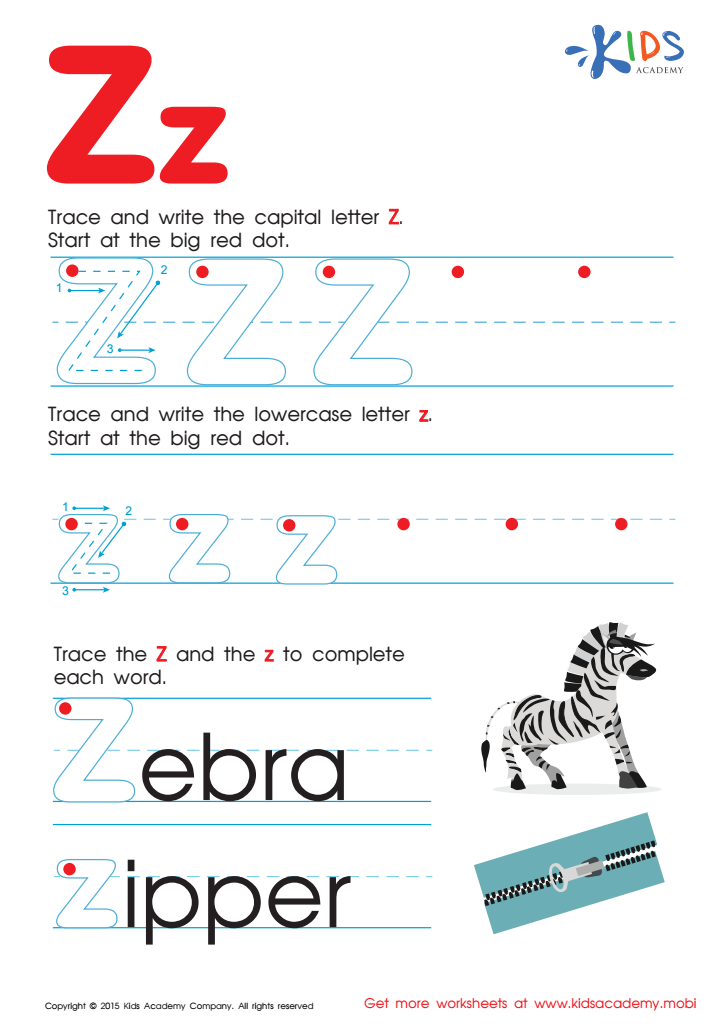
Letter Z Tracing Page
 Assign to My Students
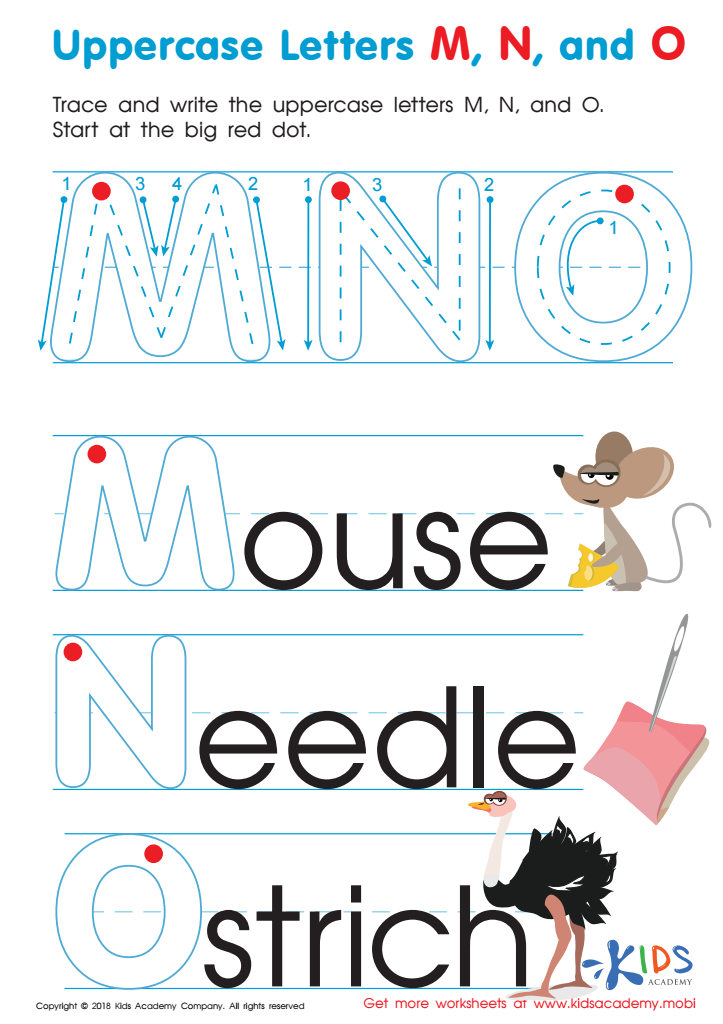
Uppercase Letters M, N, and O Worksheet

Letter J Tracing Page

Letter B Tracing Page
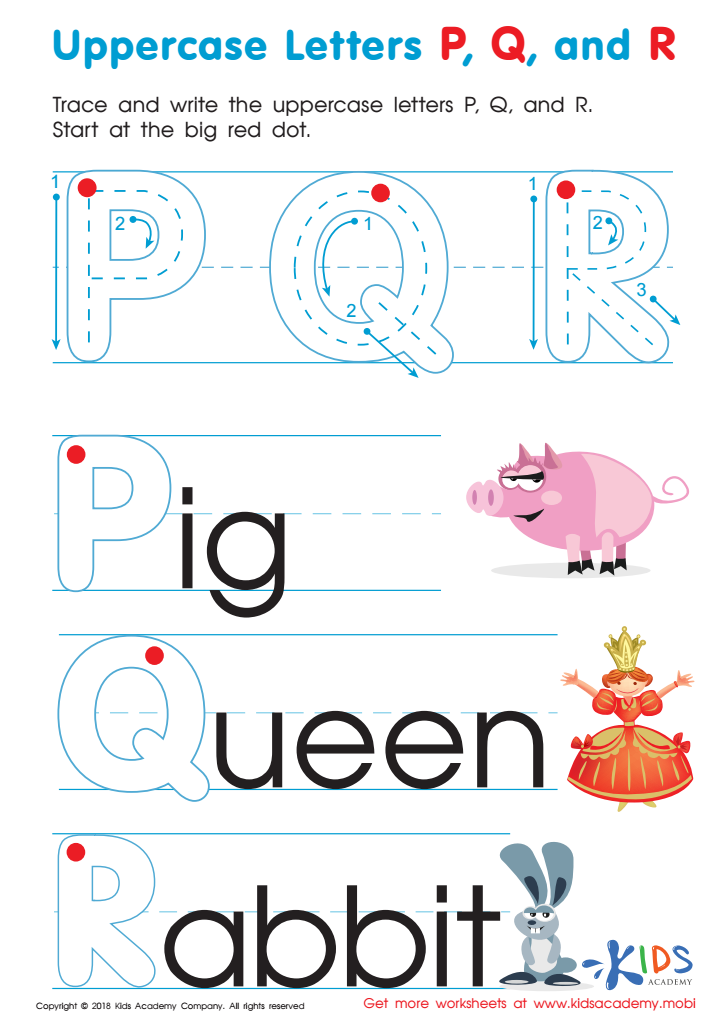
Uppercase Letters P, Q, and R Worksheet








Handwriting improvement through tracing letters is crucial for the cognitive and motor development of children aged 3-8, an age span where foundational skills are formed. Engaging in tracing activities aids in fine motor development, enhancing the small muscle movements in the fingers and hands necessary for writing. This, in turn, supports better hand-eye coordination, which is vital for various day-to-day activities.
Furthermore, tracing letters impacts cognitive skills such as memory and concentration. When children practice tracing, they learn to focus on the task at hand, improving their ability to concentrate for more extended periods. Associating shapes with letters exponentially increases letter recognition and retention, bridging the gap to reading fluency and comprehension.
Additionally, early exposure to these tracing exercises promotes self-confidence and independence. As children achieve progress, they gain confidence, reinforcing a positive attitude toward learning. Tracing also supports educational consistency, laying a strong foundation for future academic years where writing skills become more complex.
Teachers and parents should recognize that handwriting is not just about forming letters; it is a vital skill interconnected with academic success, cognitive development, and self-esteem. Investing time in tracing letters during these early years provides children with the tools they need for future educational and personal achievement.








