Vowels Worksheets for Ages 3-8 - Page 5
98 filtered results
-
From - To
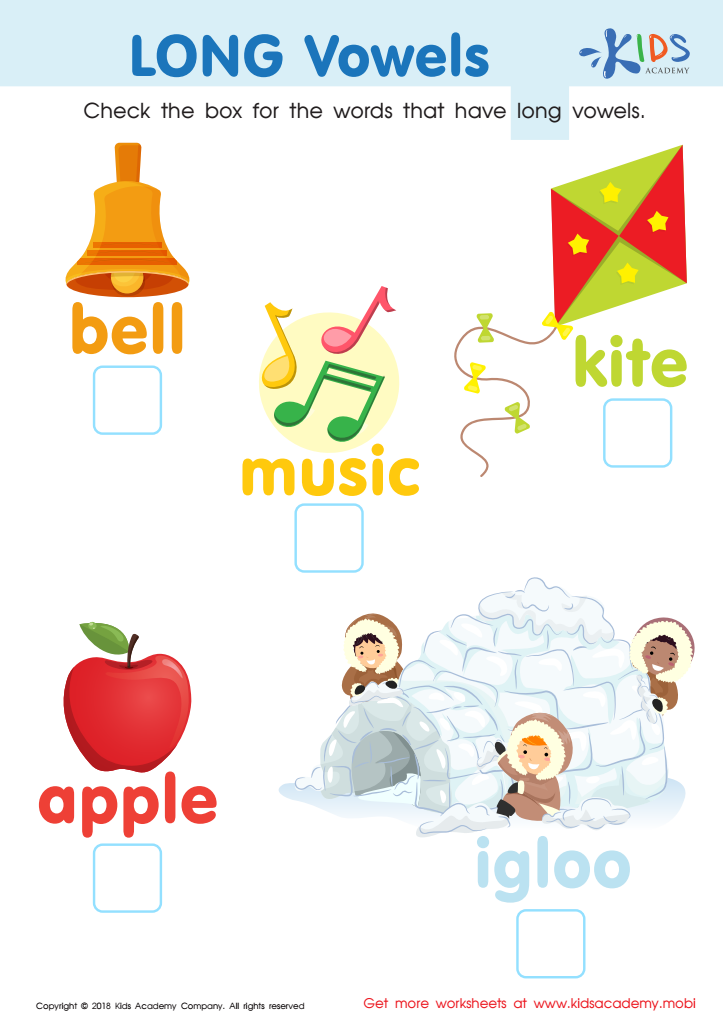
long vowels Worksheet
 Assign to My Students
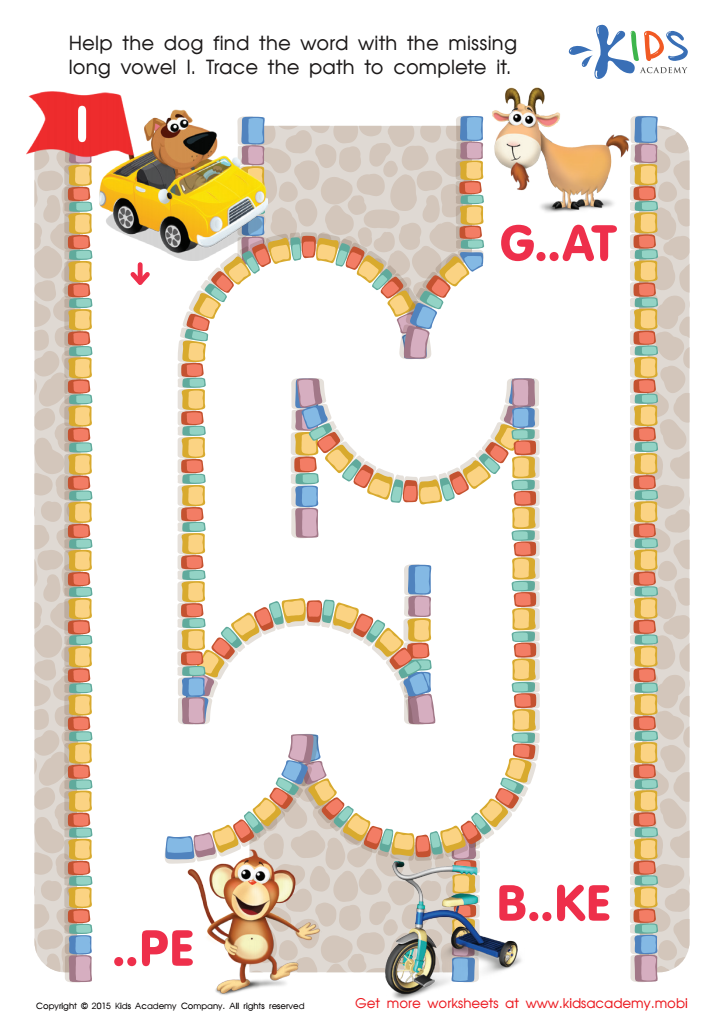
Long Vowel Sound I Worksheet





Vowels are fundamental to early reading and speech development in children ages 3-8. They are the building blocks of language, present in every syllable and crucial for word formation. Mastery of vowels aids children in decoding words, making reading smoother and more enjoyable. Proper vowel articulation also underpins clear speech, enabling young learners to effectively communicate their thoughts and needs.
At this formative stage, children are highly receptive to linguistic input, and introducing them to vowels can significantly enhance their phonemic awareness, essential for literacy proficiency. Comprehending vowels help kids recognize patterns in words, boosting their spelling and reading fluency. Additionally, vowels often carry the weight of emotion and intonation in spoken language, enriching a child's expressive capabilities.
For teachers, structured vowel lessons and engaging activities foster an inclusive and interactive learning environment. For parents, reinforcing these lessons at home through playful reading and word games strengthens the bond between caregiver and child while supporting literacy growth.
Neglecting vowel education can lead to difficulties in reading and miscommunication, impacting overall academic confidence. Hence, both parents and teachers should prioritize vowel awareness to set a robust foundation for future language development and academic success.







