Cognitive Development Vowels Worksheets for Ages 3-8
3 filtered results
-
From - To
Discover our Cognitive Development Vowels Worksheets designed specially for children ages 3-8. These engaging and educational printables enhance early literacy by focusing on vowel recognition, sound differentiation, and word formation. Our expertly-crafted worksheets help young learners develop critical cognitive skills such as memory, attention, and problem-solving, all while having fun. Ideal for both classroom and at-home learning, these activities support your child’s language development and prepare them for academic success. Give your child an early advantage with our tailored vowel worksheets, ensuring a strong foundation in reading and early literacy skills. Explore now and watch their abilities flourish!
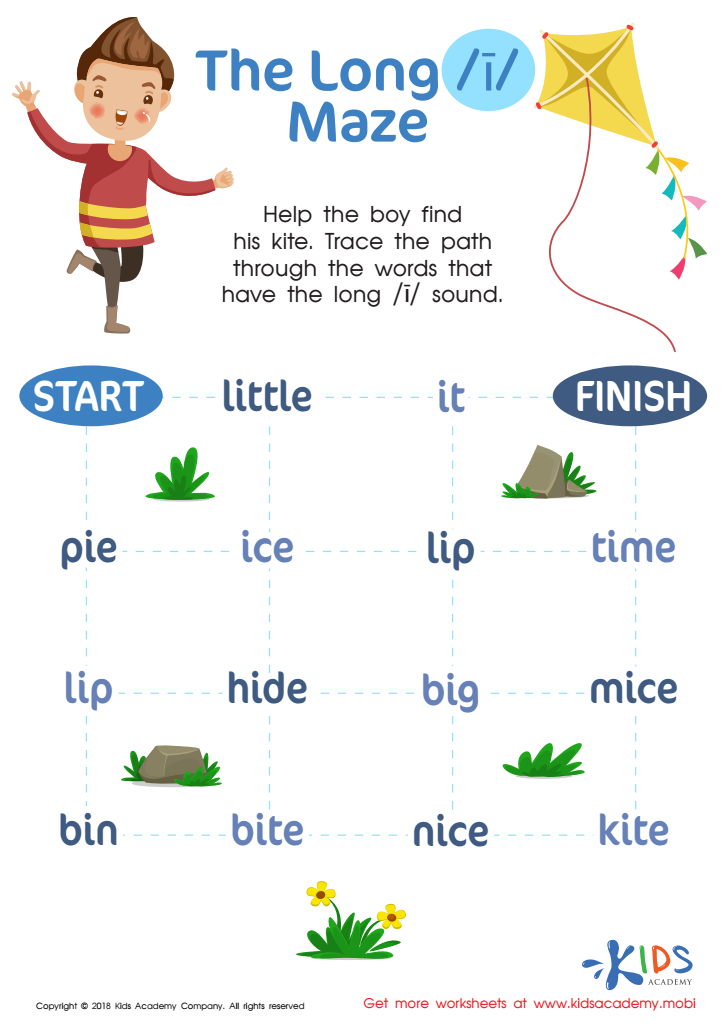
The Long I Maze Reading Worksheet
 Assign to My Students
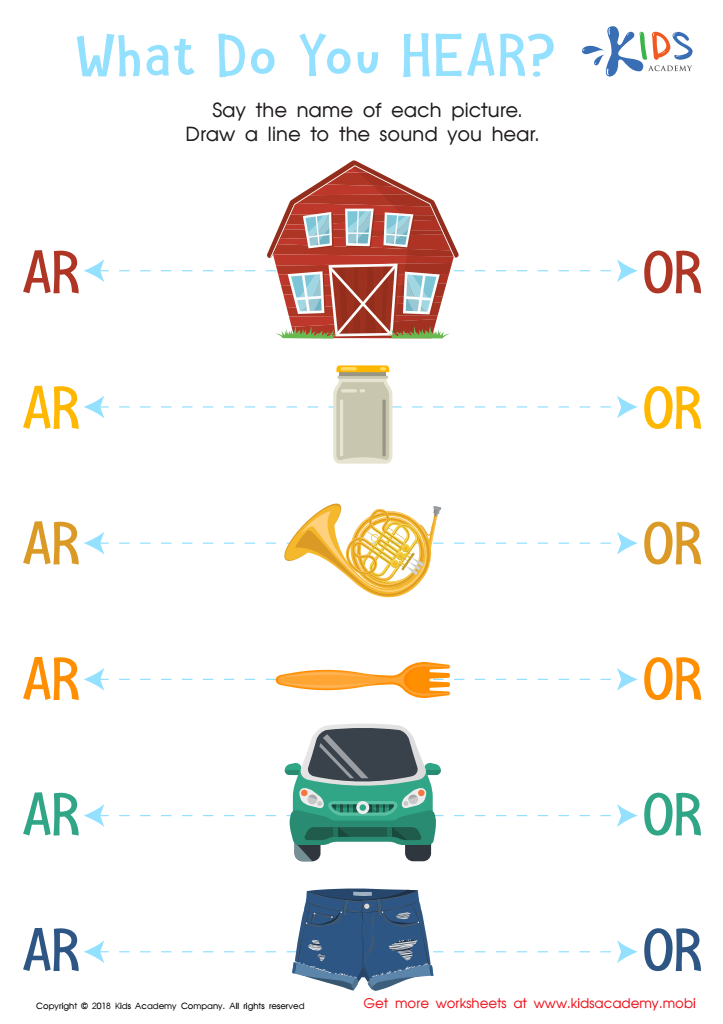
What do you hear Worksheet
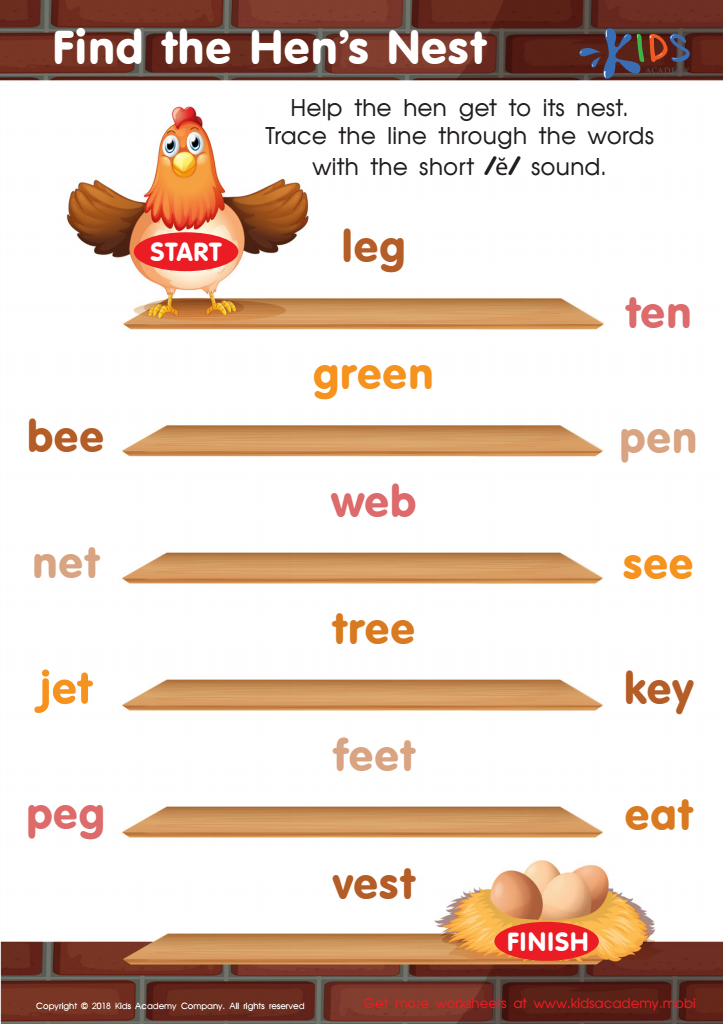
Find Hens Nest Reading Worksheet





Cognitive development during the ages of 3-8 is critical as it lays the foundation for future learning, and one crucial aspect of this development is language acquisition, particularly concerning vowels. Vowels form the core of syllables and words, playing a vital role in verbal communication. When children understand and use vowels correctly, they enhance their phonemic awareness, which is the ability to recognize and manipulate sounds. This awareness is fundamental for skills like reading and spelling.
During these formative years, children's brains are exceptionally receptive to learning new sounds and patterns. Proper guidance in vowel articulation and recognition can significantly impact their language development. Children who struggle with vowels may find reading and writing more challenging, leading to potential difficulties in other academic areas.
Furthermore, mastering vowel sounds aids in clear communication, allowing children to express their needs, thoughts, and emotions effectively. It supports social interactions by helping them be understood by peers and adults, fostering self-confidence and social skills.
Overall, focusing on cognitive development related to vowels equips children with essential tools for literacy and effective communication. This foundation not only supports academic success but also facilitates richer social engagement and more profound cognitive growth, setting children on a path for lifelong learning and effective interaction.







