Sound differentiation Vowels Worksheets for Ages 3-8
3 filtered results
-
From - To
Explore our "Sound Differentiation Vowels Worksheets" designed for children aged 3 to 8! These engaging resources help young learners identify and differentiate vowel sounds through interactive activities. Our worksheets encourage phonemic awareness, aiding in early literacy skills development. With a variety of fun exercises, including coloring and matching games, children will enhance their listening abilities while enjoying the learning process. Perfect for parents, educators, and homeschooling families, these printable materials promote independent learning and classroom interaction. Unlock your child’s potential with our comprehensive collection of vowel sound worksheets, paving the way for confident reading and writing skills. Start exploring today!
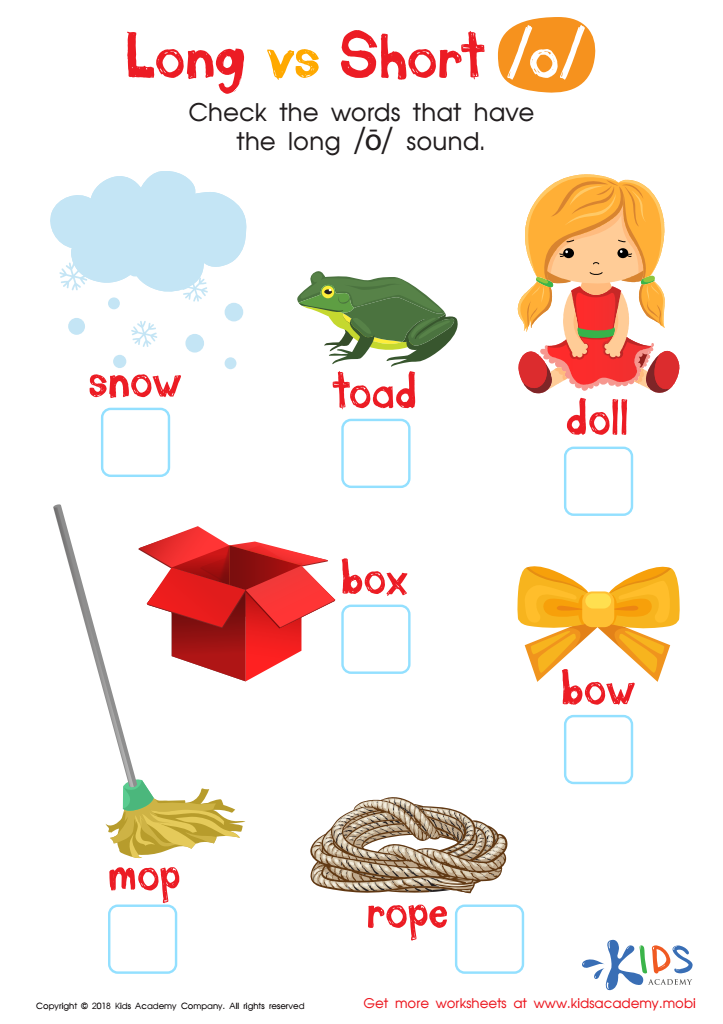
Long vs Short O Reading Worksheet
 Assign to My Students
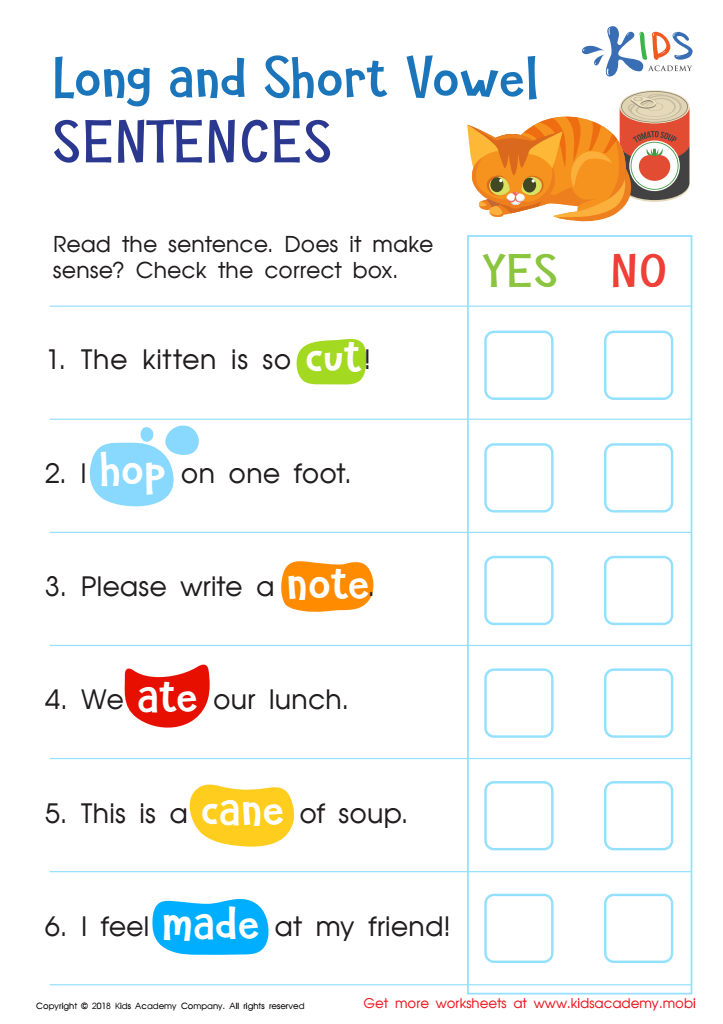
Long and Short Vowel Sentences: Assessment Worksheet
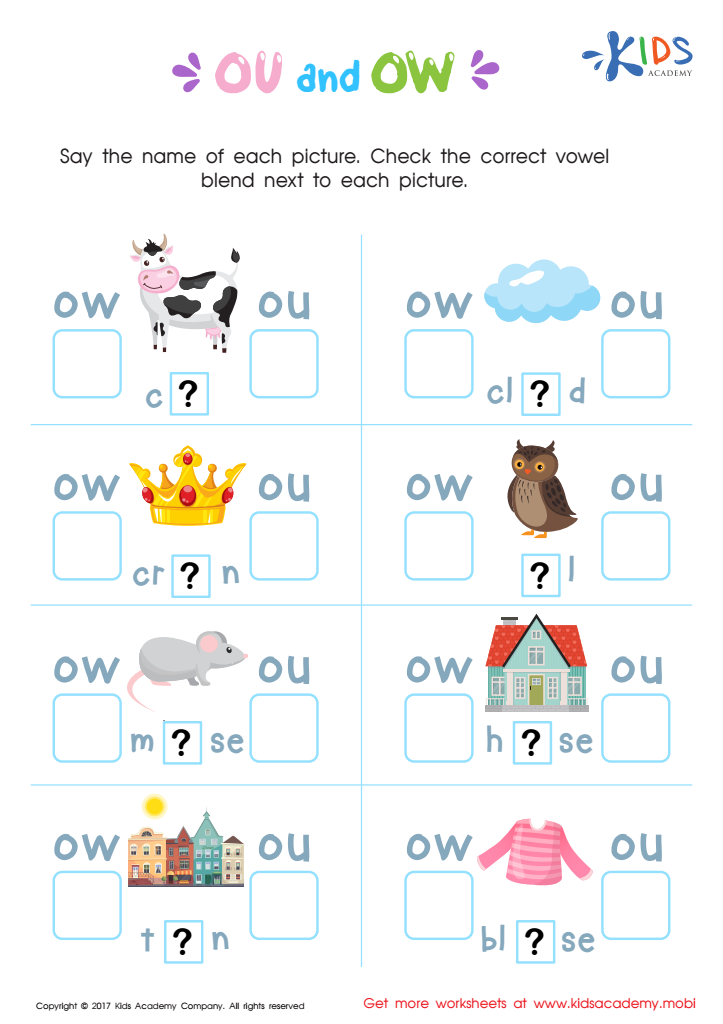
OU and OW Words Worksheet





Sound differentiation of vowels is a crucial aspect of early literacy development in children aged 3-8. At this age, children are actively learning to decode language and make sense of the sounds they hear. Understanding and differentiating vowel sounds lays the foundation for reading and writing. If children struggle with identifying and distinguishing vowel sounds, they may face challenges in spelling and reading fluency as they progress.
Parents and teachers play essential roles in facilitating this learning. By engaging children in activities that emphasize vowel sounds, such as singing songs, reading rhymes, and playing phonics games, they help reinforce sound recognition. This fosters a love for language and builds confidence in early readers.
Moreover, sound differentiation is directly linked to comprehension skills. Children who can recognize and articulate vowel sounds more effectively transition into complex words and text, enhancing their overall communication abilities.
In a broader sense, supporting sound differentiation not only contributes to academic success but also builds cognitive skills, critical thinking, and creativity. By prioritizing this learning element, parents and teachers help children become proficient readers and thinkers, setting them up for success in their educational journey and beyond.







