Word identification Vowels Worksheets for Ages 3-8
6 filtered results
-
From - To
Explore our engaging Word Identification Vowels Worksheets designed specifically for children ages 3 to 8! These worksheets foster early literacy skills by helping young learners identify vowels in a fun and interactive way. Through colorful activities and exercises, kids will practice recognizing vowel sounds, enhancing their phonetic awareness, and developing crucial reading skills. Perfect for parents and educators alike, our worksheets are tailored to cater to various learning styles, ensuring that every child enjoys a positive learning experience. Spark their curiosity and boost their confidence in reading with our carefully crafted vowel worksheets - the first step towards successful literacy!
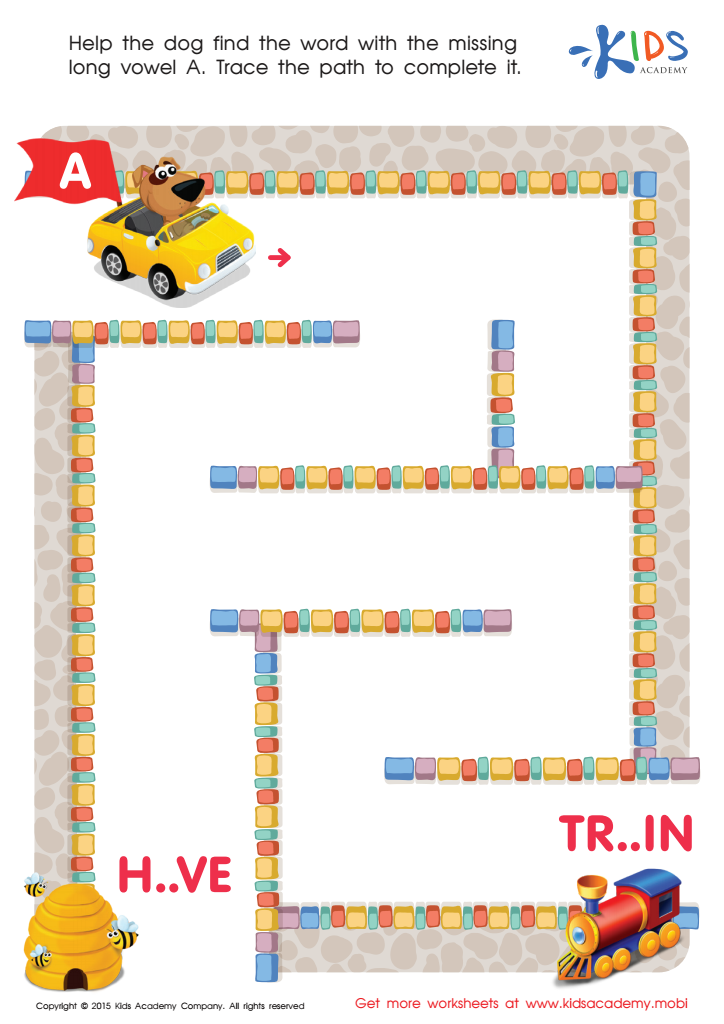
Long Vowel Sound A Worksheet
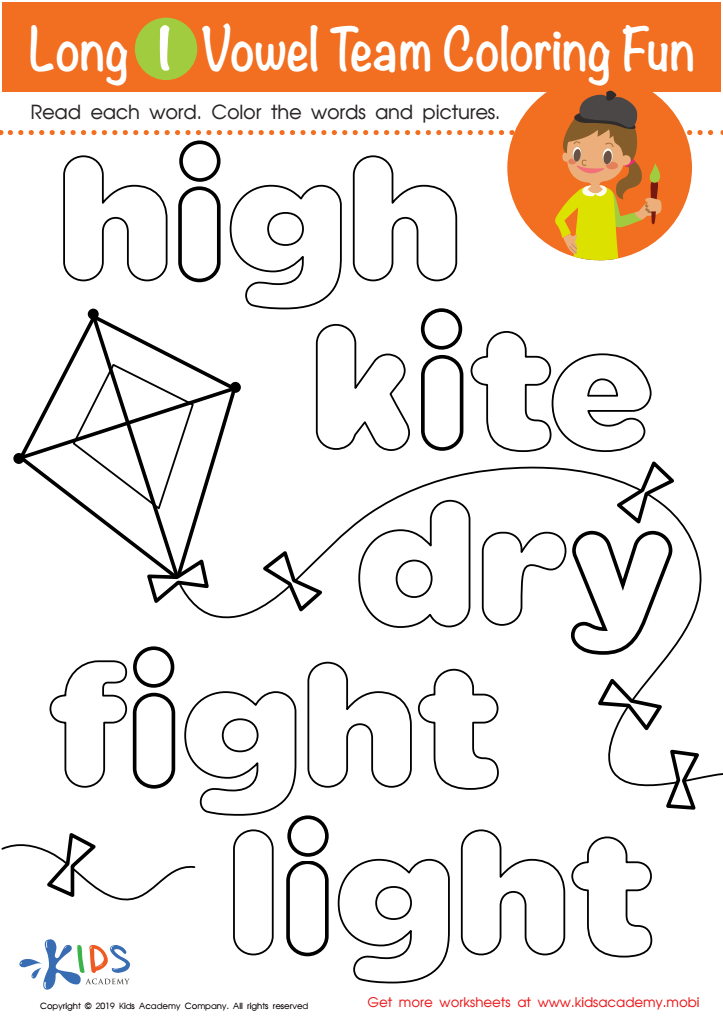
Long I Vowel Team Coloring Worksheet
 Assign to My Students
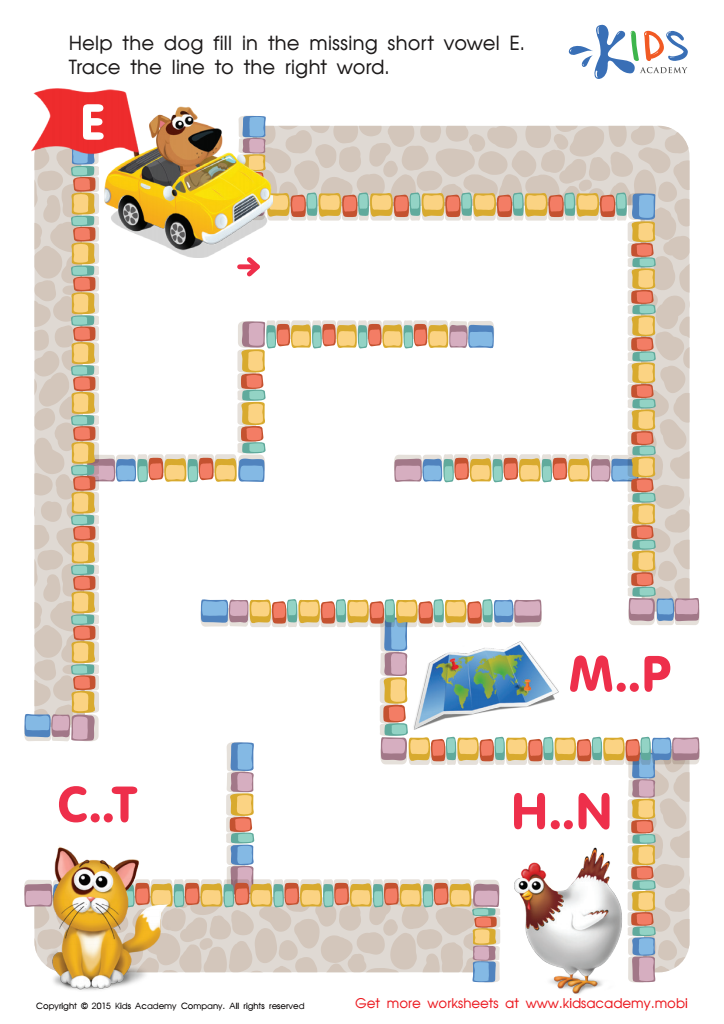
Short Vowel Sound E Worksheet
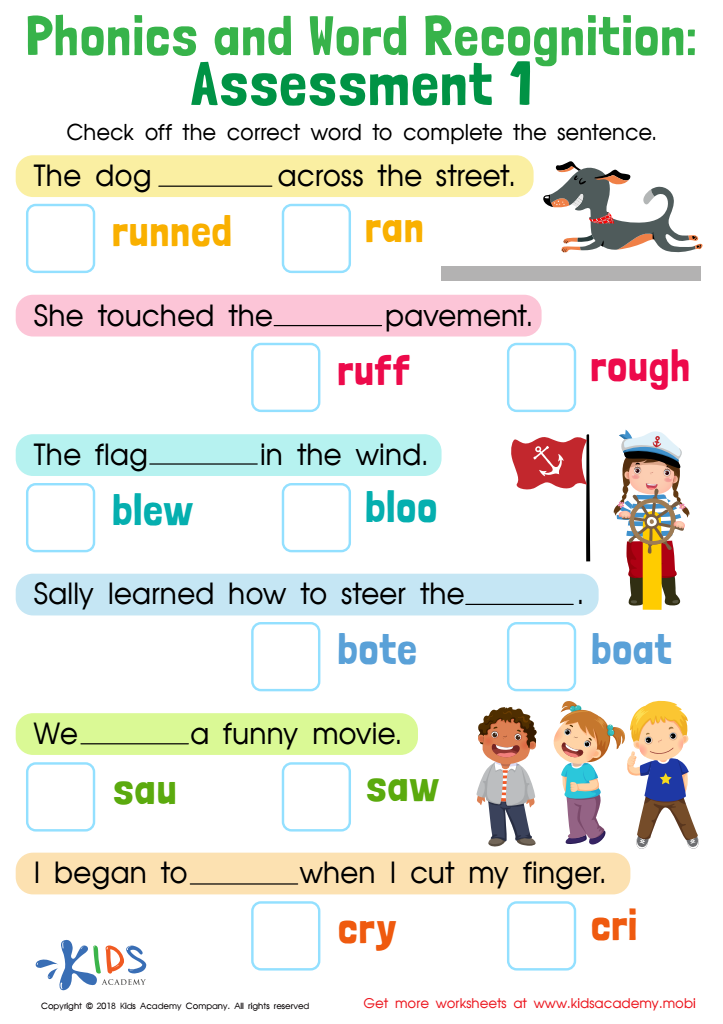
Phonics and Word Recognition: Assessment 1 Worksheet
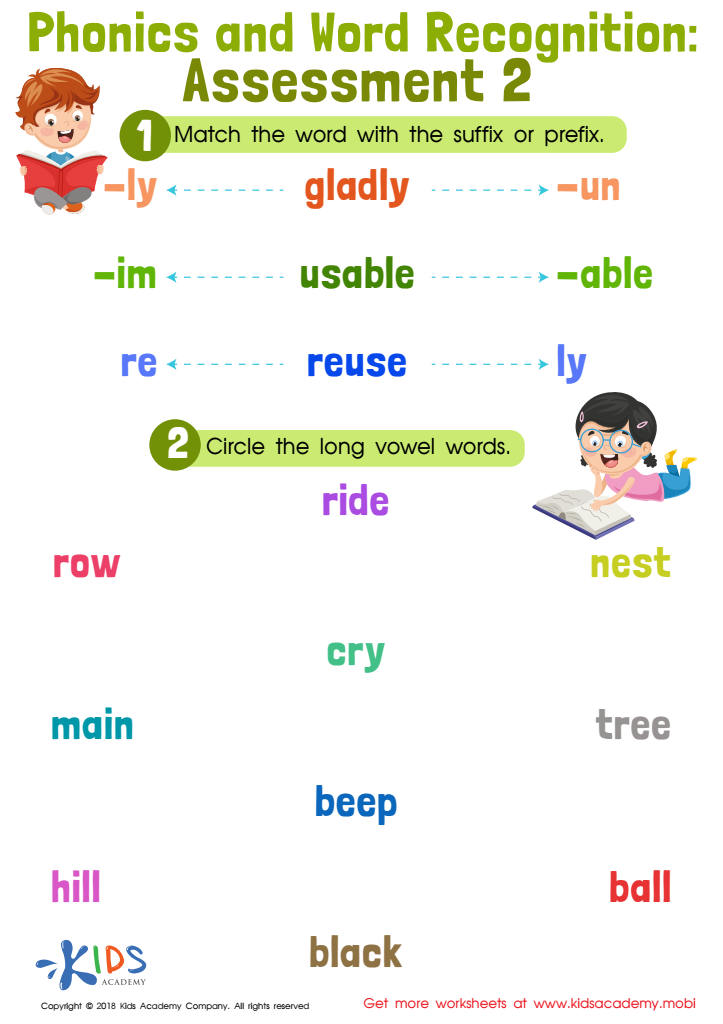
Phonics and Word Recognition: Assessment 2
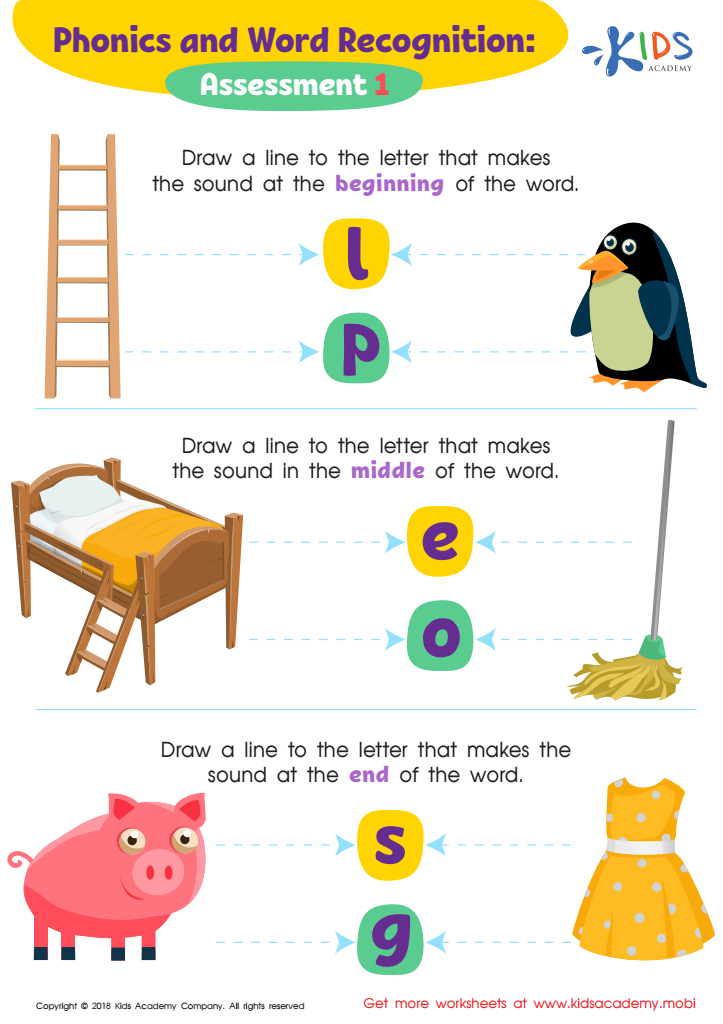
Phonics and Word Recognition: Assessment 1 ELA Worksheet





Word identification and understanding vowels are crucial for children aged 3-8 as these skills form the bedrock of literacy. During these formative years, children develop phonemic awareness—the ability to hear, identify, and manipulate sounds. Vowels, in particular, are foundational elements of speech and reading. They are integral in forming syllables, making them essential for decoding words.
By focusing on vowels, parents and teachers can help children build strong reading habits early on. Recognizing vowel sounds enhances children's ability to sound out words, improving their reading fluency and comprehension. This strong base fosters confidence, which increases a child’s interest in reading and learning. Furthermore, mastering vowel patterns equips children to tackle more complex vocabulary as they grow, ensuring ongoing academic success.
Encouraging exploration of vowels through playful activities and phonics can stimulate cognitive development. It strengthens listening skills and oral communication, tools vital for social interaction and academic progress. By prioritizing word identification and vowels, caregivers contribute directly to a child’s literacy trajectory, setting the stage for a lifelong passion for reading, critical thinking, and creativity. Investing time in these skills now reduces future struggles with reading, ultimately enhancing overall educational outcomes.







