Spelling practice Coloring Pages Worksheets for Ages 3-8
3 filtered results
Difficulty Level
Grade
Age
-
From - To
Subject
Activity
Standards
Discover our delightful Spelling Practice Coloring Pages Worksheets, specially designed for children aged 3-8. These engaging worksheets combine vibrant coloring activities with essential spelling practice, making learning both fun and effective. Each worksheet encourages young learners to color, trace, and write words, reinforcing their spelling skills while fostering creativity. Perfect for early childhood education, these printable pages are tailored to enhance fine motor skills, vocabulary, and letter recognition. Ideal for parents and educators seeking enjoyable and educational resources to support early literacy. Start your child's spelling journey today with our expertly crafted coloring worksheets!
Favorites
With answer key
Interactive
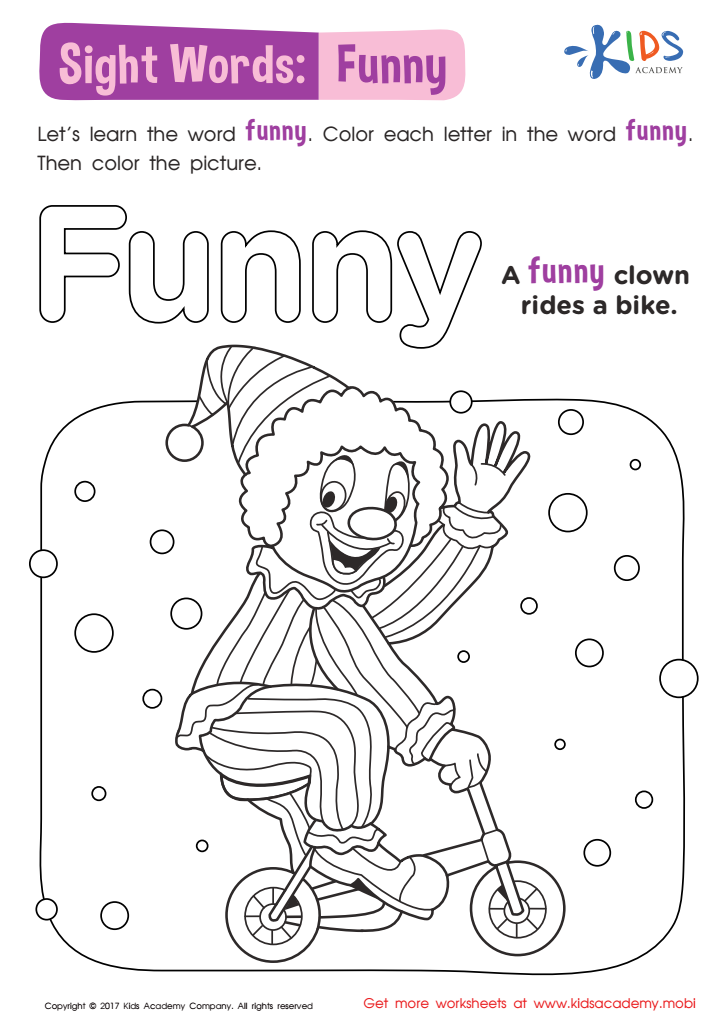
Funny Worksheet Sight Words Worksheet
Love humor? Introduce "funny" as a sight word with this fun worksheet! Have your child read the sentence then color the word in the center. Let them use their imagination to color the silly clown in any way they like!
Download (PDF)
 Assign to My Students
Assign to My Students
Funny Worksheet Sight Words Worksheet
Worksheet
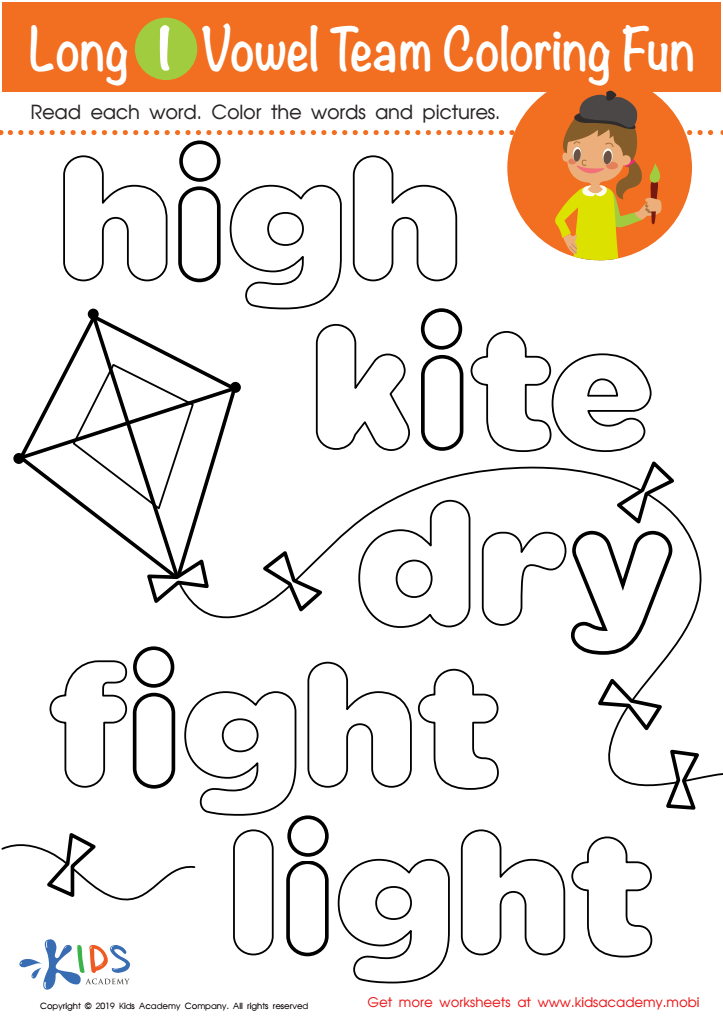
Long I Vowel Team Coloring Worksheet
This worksheet provides practice with letter combinations that make the long "i" sound while enhancing creativity and motor skills with a fun coloring activity. Unknowingly, new readers learn key phonics skills while having fun!
Download (PDF)
Assign to My Students
Assign to My Students
Long I Vowel Team Coloring Worksheet
Worksheet
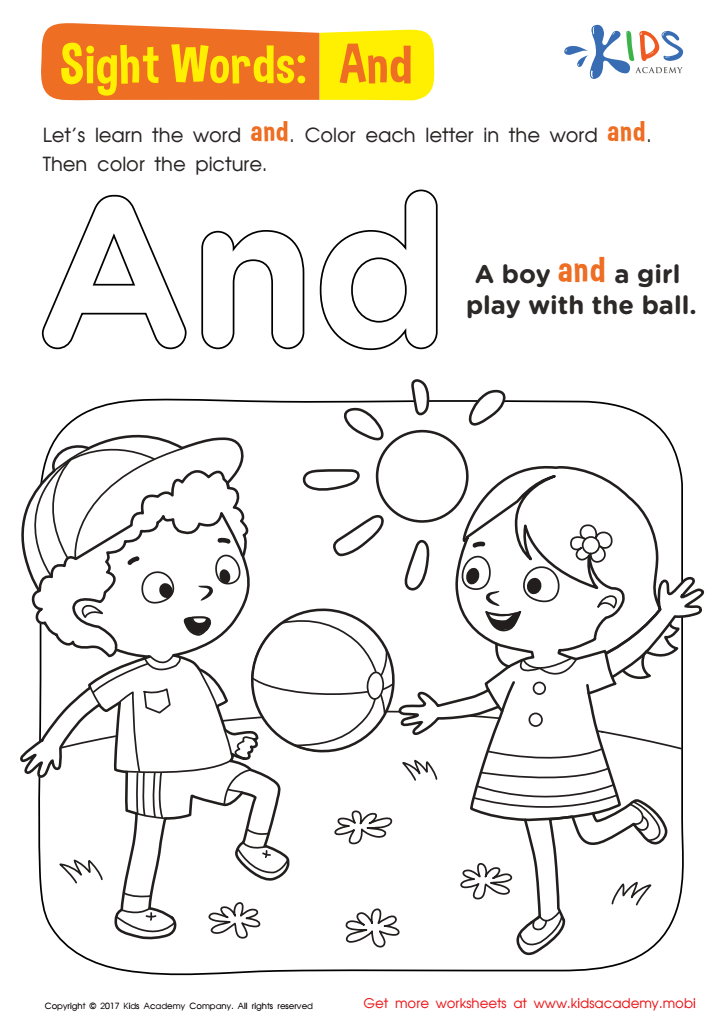
And Worksheet Sight Words Worksheet
Help your child get a jumpstart on reading with sight words! Print out this fun worksheet and get your child to read the sentence. Point out the word "and", then color the word and enjoy the rest of the scene! It's a great way to introduce sight words and get their early reading skills going!
Download (PDF)
Assign to My Students
Assign to My Students
And Worksheet Sight Words Worksheet
Worksheet
Join Kids Academy for Free
Who is primarily going to use this learning content?








Parents and teachers should care about spelling practice coloring pages for ages 3-8 because they combine the foundational skills of literacy with engaging, age-appropriate activities. At these young ages, children are developing their fine motor skills, including the ability to write and control a pencil. Coloring within specific areas enhances their hand-eye coordination, which is critical for writing letters correctly.
Additionally, the integration of fun coloring activities helps maintain their interest and motivation, transforming what could be seen as a challenging task into an enjoyable one. Spelling practice is crucial at this stage because it reinforces phonemic awareness—the understanding of how sounds form words—which is a building block for reading.
Moreover, engaging in these activities at home or in the classroom provides opportunities for practice beyond regular lessons, leading to better retention. For teachers, these resources offer an effortless way to diversify instructional methods, catering to different learning styles. For parents, they provide an interactive way to support their child's education at home.
Spelling practice coloring pages also promote cognitive skills like memory and concentration, essential components of effective learning. As children color and spell, they learn to associate letters with sounds, words with meanings, and develop a more robust linguistic foundation.