Adjective identification Worksheets for Ages 3-8
3 filtered results
-
From - To
Explore our engaging Adjective Identification Worksheets designed for children aged 3-8! These worksheets offer a fun and interactive way for young learners to recognize, use, and understand adjectives in various contexts. With colorful illustrations and age-appropriate activities, your child will enhance their vocabulary and language skills while enjoying the learning process. Each worksheet encourages exploration through exercises like identifying adjectives in sentences, matching them with nouns, and completing fun fill-in-the-blank tasks. Perfect for home or classroom use, these worksheets make learning about adjectives an enjoyable experience. Help your child become a confident communicator with our thoughtfully crafted resources!
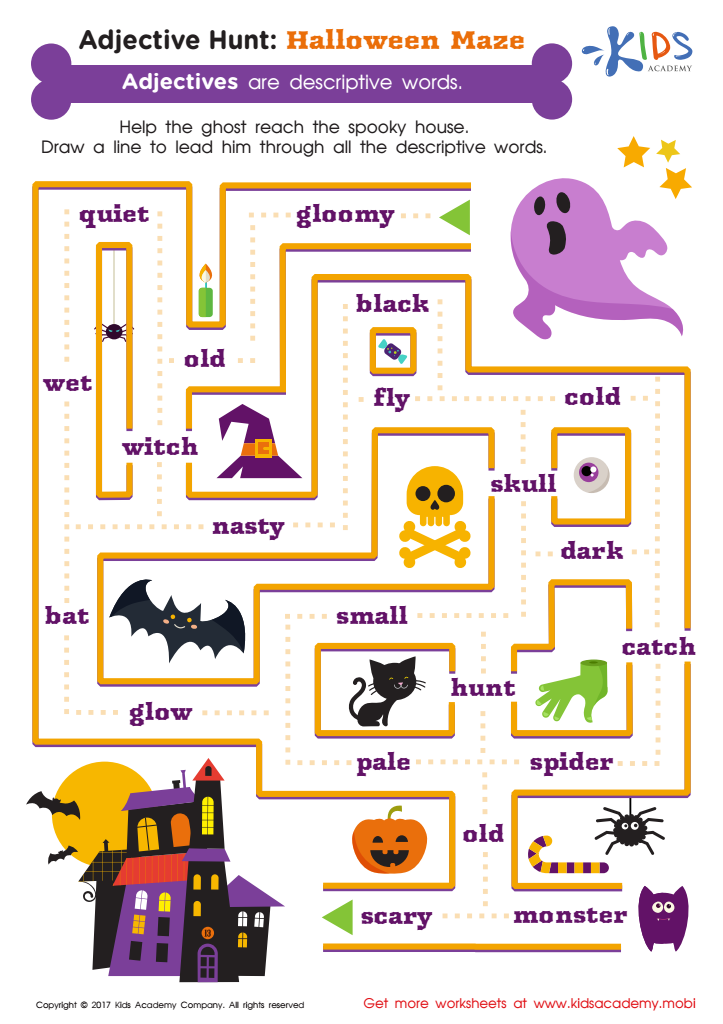
Adjective Hunt Printable
 Assign to My Students
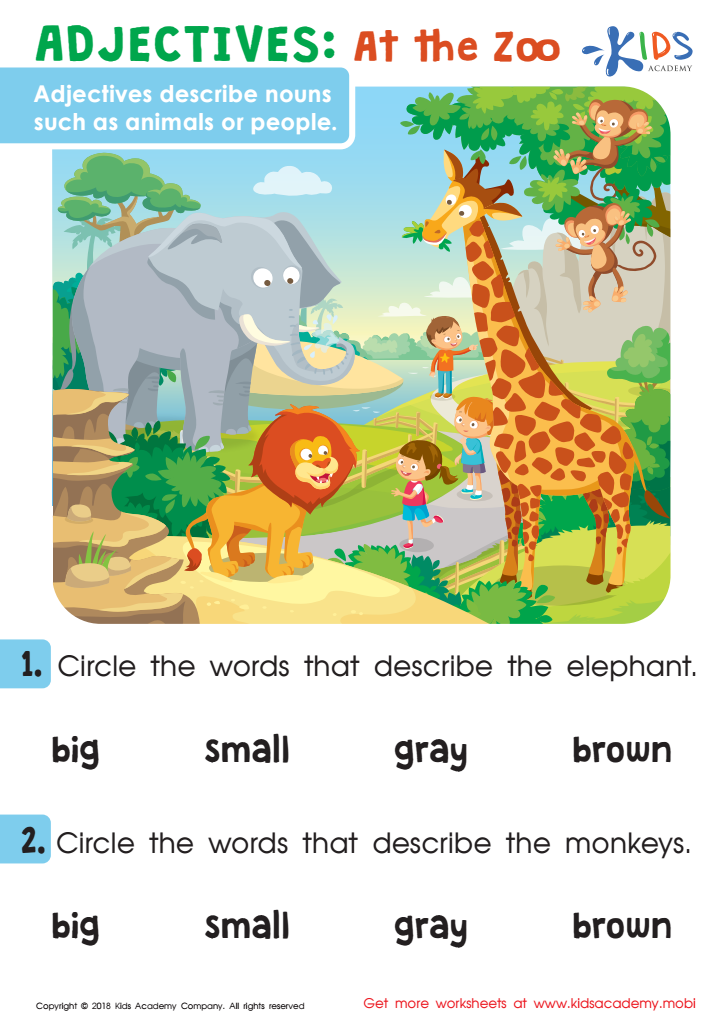
Adjectives: At The Zoo Worksheet
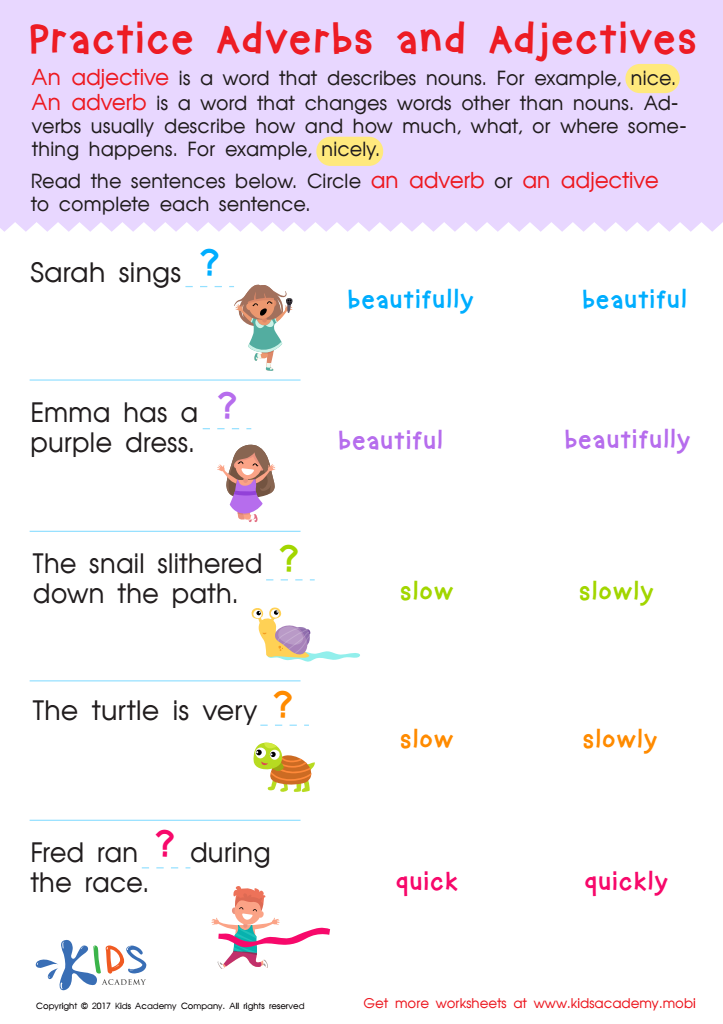
Adverbs and Adjectives Worksheet




Adjective identification is crucial for children aged 3-8 as it forms a fundamental part of their language development. Firstly, adjectives enhance vocabulary, allowing young learners to describe the world around them more vividly. When children recognize adjectives, they begin to grasp how to express feelings, preferences, and observations, which boosts their communication skills and fosters confidence in self-expression.
Additionally, understanding adjectives aids in reading comprehension. As children learn to identify descriptive words, they can better visualize and understand the context of stories, making reading more enjoyable and engaging. This comprehension is essential for their academic success as they advance in their education.
Moreover, teaching children to recognize adjectives supports cognitive development. It encourages them to think critically about the properties of objects and their experiences, enhancing observational skills and attention to detail. This analytical ability is beneficial not only in language arts but across various subjects.
Finally, adjective identification fosters creativity. By learning to use descriptive language, children can better express their ideas, leading to richer storytelling and imaginative play. By prioritizing adjective identification, parents and teachers lay a strong foundation for linguistic, cognitive, and creative growth in young learners.








