Analog clock reading Worksheets for Ages 3-8
4 filtered results
-
From - To
Explore our engaging Analog Clock Reading Worksheets designed for children ages 3-8! These interactive printables help young learners grasp essential time-telling skills through colorful illustrations and hands-on activities. Our carefully crafted worksheets promote number recognition and improve fine motor skills, ensuring a fun and educational experience. Each resource encourages kids to read various clock faces, understand both analogue time and practical applications of time in daily routines. Perfect for home or classroom use, these worksheets provide an effective way for children to master time-telling while developing their confidence. Get started today and watch your child thrive with time comprehension!
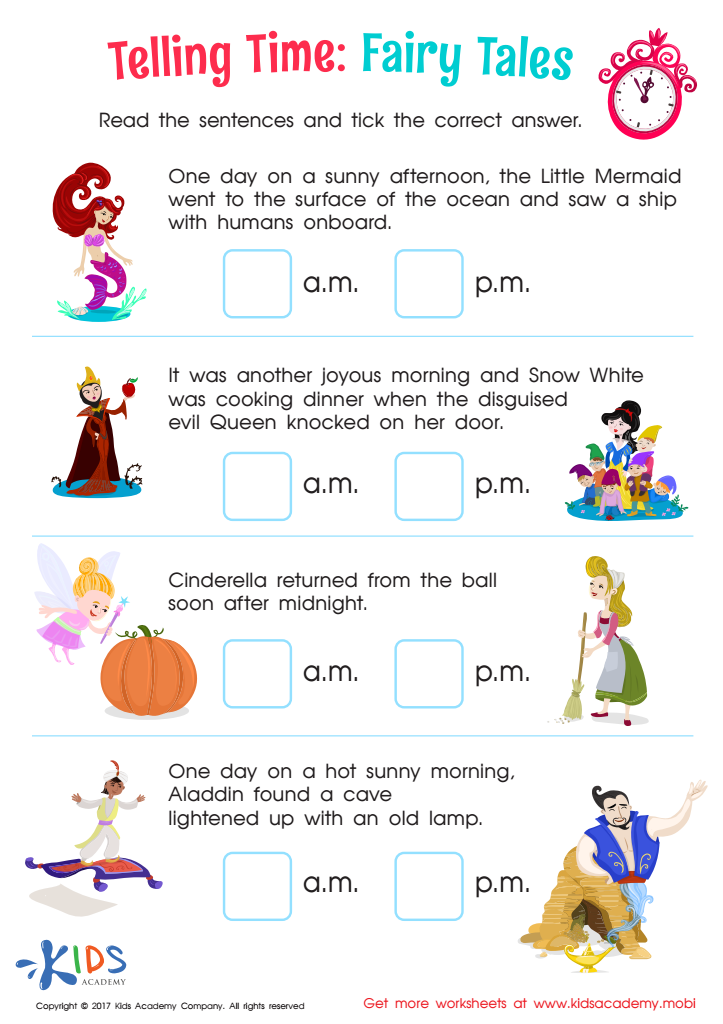
Telling Time: Fairy Tales Worksheet
 Assign to My Students
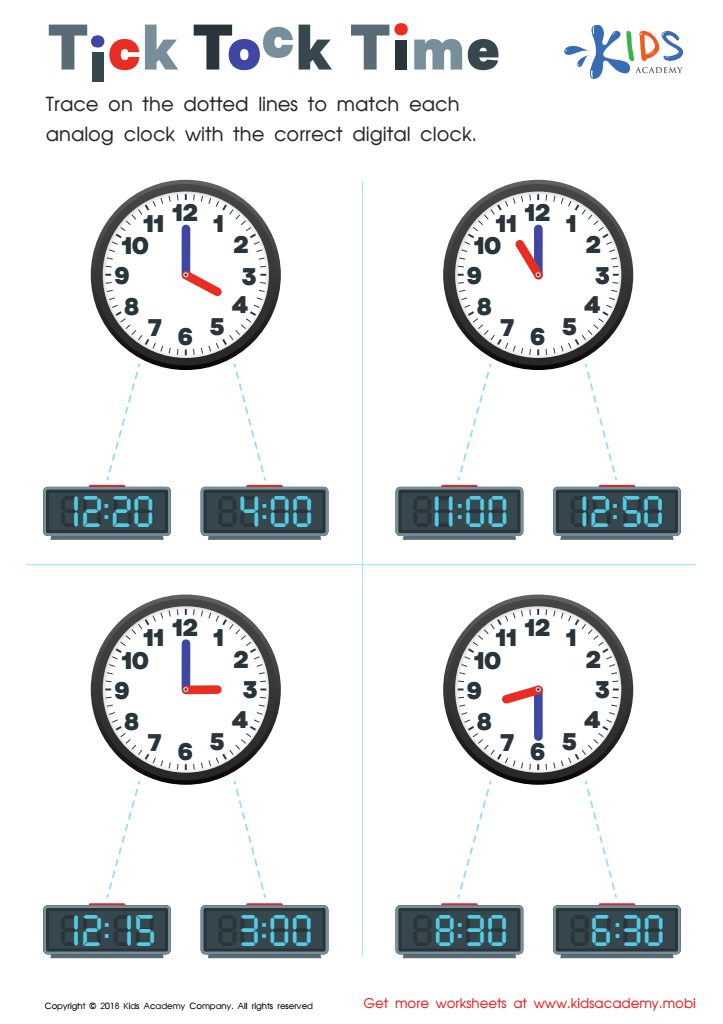
Tick Tock Time Worksheet
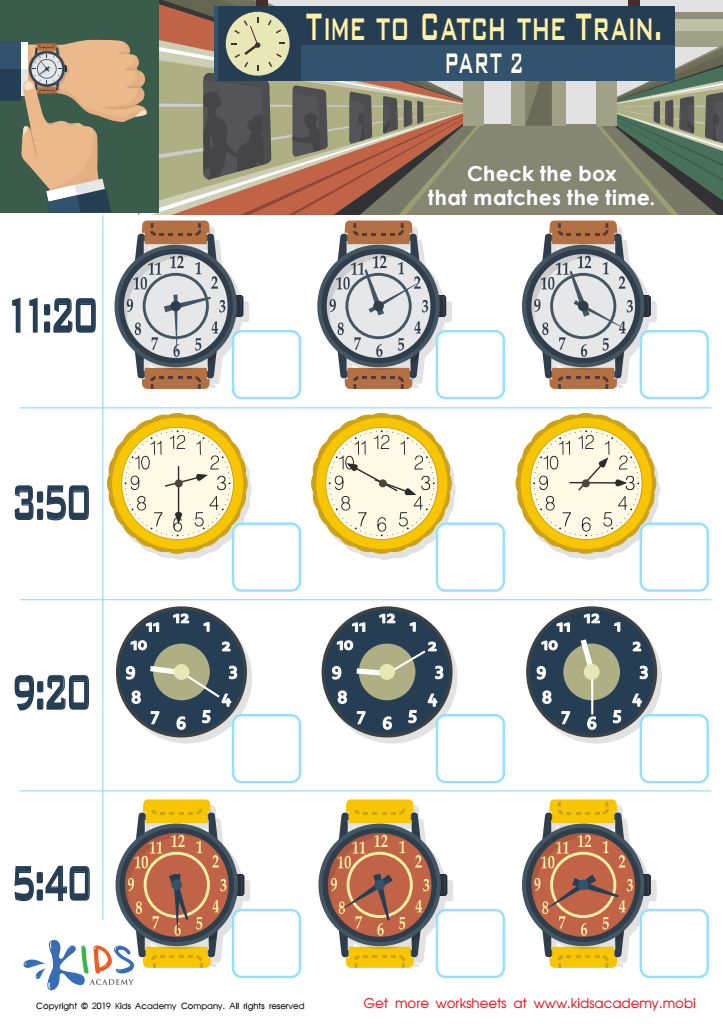
Time to Catch the Train Part 2 Worksheet






Teaching analog clock reading to children aged 3-8 is essential for several reasons. Firstly, it helps develop foundational math and cognitive skills. Recognizing numbers and understanding the concept of time involves essential counting and sequencing practices. It encourages children to make connections between numbers and their practical applications in daily life.
Secondly, reading an analog clock promotes critical thinking and problem-solving abilities. Children learn to interpret the movement of the hands, contributing to an understanding of spatial awareness and directionality. This understanding also aids in developing fine motor skills as they practice moving the hands or pointing to specific times.
Moreover, analog clocks provide a unique learning experience. They teach children the difference between minute and hour hands while fostering patience as they grasp the concept of passing time. This can instill a sense of responsibility, as they learn to manage their time more effectively.
Finally, understanding how to read an analog clock helps children engage with their environment. Many public places still use analog clocks, so this skill ensures they can navigate time in various settings.
Overall, teaching children to read analog clocks builds critical life skills, enhances academic learning, and prepares them to interact confidently with the world around them.








