Basic counting skills Worksheets for Ages 3-8 - Page 2
28 filtered results
-
From - To
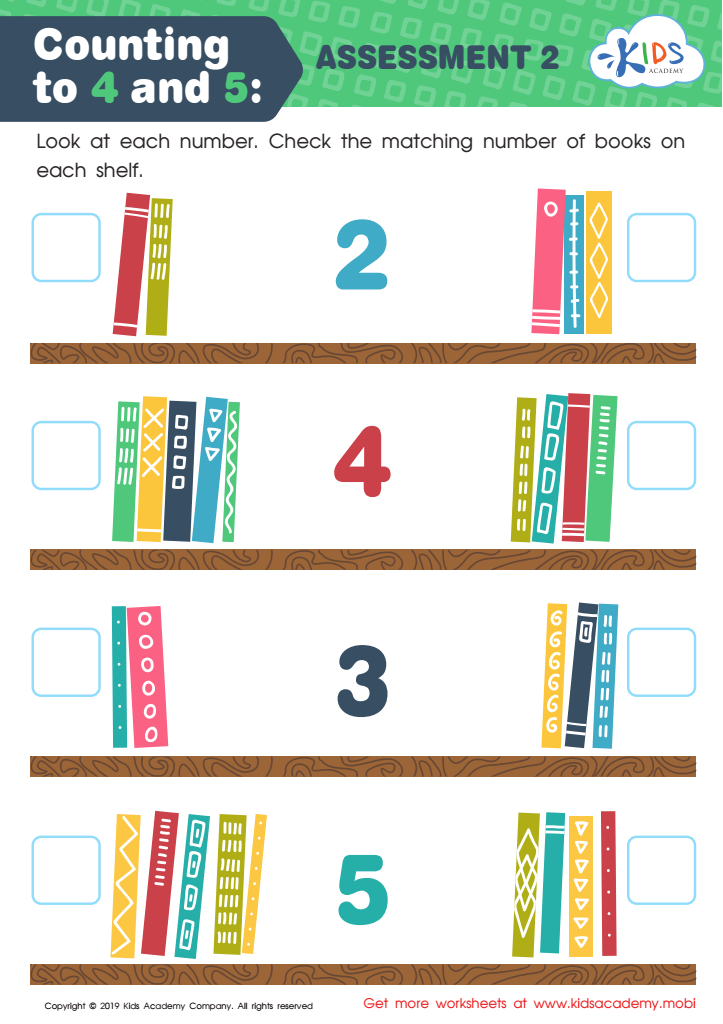
Counting to 4 and 5: Assessment 2 Worksheet
 Assign to My Students
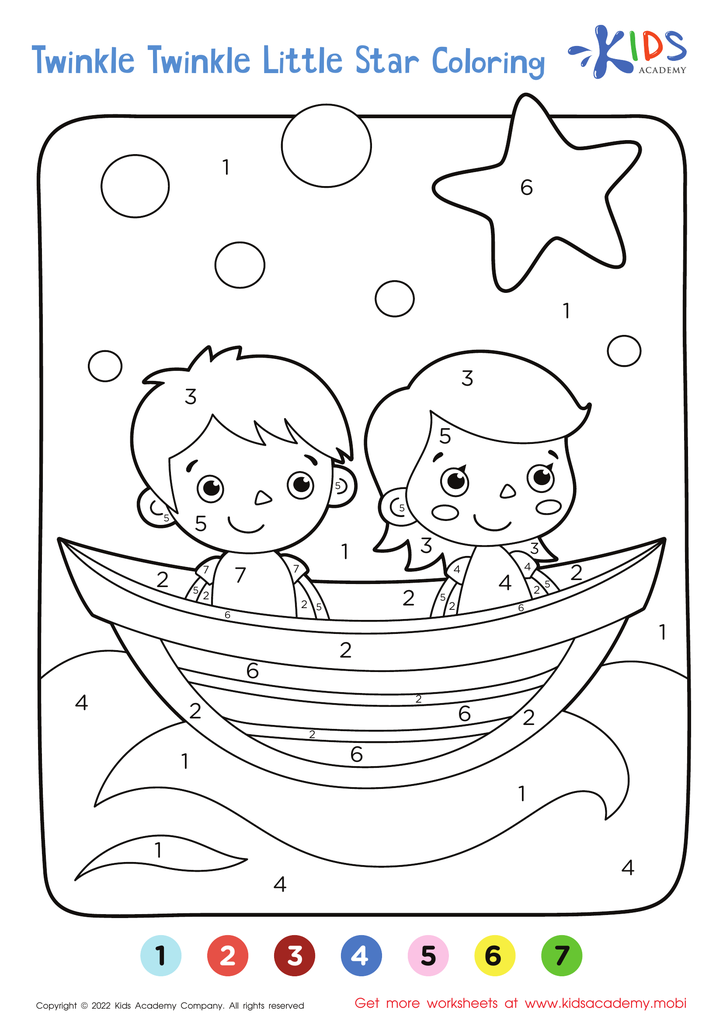
Twinkle, Twinkle, Little Star – Coloring by Numbers
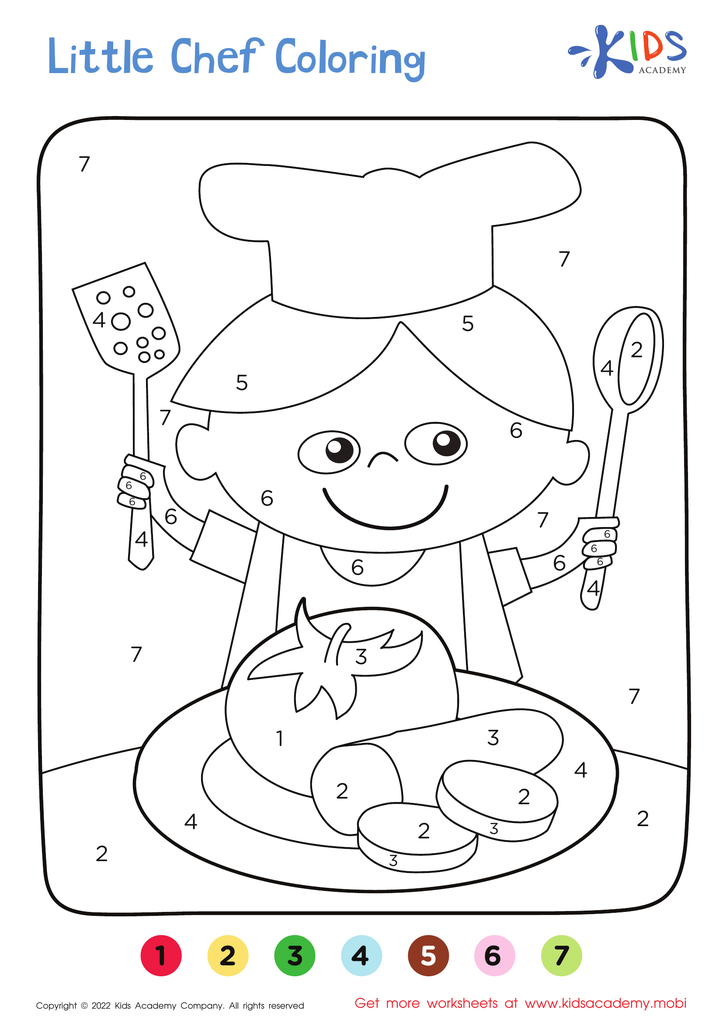
Little Chef – Coloring by Numbers







Basic counting skills are the foundation for a child's mathematical development and thus require attention from both parents and teachers. During the ages of 3-8, children’s brains are highly adaptable and ready to absorb fundamental concepts that will support more complex learning later on. Counting skills are not just about reciting numbers but involve understanding the quantity those numbers represent, a concept known as "number sense."
Developing number sense at an early age enhances cognitive development and critical thinking skills. It prepares children for the rudimentary operations of addition, subtraction, and eventually more complex operations like multiplication and division. Without a strong grasp of basic counting, children can struggle with these future mathematical concepts, leading to academic difficulties.
Furthermore, early proficiency in counting aids in everyday life skills such as telling time, managing money, and measuring ingredients for cooking. This sort of practical application helps solidify the importance and utility of counting beyond academic settings.
Lastly, acquiring counting skills can also boost a child's confidence and enthusiasm for learning. When children can successfully count and solve simple problems, they experience a sense of achievement that fosters a positive attitude towards future challenges. Therefore, prioritizing basic counting skills in early childhood sets a strong educational foundation that reaps long-term benefits.








