Basic geometry comprehension Worksheets for Ages 3-8
3 filtered results
-
From - To
Discover our engaging Basic Geometry Comprehension Worksheets designed for children aged 3-8! These worksheets offer a fun and interactive way to introduce young learners to fundamental geometric concepts such as shapes, sizes, and spatial awareness. Each activity is tailored to not only enhance critical thinking skills but also foster a love for learning. Ideal for home or classroom use, our worksheets incorporate colorful visuals and creative exercises to keep kids motivated. Perfect for nurturing early math skills, our geometry worksheets support various learning styles and are easy to print. Start your child's journey into the world of geometry today!
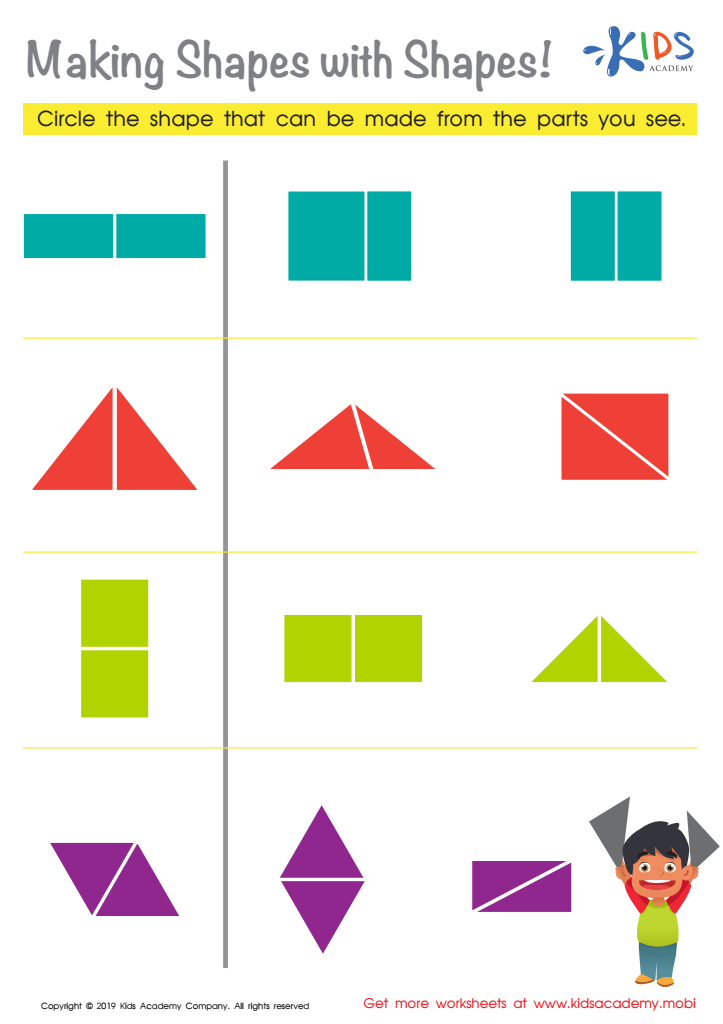
Making Shapes with Shapes Worksheet
 Assign to My Students
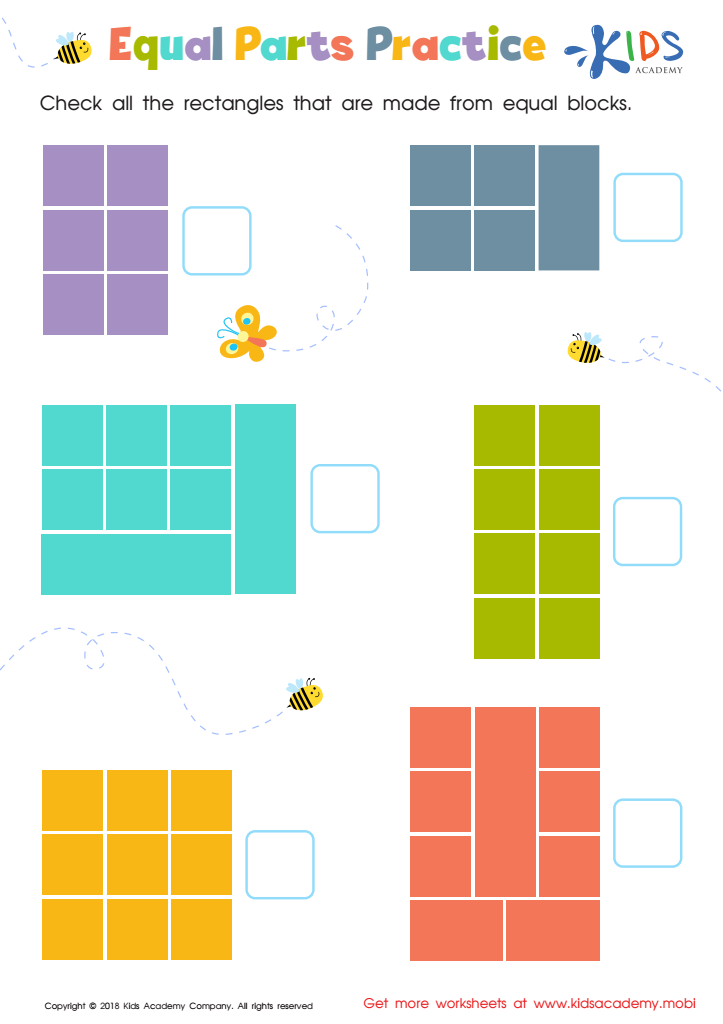
Equal Parts Practice Worksheet








Basic geometry comprehension is essential for children ages 3-8, as it serves as a fundamental building block for their cognitive and spatial development. At this age, children are naturally curious and eager to explore the world around them. Engaging with geometric shapes and concepts helps them make sense of their environment and develop critical thinking skills.
Understanding basic geometry aids in developing spatial awareness, as children learn to recognize, describe, and compare different shapes and sizes. This understanding is not just academic; it enhances daily life skills such as organizing their belongings, navigating spaces, and even basic problem-solving. For example, identifying shapes can improve a child’s abilities in art, construction activities, and even reading skills, as they learn to recognize shapes in letters and numbers.
Moreover, early geometry comprehension fosters mathematical foundations that are crucial for future learning. Incorporating geometry into play and structured activities helps keep children engaged while reinforcing learning concepts. This foundational knowledge allows for smoother transitions into more complex mathematical concepts later.
In summary, parents and teachers should prioritize basic geometry comprehension to nurture cognitive skills, promote spatial reasoning, and lay the groundwork for future academic success.








